
Propagation
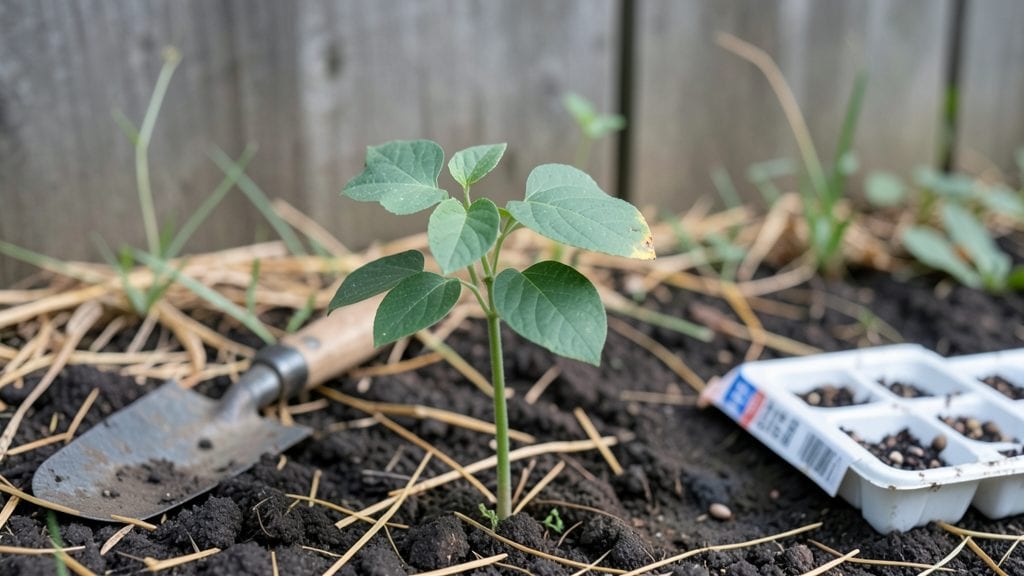
Planting pinto bean seeds in warm soil means sprouts appear in 3-5 days instead of weeks—here’s how to trigger that speed. I’ve watched these seeds go from dry and dormant to poking through soil faster than anything else in my garden, and the secret is all about temperature.
Most gardeners overlook this, but a few extra degrees in the soil can cut germination time in half.
The trick starts with soil prep: pinto beans love loose, well-draining soil that’s at least 70°F—warmer than most gardeners realize. Mix in compost to improve drainage, then plant seeds 1-2 inches deep and 3-4 inches apart in rows spaced 18 inches apart.
A black plastic mulch laid before planting adds 5-10°F of warmth, which is a game-changer for cooler climates.
Once planted, keep the soil consistently moist but not soggy—pinto beans hate sitting in water. Within a week, you’ll see those first tiny leaves unfurling, and by 4-6 weeks, you’ll have plants ready to climb. The payoff? A harvest of buttery, speckled beans that outperform store-bought any day.
For faster results, try soaking seeds overnight before planting—it shaves off another day or two. And if your soil stays cool, consider using a seedling heat mat for the first week. The key is patience paired with warmth, and before you know it, you’ll have a thriving bean patch.
📚 In This Guide
- What you need
- Instructions
- Tips and common mistakes
- Wrapping up and next steps
What you need
- ● Pinto bean seeds: 1–2 lbs (or ~50–100 seeds, depending on spacing needs). Choose heirloom or organic if possible for better germination.
- ● Well-draining potting mix or garden soil: A blend with 50% compost (for nutrients) and 30% perlite/sand (for aeration). Avoid heavy clay.
- ● Containers or garden plot: Containers: 5–10 gallon pots (1–2 seeds per pot) with drainage holes.
- ● Garden beds: Rows spaced 18–24 inches apart (beans need room to climb or sprawl!).
- ● Watering can or hose with gentle spray nozzle: Beans hate soggy soil but need consistent moisture.
- ○ Mulch (optional but recommended): Straw or shredded leaves to retain moisture and regulate soil temp.
- ● Hand trowel or small shovel: For digging seed holes (~1 inch deep).
- ● Garden gloves: Protect your hands from soil and thorns (if using trellises).
- ○ Trellis or stakes (optional): If growing bush varieties, skip this. For pole beans, use 6–8 ft tall stakes or a 3 ft wide trellis.
- ○ Soil thermometer (optional but helpful): Pinto beans germinate best in soil 60–85°F. A cheap probe thermometer ensures you time planting perfectly!
- ○ Fertilizer (low-nitrogen, optional): A balanced 5-5-5 or compost tea at planting time boosts early growth.
- ● Warm soil: Wait until soil temps consistently reach 60°F+ (use a thermometer or check local frost dates). Cold soil = slow or failed germination!
- ● Sunlight access: Pinto beans need 6–8 hours of full sun daily. Test your spot for shade patterns before planting.
- ● pH-balanced soil: Aim for 6.0–7.0 pH. Test your soil or amend with lime (to raise pH) or sulfur (to lower it) if needed.
- ● Patience: Germination takes 7–14 days—stay consistent with watering!
Step-by-step instructions for planting pinto bean seeds
Here’s how to get your pinto beans sprouting in just 5-7 days—no waiting weeks for stubborn seeds.
Warm the Soil to Kickstart Germination
Pinto beans need soil temperatures above 70°F to germinate quickly. If your garden soil is still cool, place your pots or planting area on a black plastic sheet for a week before sowing. The dark surface absorbs heat from the sun, warming the soil faster. Test the temperature with a soil thermometer—it should read 75-85°F at planting time.
If you’re planting in containers, fill them with the 2 gallons of potting mix and let them sit in a sunny spot for 24 hours before adding seeds. Warm soil speeds up germination, but don’t overheat it—above 90°F can slow growth. A greenhouse or a sunny windowsill works well for indoor starters.
Plant Seeds at the Right Depth and Spacing
Pinto beans are large seeds, so plant them 1-2 inches deep—any shallower and they’ll dry out before sprouting. Use your finger to make a hole just wide enough to hold the seed, then drop 1 seed per hole. Space them 4-6 inches apart in rows that are 18-24 inches apart for proper airflow and sunlight.
Cover the seeds lightly with soil, pressing down gently to ensure good contact. If you’re planting in rows, use a small stick or your finger to mark the spacing—beans grow fast, and overcrowding leads to weak vines. Water the soil lightly after planting, but avoid soaking it, as excess moisture can cause rot.
Keep Soil Moist but Not Soggy
Water the soil every 2-3 days until the top inch feels slightly damp—not wet, not dry. Pinto beans need consistent moisture to germinate, but soggy soil suffocates roots. If you’re using containers, check the weight—lighter pots need watering, while heavier ones still have moisture.
Mulch the soil with 1 inch of straw or grass clippings to retain moisture and regulate temperature. This keeps the soil warm longer and reduces the need for frequent watering. Avoid synthetic mulches—they can trap too much heat and dry out the soil faster.
Provide Support and Sunlight Early
Beans need 6-8 hours of direct sunlight daily, but they’ll start reaching for light as soon as they sprout. If you’re growing in containers, place them in a south-facing spot or under grow lights for 12-14 hours a day. Leggy seedlings mean your plants aren’t getting enough light—adjust their position if stems stretch thin.
Set up trellises or stakes as soon as the first true leaves appear (about 7-10 days after planting). Pinto beans are vigorous climbers, and supporting them early prevents broken stems. If you’re planting in the ground, drive stakes 6 inches deep and weave twine between them for climbing support.
Thin and Fertilize for Strong Growth
Once seedlings reach 3-4 inches tall, thin them so only the strongest plant remains in each spot. Use scissors to snip weak stems at the base—this prevents disturbing the roots of the plants you’re keeping. Thin to 3-4 inches apart for optimal airflow and sunlight penetration.
After thinning, mix 1 tablespoon of 10-10-10 fertilizer into the soil around each plant. Pinto beans fix nitrogen in the soil, but a little extra helps them grow faster. Water deeply after fertilizing to help nutrients reach the roots. Avoid over-fertilizing—too much can burn young plants.
Tips & tricks for planting pinto bean seeds
These simple tricks can make all the difference when you're working with the 5-7 day germination window for pinto beans.
Temperature Matters: The 75-85°F range is your sweet spot for germination. I've found that using a clear plastic dome over containers creates a mini greenhouse effect, helping maintain that ideal temperature range. Just remember to remove it once sprouts appear to prevent overheating above 90°F, which can actually slow down germination.
Timing Secret: That 24-hour pre-warming of your potting mix is crucial, especially if you're planting in containers. I like to set my containers on a heating mat for the last 12 hours of this period—it gives that extra boost to get the soil temperature up to 85°F consistently. This pre-warming is what helps achieve that fast 5-7 day germination window.
Planting Precision: When planting those 1-2 inch deep seeds, I use a small stick to make the planting holes—it gives you consistent depth every time. For the 4-6 inch spacing between seeds, I've found that using a ruler helps maintain that even spacing. This prevents overcrowding which can lead to weak vines later on.
Lighting Strategy: If you're using grow lights for that 12-14 hours of daily light, position them just 6-8 inches above the seedlings. I've noticed that this distance prevents those leggy seedlings that indicate insufficient light. You'll know you've got it right when the seedlings grow strong and sturdy rather than stretching toward the light.
Pro Tips for Planting Pinto Bean Seeds
- These simple tricks can make all the difference when you're working with the 5-7 day germination window for pinto beans.
- Temperature Matters: The 75-85°F range is your sweet spot for germination.
- Timing Secret: That 24-hour pre-warming of your potting mix is crucial, especially if you're planting in containers.
Frequently asked questions
Got questions about planting pinto bean seeds?
You’re not alone! Here are answers to the most common concerns—from timing to troubleshooting—so you can grow these nutritious legumes with confidence.
When is the best time to plant pinto bean seeds?
Pinto beans thrive in warm soil—aim for 60–85°F (15–29°C). In most regions, wait until after the last frost (typically late spring or early summer). If your climate is cool, use row covers or plant in black plastic mulch to warm the soil faster.
How long does it take for pinto bean seeds to germinate?
Germination usually takes 7–14 days in warm, moist soil. Speed it up by soaking seeds overnight before planting or using a seedling heat mat. If soil stays too cold (<50°F/10°C), germination slows or stalls—patience (or a greenhouse) helps!
Can I plant pinto beans in containers instead of a garden?
Pinto beans grow well in 5-gallon buckets or deep pots (12+ inches) with drainage holes. Use a lightweight potting mix and a trellis for climbing varieties. Just ensure containers get 6+ hours of sun daily and keep soil consistently moist.
Why aren’t my pinto bean seeds sprouting? Troubleshooting tips.
Check these common issues:
- Cold soil: Wait for warmer temps or use a heat source.
- Dry soil: Keep seeds moist (not soggy) until sprouts appear.
- Old seeds: Pinto beans lose viability after 2–3 years—test viability by soaking a few in water (floaters = bad).
- Poor drainage: Seeds rot in compacted or waterlogged soil.
Are pinto beans drought-tolerant once established?
Once plants are 2–3 inches tall, pinto beans are moderately drought-tolerant but grow best with 1–1.5 inches of water weekly. Mulch heavily to retain moisture, and avoid letting soil dry out during flowering/podding. Drought stress can reduce yields, so monitor during dry spells!
Wrapping up and next steps
Planting pinto bean seeds is a rewarding journey that blends patience with the magic of nature! By focusing on soil warmth and proper care, you’ll unlock faster germination and a thriving harvest. Whether you’re a beginner or a seasoned gardener, these tips make the process simple and fun.
Ready to grow? Start small—try a few seeds in a pot or a sunny patch of soil—and watch your garden transform! Soon, you’ll be enjoying fresh, homegrown beans straight from your efforts. Happy planting! 🌱💚