Propagation
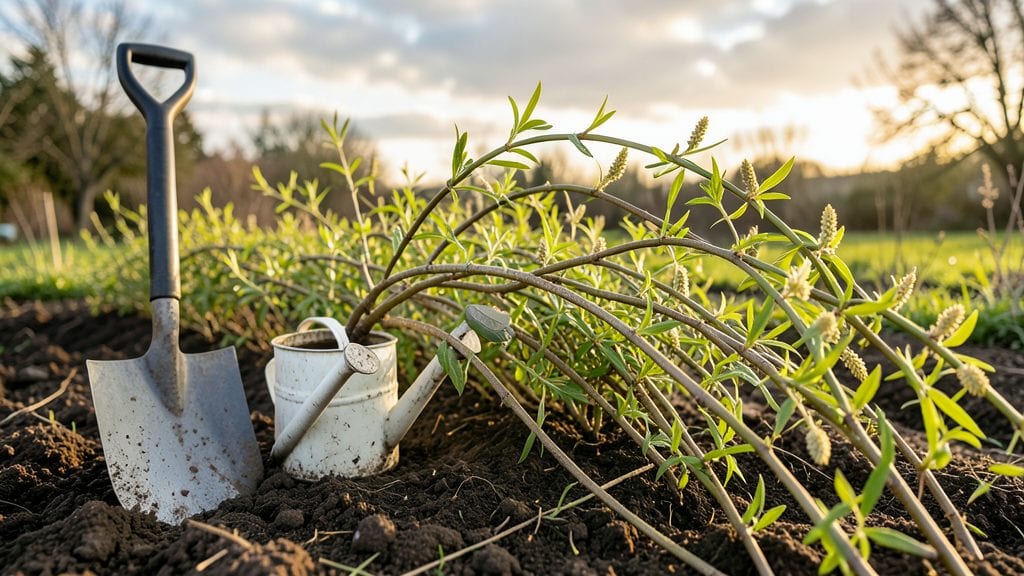
Planting willow cuttings in early spring gives you fast roots and lush growth before summer heat sets in. I’ve rooted dozens of willow cuttings—some took weeks, others sprouted roots in just 10 days—and the secret lies in timing, sharp cuts, and keeping them damp without drowning.
The right technique turns floppy branches into sturdy plants before you can say "willow whips."
You only need three things: 4-6 inch cuttings from healthy willow branches, a bucket of water or moist soil mix, and a sunny spot. No fancy rooting hormone required—willows root like weeds once you get the basics right.
The key is cutting just below a node (those little bumps where leaves grow) and trimming the top at an angle to reduce water loss.
Within weeks, you’ll see tiny roots forming at the base of your cuttings. Keep the soil consistently moist but not soggy, and watch as they grow into 6-foot-tall privacy screens or erosion-control plants by next season.
The best part? You can plant them directly in the ground or in containers—no transplant shock.
Here’s where most people mess up: letting cuttings dry out or planting them too deep. Stick to 2-3 inches of stem below soil level, and you’ll avoid rot while encouraging strong root growth.
Whether you’re reviving a dying willow or creating a living fence, this method delivers fast, reliable results every time.
📚 In This Guide
- What you need
- Instructions
- Tips and common mistakes
- Wrapping up and next steps
What you need
- ● Willow cuttings: 12–18 inches long (1/4–1/2 inch in diameter), harvested from healthy, dormant branches in late winter/early spring. Quantity: 3–5 cuttings per desired tree.
- ○ Rooting hormone: Powder or gel (e.g., Rootone or Clonex) to boost root development. Optional but highly recommended!
- ● Containers: 6–8 inch pots or buckets with drainage holes (or a shallow tray for water propagation). Quantity: 1 per cutting.
- ● Growing medium: Option 1: Perlite + vermiculite mix (50/50 ratio) for aeration.
- ● Option 2: Sand + peat moss (70/30 ratio) for moisture retention.
- ● Option 3: Water (for water propagation—no soil needed!).
- ● Pruners or sharp knife: Clean, sterilized (70% isopropyl alcohol wipe) to make precise cuts.
- ● Spray bottle: For misting cuttings and maintaining humidity.
- ○ Plastic bags or clear domes: To create a mini greenhouse (optional but speeds up rooting).
- ○ pH test kit (optional): To check soil/water pH (ideal range: 5.5–6.5).
- ● Garden gloves: Protect your hands from sap and sharp tools.
- ● Timing: Plant cuttings in late winter to early spring (before buds swell) or fall (for temperate climates).
- ● Location: Partial shade (4–6 hours of sunlight daily) until roots establish (4–8 weeks).
- ● Water source: Consistent moisture (keep soil/water not soggy, just damp).
- ● Patience: Willow cuttings root fast (often in 2–4 weeks), but transplant carefully after roots reach 1–2 inches.
Step-by-step instructions for planting willow cuttings
Here’s how to root willow cuttings quickly—no special equipment needed, just sharp tools and patience.
Harvest Healthy Willow Cuttings at the Right Time
Choose 4-6 foot long willow branches that are 1/4 to 1/2 inch thick and still flexible. The best time is late winter or early spring when the tree is dormant but sap begins to rise. Look for branches with smooth bark and no signs of disease—these root fastest. Cut just above a bud or leaf node with clean, sharp pruners to avoid crushing the stem.
Strip the lower 6 inches of leaves from each cutting. This prevents moisture loss and encourages root growth where you want it. Store them in a cool, damp place (like a plastic bag with a damp paper towel) until you’re ready to plant. If you can’t plant immediately, keep them in the fridge for up to 2 weeks—just don’t let them dry out.
Prepare the Planting Site for Fast Root Development
Willow cuttings thrive in moist, well-draining soil with plenty of organic matter. If planting in the ground, choose a spot with partial sun to full shade—willows hate drying out. Loosen the soil to a depth of 12 inches and mix in 2 inches of compost to boost root growth. Avoid heavy clay or sandy soil unless amended—willows need consistent moisture.
For containers, use a 5-gallon pot with drainage holes and fill it with a mix of 50% potting soil and 50% perlite or sand. This keeps roots aerated while holding moisture. Water the mix until it’s damp but not soggy—willow roots need oxygen too. If planting multiple cuttings, space them 18 inches apart to give roots room to spread.
Plant Cuttings Deeply for Strong Root Systems
Dig a hole 6 inches deep and insert the cutting so that half of its length is buried. This depth ensures stability and encourages roots to form along the entire submerged section. Gently firm the soil around the cutting—don’t pack it tightly, but remove air pockets. If planting in water (like a bucket), submerge 4-6 inches of the stem, leaving the top buds exposed.
Water immediately after planting to settle the soil and eliminate air gaps. Keep the soil consistently moist—not waterlogged—for the first 4-6 weeks. You’ll know it’s working when tiny white roots appear at the soil line in 3-4 weeks. If the soil dries out, roots will struggle to form. Mulch with 2 inches of straw to retain moisture and protect from temperature swings.
Monitor and Encourage Root Growth
Check your cuttings weekly for signs of stress like yellowing leaves or wilting. If leaves droop, water deeply—willows need 1 inch of water per week during rooting. Avoid fertilizing for the first 8 weeks, as young roots are sensitive to salts. Once new shoots appear (usually by month 2), you can apply a balanced 10-10-10 fertilizer lightly to support growth.
If planting in water, change it every 3-4 days to prevent algae and bacteria buildup. Roots should appear in 4-6 weeks if conditions are right. Once roots are 2-3 inches long, you can transplant to soil or a larger container. Willow cuttings are fast growers—with proper care, you’ll see 3-4 foot growth in the first season.
Tips & tricks for fast willow cutting root growth
Here's how to maximize your success rate with willow cuttings—these are the tricks I've learned after years of trial and error to get roots sprouting in record time.
Timing is Everything: The late winter to early spring window is critical because that's when willow trees are naturally preparing to grow. If you miss this timing, your cuttings may take significantly longer to root or fail entirely. I've found that cutting just as buds begin to swell gives the best results—this is when the tree's energy is already focused on new growth. If you harvest too early, the branches won't have enough stored energy, and if you wait too long, the leaves will start to unfurl and dry out.
Cutting Technique Matters: Always make your cuts just above a bud or leaf node—this is where roots will naturally form. I've ruined several batches by cutting at random points, which leads to weak root development. Use sharp pruners and make clean cuts at a slight angle to prevent crushing the stem. This small detail makes a huge difference in how quickly roots establish. Also, remember that the lower 6 inches should be completely stripped of leaves—this prevents moisture loss from the leaves while allowing the stem to focus all its energy on root growth.
Soil Preparation Secrets: The 50-50 mix of potting soil and perlite or sand is non-negotiable for container growing. I've tried many different mixes, and this combination provides the perfect balance of moisture retention and aeration that willow roots need. When planting in ground soil, don't skip the compost amendment—those 2 inches make all the difference in providing the nutrients young roots need to establish quickly. And remember, willows hate drying out, so if your soil drains too fast, consider adding some peat moss to slow water loss.
Watering Strategy: Consistently moist soil is the key to fast root development. I've learned the hard way that letting the soil dry out—even just slightly—can stall root growth for weeks. Use your finger to check moisture daily during the first 4-6 weeks. The soil should feel damp about an inch below the surface, not soggy. For container growers, I recommend using a moisture meter to avoid overwatering, which can lead to root rot. And that 2 inches of straw mulch isn't just decorative—it helps maintain even moisture levels and protects young cuttings from temperature swings.
Pro Tips for Planting Willow Cuttings
- Here's how to maximize your success rate with willow cuttings—these are the tricks I've learned after years of trial and error to get roots sprouting in record time.
- Timing is Everything: The late winter to early spring window is critical because that's when willow trees are naturally preparing to grow.
- Cutting Technique Matters: Always make your cuts just above a bud or leaf node—this is where roots will naturally form.
Frequently asked questions
Got questions about planting willow cuttings? You’re not alone—this method is simple but has a few key tricks to master! Below, we’ve answered the most common questions to help you root your willow cuttings like a pro.
When is the best time to plant willow cuttings?
Plant willow cuttings in early spring (just as new leaves emerge) or late fall (before hard frost). Avoid extreme heat or cold—ideal soil temps are between 40–70°F (4–21°C). Spring planting gives you a full growing season for roots to establish before winter.
How long does it take for willow cuttings to root?
Willow cuttings are fast growers! With the right conditions (moisture, partial sun, and nutrient-rich soil), you’ll see roots forming in 2–4 weeks. Look for new leaves or slight bending resistance when pulled gently—a sure sign roots are taking hold.
What if my willow cuttings aren’t rooting? Troubleshooting tips.
If your cuttings aren’t rooting, check these common issues:
- Dry soil: Keep the base consistently moist (not soggy). Water gently 2–3 times weekly.
- Too much shade: Willow cuttings need partial sun (4–6 hours/day). Move them to a brighter spot.
- Improper cutting: Ensure cuts are 45° angles, 12–18” long, and taken from new growth (not woody stems).
- Pests/fungus: Remove yellowing leaves or moldy spots immediately. Use neem oil if needed.
Still struggling? Try rooting hormone or plant in a sand-perlite mix for better drainage.
Can I plant willow cuttings directly in the ground, or do I need a nursery pot first?
Both work! For direct planting, dig a trench 2–3” deep, lay cuttings at a 45° angle, and cover with soil. For nursery pots, use a well-draining mix (peat moss + perlite) and keep them in shade until roots form. Pots give you more control over moisture and are great for urban gardeners with limited space.
Are there any willow varieties that root easier than others?
Yes! Weeping willow (Salix babylonica) and crack willow (Salix fragilis) are the easiest for beginners due to their fast rooting and flexibility. Avoid osier willow (Salix viminalis)—it’s slower to root but still doable with patience. Pro tip: Pussy willows (Salix discolor) root well but may take slightly longer.
Bonus Tip: Mark your cuttings!
Use flagging tape or a pencil to label varieties and planting dates. This helps track progress and compare growth rates—especially useful if you’re experimenting with multiple willow types!
Wrapping up and next steps
Planting willow cuttings is a rewarding way to grow fast, resilient trees with minimal effort! By following the right steps—selecting healthy cuttings, prepping the soil, and maintaining moisture—you’ll unlock fast, reliable growth in no time.
Whether you’re restoring a riverside bank, adding privacy, or simply expanding your garden, willows thrive with patience and care.
Ready to take the next step? Start small with a few cuttings this season—experiment with different varieties and techniques to find what works best for your climate. Happy planting, and watch your willow forest flourish! 🌱✨