
Pruning
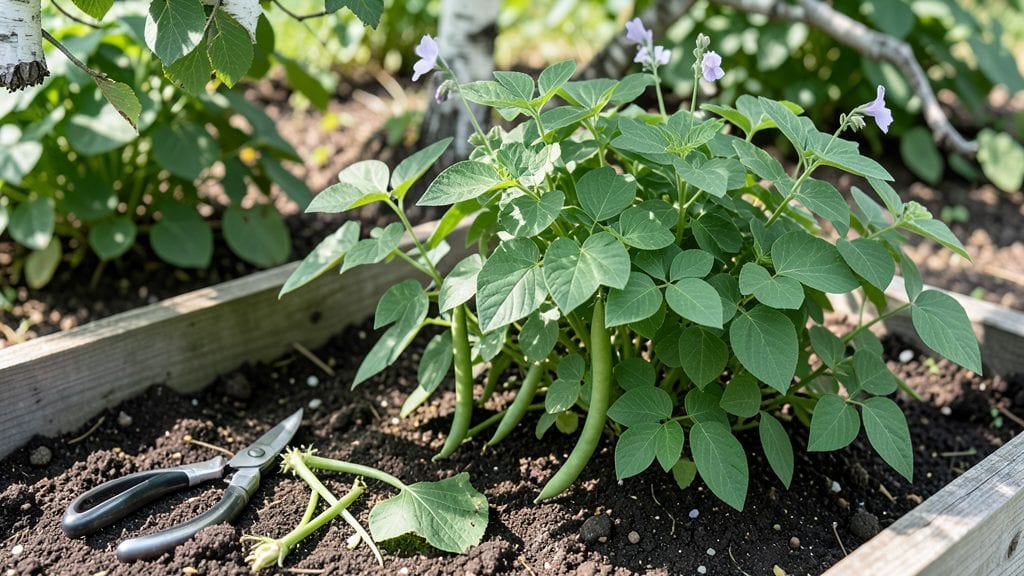
Pruning bean plants isn't just about shaping—it's the secret to doubling your harvest without adding more plants. 🌱 I learned this the hard way after watching my bush beans produce just a handful of pods while my neighbor's pole beans overflowed with beans.
The difference? Simple trimming at the right time.
You only need three tools: sharp pruning shears, a pair of gloves, and a clear morning for the job. For bush beans, pinch off the first few flowers to encourage stronger stems.
Pole beans need regular trimming of side shoots longer than 6 inches to keep energy focused on the main vine and fruit production. This isn't complicated—just strategic cuts that pay off in pounds of beans.
After pruning, you'll notice something magical: more airflow means fewer diseases, and the plants redirect energy from leaves to pods. Within two weeks, you'll see thicker vines and a surge of new flower clusters.
The best part? Your harvest window stretches longer because the plants keep producing instead of burning out.
This works for both bush and pole varieties, though the timing shifts slightly—bush beans get their first trim at flowering, while pole beans need ongoing maintenance every 2-3 weeks. Even if you've never pruned beans before, these steps are foolproof. Let's get those shears ready!
📚 In This Guide
- What you need
- Instructions
- Tips and common mistakes
- Wrapping up and next steps
What you need
- ● Pruning shears – Sharp, clean bypass pruners (avoid dull tools that crush stems). Quantity: 1 pair.
- ● Gloves – Garden gloves (nitrile-coated for grip and protection). Quantity: 1 pair.
- ● Disinfectant – 70% isopropyl alcohol or hydrogen peroxide (3%) (to sterilize tools between cuts). Quantity: Small spray bottle or wipe.
- ○ Garden twine or plant ties – Optional but helpful (for supporting pruned plants if needed). Quantity: 1 roll.
- ○ Compost or mulch – For disposing of pruned material (optional, but great for nutrient recycling!).
- ● Mature bean plants – Prune only after plants have established 4–6 true leaves (usually 3–4 weeks after planting).
- ● Sunny day – Choose a mild, dry morning to prune (avoid pruning in extreme heat or wet conditions).
- ● Patience & observation – Keep an eye on plant health post-pruning for 2–3 days to monitor recovery.
Step-by-step guide to pruning bean plants for healthier growth
Healthy beans need just a little help to grow straight and produce more pods. Here’s how to trim them right.
🌱 Step 1: Identify and Remove Damaged or Diseased Growth
Start by inspecting your bean plants for any yellowed, browned, or wilted leaves, stems, or pods. These are signs of disease, pests, or environmental stress. Use clean, sharp pruning shears to snip away any affected parts at the base of the plant. This prevents the spread of disease and helps the plant focus its energy on healthy growth.
Don’t skip this step—even small damaged areas can weaken the plant over time. If you see black spots or mold, remove those leaves immediately. Healthy leaves should be a vibrant green, and stems should feel firm to the touch. If a stem feels mushy or hollow, it’s time to trim it back.
✂️ Step 2: Thin Out Overcrowded Stems and Leaves
Bean plants can get leggy or produce too many side shoots, which compete for nutrients and sunlight. Focus on the main stem and the first few strong side branches. Remove any weak or crowded stems by cutting them off at the base with your pruning shears. Aim to leave about 3-4 inches of space between remaining stems to improve airflow and reduce humidity around the plant.
For bush beans, you’ll want to keep the plant compact—trim back any long, sprawling vines that aren’t producing pods. For pole beans, prune back any side shoots that grow below the first 6 inches of the main stem, as these often produce fewer pods. This encourages the plant to focus its energy upward, where it can produce more harvestable beans.
🌿 Step 3: Encourage Airflow and Support Growth
After trimming, step back and check for any remaining crowded areas. If branches are still too close together, gently spread them apart to improve airflow. This helps prevent fungal diseases like powdery mildew, which thrive in damp, shaded conditions. If your bean plants are growing on a trellis or stakes, gently tie any long or weak stems to provide support.
Finally, watch for new growth after pruning. Healthy bean plants will bounce back quickly, producing more leaves and flowers within 7-10 days. Keep an eye out for any new signs of stress or disease, and address them promptly. With the right trimming, your bean plants will reward you with a bountiful harvest of fresh, tender pods.
Tips & tricks for pruning bean plants like a pro
Pruning bean plants might seem simple, but these small tricks make all the difference between a struggling garden and a thriving harvest.
Timing is Everything: The best time to prune is in the morning when the dew has evaporated but the plants are still cool. This reduces stress on the plants and gives them time to recover before the heat of the day. I always prune on a cloudy day if possible—less sun means less water loss for the plants.
Tool Selection Matters: Never use dull or dirty pruning shears—clean, sharp tools make precise cuts that heal faster. I keep a small bottle of rubbing alcohol handy to wipe down my shears between cuts on different plants to prevent cross-contamination. For bush beans, regular hand pruners work great, but for taller pole beans, I reach for longer-handled loppers to avoid straining my back.
Visual Cues for Healthy Growth: After pruning, healthy bean plants should show new growth within 7-10 days as mentioned in Step 3. Look for fresh green leaves that stand upright rather than wilting. If you see yellowing leaves after pruning, it might mean you removed too much foliage—next time, leave slightly more growth on the plant. The key is balance: enough pruning to improve airflow, but not so much that you shock the plant.
Seasonal Considerations: Early in the season, focus on removing only the most damaged growth to give plants time to establish themselves. Later in the season, when plants are more established, you can be more aggressive with pruning to redirect energy to pod production. I always do a final light pruning just before harvest to encourage one last flush of pods.
Pro Tips for Prune Bean Plants
- Pruning bean plants might seem simple, but these small tricks make all the difference between a struggling garden and a thriving harvest.
- Timing is Everything: The best time to prune is in the morning when the dew has evaporated but the plants are still cool.
- Tool Selection Matters: Never use dull or dirty pruning shears—clean, sharp tools make precise cuts that heal faster.
Frequently asked questions
Got questions about pruning bean plants?
You’re not alone! Whether you're a first-time gardener or a seasoned green thumb, these common queries will help you trim with confidence and maximize your harvest.
When is the best time to prune bean plants?
Prune pole beans when they reach 12–18 inches tall, focusing on the main stem and side branches. For bush beans, light pruning (removing yellowing leaves or crowded stems) can happen throughout the growing season. Avoid heavy pruning later in the season—it can reduce pod production. Timing matters!
How much should I cut back my bean plants?
For pole beans, trim back 1/3 of the plant’s height to encourage bushier growth and better airflow. For bush beans, remove only yellow or diseased leaves or stems growing toward the center. Never cut more than 20% of the plant at once—think "less is more" for a healthy harvest.
Can I prune bean plants too much?
Yes! Over-pruning stresses plants, reducing energy for pod development. Stick to selective trimming—focus on removing dead, crowded, or weak growth. If you’ve already pruned heavily, give your plants time to recover before expecting a full harvest. Patience pays off!
What if my bean plants don’t need pruning?
Bush beans often thrive without pruning, but you can still remove lower leaves to improve airflow and reduce disease risk. Pole beans benefit from pruning, but if yours are growing well with minimal intervention, skip it! Observe your plants—healthy foliage and pods are your best guide.
How do I prune beans without hurting the harvest?
Use clean, sharp shears to make cuts just above a leaf node (where new growth emerges). Avoid tearing stems, and always prune on a dry, sunny day to prevent fungal issues. Focus on shape, not size—a balanced plant yields more pods!
Wrapping up and next steps
Pruning your bean plants might seem like extra work, but it’s the secret to a healthier, more productive garden! 🌱 By following these three simple steps—removing yellow leaves, trimming leggy growth, and thinning crowded pods—you’ll encourage stronger vines, better airflow, and a harvest bursting with flavor.
Now that you’re armed with the know-how, there’s no time like the present to grab your shears and get pruning! Your future self (and taste buds) will thank you.
Next step: Pick a sunny day, gather your tools, and start with just one plant—confidence grows with every snip! 🌟