
Pruning
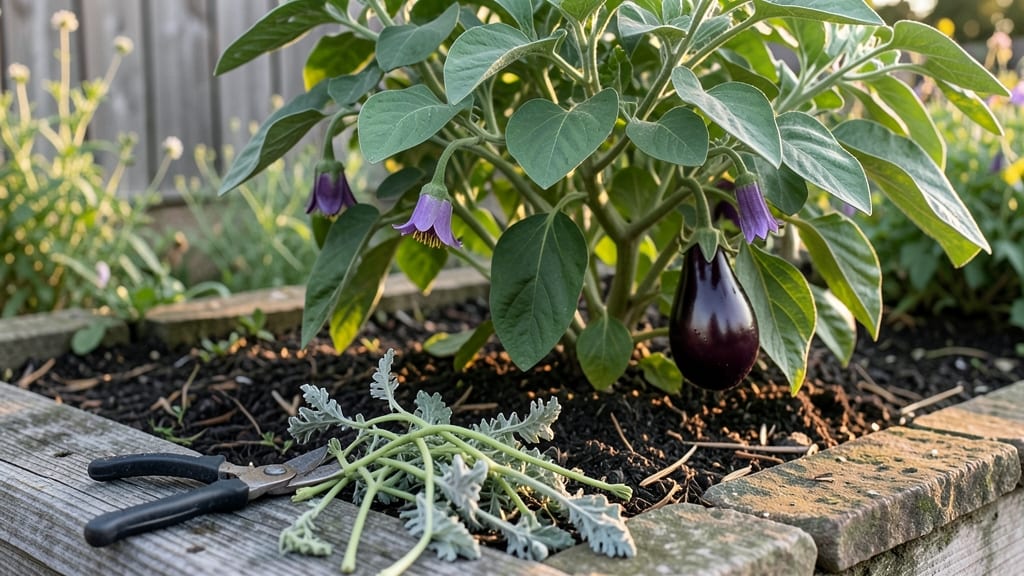
Pruning aubergine plants isn't just about shaping them—it's about unlocking their full fruit potential. ✨ I learned this the hard way after my first harvest turned out sparse and scraggly, despite having what looked like healthy plants.
The secret lies in three precise cuts that redirect energy where it matters most: toward bigger, more abundant fruit.
You'll need sharp pruning shears, a clean cutting surface, and about 20 minutes of focused time. The right tools prevent damage, and the process itself is simpler than it looks—no advanced horticulture degree required.
Start by removing any suckers (those little shoots growing between the main stem and branches) when they're still small, usually within a week of appearing.
What you'll end up with is a plant that focuses its energy on producing fruit instead of growing unnecessary foliage. Expect thicker stems, more robust branches, and a harvest that could double in size compared to unpruned plants.
The key is consistency: check your plants weekly during the growing season and trim as needed.
This method works equally well for container-grown plants and those in the ground, though greenhouse varieties may need slightly less aggressive pruning due to their controlled environment. The payoff? Eggplants that look like they belong in a farmer's market display, not just your backyard.
📚 In This Guide
- What you need
- Instructions
- Tips and common mistakes
- Wrapping up and next steps
What you need
- ● Sharp pruning shears or bypass pruners – Choose sterilized, bypass-style shears (avoid anvil pruners to prevent crushing stems). A 7- to 10-inch blade works best for most aubergine plants.
- ● Clean, sharp garden knife or razor blade – For precise cuts on smaller stems or suckers (especially useful if shears are too bulky).
- ● Disinfectant solution – Mix 1 part rubbing alcohol (70% isopropyl) or hydrogen peroxide (3%) with 9 parts water to sterilize tools between cuts and prevent disease spread.
- ○ Gloves (optional but recommended) – Wear nitrile or garden gloves to protect against thorns (some varieties have them!) and sap irritation.
- ● Compost or mulch – A small bag or bucket to collect pruned material for composting.
- ● Staking or support system (if needed) – If your aubergine plants are tall or top-heavy, have bamboo stakes or soft ties ready to support pruned branches.
- ● Hand lens or magnifying glass – Helps spot early signs of pests or disease on stems before pruning.
- ○ Pruning sealant (optional) – A wound dressing (like tree sealant) to coat larger cuts and reduce water loss (though most aubergine plants heal fine without it).
- ● Spray bottle with water – Keeps tools clean and prevents sap from clogging blades.
- ● Notebook & pen – To track pruning dates, plant responses, and note any unusual growth patterns.
How to prune aubergine plants for healthier growth and bigger harvests
Here's how to shape your aubergine plants for maximum fruit production—no fancy tools required.
✂️ Step 1: Remove Lower Leaves to Improve Airflow
Start by stripping away the bottom 6-8 inches of leaves from each stem. These lower leaves block airflow and trap moisture, creating perfect conditions for fungal diseases like powdery mildew. Use clean, sharp pruners or your fingers to gently twist leaves off—never tear them, as this damages the plant.
Focus on leaves that touch the soil or nearby foliage. You'll see a noticeable difference in sunlight reaching the lower branches, which encourages stronger growth higher up where fruit develops. This step also makes harvesting easier later—fewer leaves mean less obstruction when you reach for those glossy purple fruits.
✂️ Step 2: Prune Suckers for Stronger Fruit Production
Look for small shoots growing between the main stem and branches—these are called suckers. They steal energy from fruit production, so pinch them off when they're about 2-3 inches long. Use your thumb and forefinger to snap them cleanly at the base, or cut with pruners just above a leaf node.
I always prune suckers on the lower half of the plant first, then work my way up. This redirects the plant's energy to existing flowers and fruit rather than new growth. You'll know you're doing it right when you see more flowers forming on the main branches within 2-3 weeks.
✂️ Step 3: Trim Overcrowded Branches to Prevent Disease
Examine the plant for branches growing too close together or crossing each other. These create shaded areas where humidity lingers, inviting pests and diseases. Cut back any branches that are rubbing against others or growing inward, always making your cuts just above a leaf node at a 45-degree angle.
For aubergines, I never remove more than 20-25% of the plant's foliage at once. This keeps the plant strong enough to support fruit while still improving airflow. After pruning, step back and admire your plant—you should see an open, airy structure that lets sunlight penetrate to the center.
💧 Step 4: Maintain Pruning Through the Season
Check your aubergine plants weekly for new suckers or overcrowded growth. Regular maintenance prevents the plant from becoming stressed. After each pruning session, water the base deeply to help the plant recover. You'll notice new growth appearing within 5-7 days—this is your signal that the plant is responding well.
As the season progresses, focus on removing any yellowing or diseased leaves immediately. This prevents the problem from spreading to healthy parts of the plant. By late summer, you'll see your pruning efforts pay off with larger, healthier aubergines and fewer empty branches.
Tips & tricks for pruning aubergine plants
Aubergine plants respond beautifully to strategic pruning—here's how to maximize your harvest without stressing the plant.
Timing is Everything: Early morning is the best time to prune, when the plants are hydrated and cool. Avoid pruning in the heat of the day or after heavy rain—this can stress the plant and make it more susceptible to disease. I've found that pruning every 2-3 weeks throughout the growing season keeps my aubergines thriving, especially when combined with the weekly checks mentioned in Step 4.
Tool Prep Matters: Always sanitize your pruners with rubbing alcohol before and after use to prevent spreading diseases between plants. I keep a small bottle of alcohol in my gardening toolkit for quick disinfection. For larger plants, I've found that using clean, sharp scissors works just as well as pruners when making precise cuts—just make sure to make clean cuts at the 45-degree angle mentioned in Step 3.
Visual Cues for Pruning: When removing suckers in Step 2, look for the small triangular leaf structure that forms where the sucker meets the main stem. This is your leaf node—the perfect place to make your cut. For overcrowded branches in Step 3, imagine you're creating a "window" in the plant's canopy to let sunlight reach the center. You'll know you've done it right when you can see through to the center of the plant from multiple angles.
Seasonal Adjustments: In cooler climates, you might need to wait until after the last frost before starting your pruning routine. I've seen aubergine plants in Zone 7 that needed an extra week of protection before pruning could begin safely. Also, if you're growing in containers, be extra gentle with pruning—container-grown plants have less room to recover from stress, so stick to the 20-25% foliage removal guideline strictly.
Pro Tips for Pruning Aubergine Plants
- Aubergine plants respond beautifully to strategic pruning—here's how to maximize your harvest without stressing the plant.
- Timing is Everything: Early morning is the best time to prune, when the plants are hydrated and cool.
- Tool Prep Matters: Always sanitize your pruners with rubbing alcohol before and after use to prevent spreading diseases between plants.
Frequently asked questions
Got questions about pruning aubergine plants? You’re not alone—gardeners often wonder about timing, techniques, and how to avoid mistakes. Here are answers to the most common queries to help you prune like a pro and maximize your harvest!
When is the best time to prune aubergine plants?
Prune your aubergine plants early in the morning when the plants are still turgid (full of water) and temperatures are cooler. Avoid pruning during extreme heat or late in the day, as this can stress the plant. Focus on pruning young plants (4-6 weeks old) to encourage bushier growth and mature plants (after flowering) to redirect energy to fruit production.
How do I know which branches to cut?
Look for three types of cuts:
- Topping cuts: Trim the main stem just above a leaf node when the plant reaches your desired height (usually 3-4 feet).
- Side branch cuts: Remove branches growing inward or crossing over others to improve airflow and sunlight exposure.
- Sucker cuts: Snip off small shoots growing between the main stem and a branch (these steal energy from fruit production).
What if I skip pruning my aubergine plants?
Skipping pruning won’t kill your plants, but you’ll likely see fewer, smaller fruits and more stress from overcrowding. Without pruning, aubergines may produce too many flowers at once, leading to flower drop or stunted growth. Pruning helps balance energy between foliage and fruit, ensuring a healthier, more productive plant.
Can I prune aubergine plants too much?
Yes! Over-pruning can weaken the plant and reduce its ability to produce fruit. Never remove more than 1/3 of the plant’s foliage at once. Focus on selective cuts—prioritize removing dead, diseased, or overly competitive branches while leaving enough leaves to photosynthesize. If you’ve already pruned too aggressively, pause and let the plant recover before resuming.
What should I do with the pruned branches?
Don’t toss those clippings! Here’s what to do:
- Compost them: Healthy, disease-free branches break down well in compost.
- Use as mulch: Spread smaller trimmings around the base of the plant to retain moisture.
- Avoid composting if diseased: If branches show signs of blight or pests, discard them in the trash to prevent spreading issues.
Wrapping up and next steps
Pruning your aubergine plants isn’t just about shaping them—it’s a game-changer for bigger, healthier harvests! By mastering those three strategic cuts, you’ll encourage stronger growth, better airflow, and a bounty of plump, delicious fruits. 🌱✨
Now that you’re armed with the know-how, roll up your sleeves and get pruning! Start with just one plant to practice, and soon you’ll be a pro—your garden (and taste buds) will thank you. Happy growing!