
Pruning
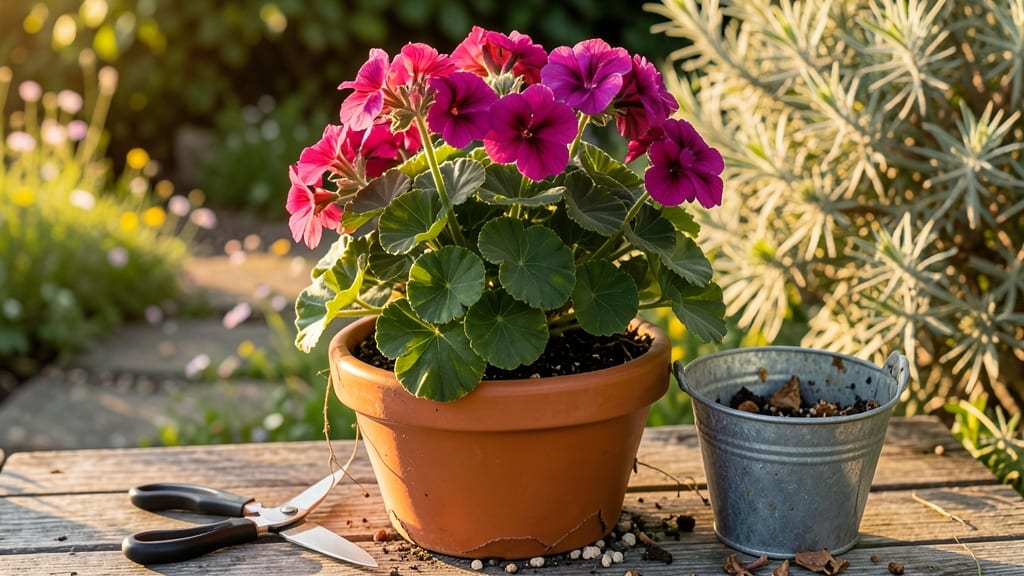
Pruning geranium plants isn't just about cutting back—it's the secret to keeping them blooming like crazy all season. 🌸 I learned the hard way that skipping this step means leggy stems and fewer flowers, but two strategic cuts a year transform my geraniums from straggly to showstopping.
The first cut in early spring clears out winter damage, while the second in midsummer encourages a second flush of blooms that lasts until frost.
You only need three things: sharp pruning shears, a sunny spot, and about 15 minutes. The shears should cut cleanly without crushing stems—dull blades tear tissue and invite disease. Work on a dry morning when the plants are perky, and always remove any yellow or brown leaves first.
Geraniums are tough, but they respond best to precise cuts just above a leaf node where new growth can sprout.
After pruning, your plants will look like they’ve been hit by a lawnmower—but don’t panic. Within two weeks, you’ll see fresh, vibrant green shoots pushing out from the base. The blooms that follow are bigger, brighter, and last longer than before.
This isn’t just about aesthetics; pruned geraniums also resist powdery mildew better and produce more flowers per stem.
Here’s the kicker: the same technique works for both patio geraniums and those in garden beds. Whether you’re dealing with zonal geraniums or the trailing types, these two cuts keep them compact, bushy, and bursting with color.
And if you miss a year? No worries—geraniums forgive easily. Just start fresh next spring and watch them bounce back.
📚 In This Guide
- What you need
- Instructions
- Tips and common mistakes
- Wrapping up and next steps
What you need
- ● Sharp pruning shears – Bypass pruners (4-6 inch blades) for clean cuts; sterilize with rubbing alcohol before use.
- ● Gloves – Garden gloves (nitrile or leather) to protect hands from thorns and sap.
- ● Disinfectant – 70% isopropyl alcohol or hydrogen peroxide (3%) to sterilize tools between cuts.
- ○ Pruning saw (optional but helpful) – For thick, woody stems (5+ inches in diameter).
- ● Trash bag or compost bin – To discard pruned stems (avoid leaving them near plants to prevent disease).
- ● Watering can or hose – For post-pruning hydration (1 gallon per plant for large geraniums).
- ● Plant food or fertilizer – Balanced 10-10-10 or bloom booster (apply 2-4 weeks after pruning).
- ● Mulch – Organic mulch (shredded bark or straw) to retain moisture and deter weeds.
- ● Plant markers – If pruning multiple varieties, label stems to track regrowth.
- ● Sunscreen or long sleeves – For sun-sensitive skin (geraniums can be prickly!).
Step-by-Step instructions for pruning geranium plants
Here’s my foolproof method for keeping geraniums lush and blooming all season with just two clean cuts.
✂️ Step 1: First Cut After Initial Blooming
Wait until your geraniums finish their first flush of flowers—you’ll know it’s time when about 75% of blooms have faded. Use sharp, clean pruning shears to cut back each stem to just above a set of healthy leaves, about 2-3 inches above the base. This encourages bushier growth and prevents leggy stems.
I always make cuts at a 45-degree angle to increase water absorption and reduce rot risk. Avoid cutting too close to the base—you want to leave enough leaf surface to support new growth. If a stem feels woody or dead, trim it back further until you hit green tissue.
✂️ Step 2: Second Cut for Mid-Season Renewal
About 6-8 weeks after the first cut, give your geraniums another trim when you see stems getting sparse or leggy again. This time, cut back to half the height of the plant, but never below the original wood. You’ll see fresh, compact growth within 2-3 weeks—this is your signal the plant is responding well.
Remove any yellow or brown leaves during this process. They’re not just unsightly—they sap energy from the plant. I also snip off any flower stalks that appear after the second cut to redirect the plant’s focus toward new foliage rather than seed production.
🌿 Step 3: Late-Season Maintenance for Winter Prep
As temperatures drop below 50°F at night, stop all pruning. Instead, focus on cleaning up—remove any remaining dead blooms and trim back any stems that have turned woody or diseased. This keeps the plant tidy and reduces overwintering pests.
If you’re growing geraniums in pots, move them to a sheltered spot with partial shade and reduce watering. In colder climates, bring potted geraniums indoors before the first frost. I’ve kept mine alive for years by overwintering them in a bright, cool room with just enough water to keep the soil slightly moist.
💧 Step 4: Post-Pruning Care for Strong Regrowth
After each major pruning, water deeply to help the plant recover. Geraniums are drought-tolerant, but they’ll bounce back faster with 1 inch of water per week during active growth. I always fertilize lightly with a balanced 10-10-10 formula about 2 weeks after pruning to support new growth.
Watch for new shoots emerging from the base or along the stems. These are your plant’s way of telling you it’s ready to grow again. If you notice any signs of stress—like wilting or yellowing leaves—adjust your watering or light exposure. Geraniums thrive in full sun to partial shade, but they’ll tolerate a bit of shade if the weather gets too hot.
Tips & tricks for perfect pruning of geranium plants
These simple tricks will help you transform your geraniums into lush, blooming plants all season long.
The Cutting Angle Matters: When you make those 45-degree cuts in Step 1, you're not just being precise—you're actually helping your plants drink better. The angled cut increases the surface area for water absorption while preventing rot by keeping water from pooling at the base. I've seen plants recover faster when I take this extra second to angle my cuts properly.
Timing Secret for Second Cuts: Those 6-8 weeks between cuts in Step 2 aren't arbitrary—they give your geraniums enough time to recover and develop new growth. Watch for stems that look sparse or leggy rather than relying strictly on the timeline. In hotter climates, you might need to trim sooner, while cooler areas can stretch that window to 10 weeks.
Winter Prep Wisdom: The 50°F nighttime temperature threshold in Step 3 is your cue to switch from pruning to maintenance mode. At this point, geraniums are preparing for dormancy, so focus on cleanup rather than aggressive pruning. I've found that removing diseased stems now prevents overwintering pests from establishing themselves for next season.
Post-Pruning Recovery: That 1 inch of water per week in Step 4 is crucial, but don't overdo it. Geraniums are drought-tolerant, but they need consistent moisture after pruning to establish new roots. I always water deeply in the morning so the foliage has time to dry before evening—this prevents fungal issues that can stress already recovering plants.
Pro Tips for Pruning Geranium Plants
- These simple tricks will help you transform your geraniums into lush, blooming plants all season long.
- The Cutting Angle Matters: When you make those 45-degree cuts in Step 1, you're not just being precise—you're actually helping your plants drink better.
- Timing Secret for Second Cuts: Those 6-8 weeks between cuts in Step 2 aren't arbitrary—they give your geraniums enough time to recover and develop new growth.
Frequently asked questions
Got questions about keeping your geraniums thriving with the perfect prune? Here are some of the most common ones—and their answers!
When is the best time to prune geraniums for maximum blooms?
Prune geraniums twice a year for best results: early spring (just before new growth starts) and late summer/early fall (after blooming slows). Avoid pruning in extreme heat or cold—wait for mild weather (50–75°F). This timing encourages bushier growth and nonstop blooms!
How much should I cut back geraniums when pruning?
For spring pruning, cut back one-third of the plant’s height to encourage fresh growth. In late summer, trim half of the leggy stems to promote fall/winter blooms. Never remove more than 50% of the plant at once—this can stress it. Use clean, sharp shears for the cleanest cuts!
What if I prune at the wrong time? Will my geraniums die?
Geraniums are tough! Light pruning mistakes (like trimming too late in fall) may delay blooming, but they won’t die. Harsh errors (like cutting into woody stems or pruning in freezing temps) can weaken the plant. If you over-prune, give it time—new growth will return with proper care (sun, water, and fertilizer).
Can I propagate geraniums from cuttings after pruning?
Save your trimmings
—geraniums root easily. Dip cuttings in rooting hormone (optional) and place them in water or moist potting mix. Keep them in bright, indirect light and mist occasionally. In 2–4 weeks, you’ll have baby geraniums ready to transplant!
Do geraniums need pruning if grown indoors?
Yes! Indoor geraniums benefit from light pruning every 4–6 weeks to maintain shape and encourage blooms. Pinch back leggy stems and remove spent flowers. Since indoor light is weaker, avoid heavy pruning—stick to 10–20% of the plant’s height. Rotate the pot weekly for even growth!
Wrapping up and next steps
Pruning your geraniums isn’t just about keeping them tidy—it’s the secret to vibrant, long-lasting blooms all year round! 🌸 With just two clean cuts, you can encourage bushier growth, prevent legginess, and even revive tired plants.
Remember, timing and sharp tools are your best friends, so don’t hesitate to grab those shears and get pruning.
Now that you’re armed with the know-how, take action this weekend! Pick a sunny day, gather your supplies, and give your geraniums the TLC they deserve. Your garden—and your future blooms—will thank you!