
Vegetables
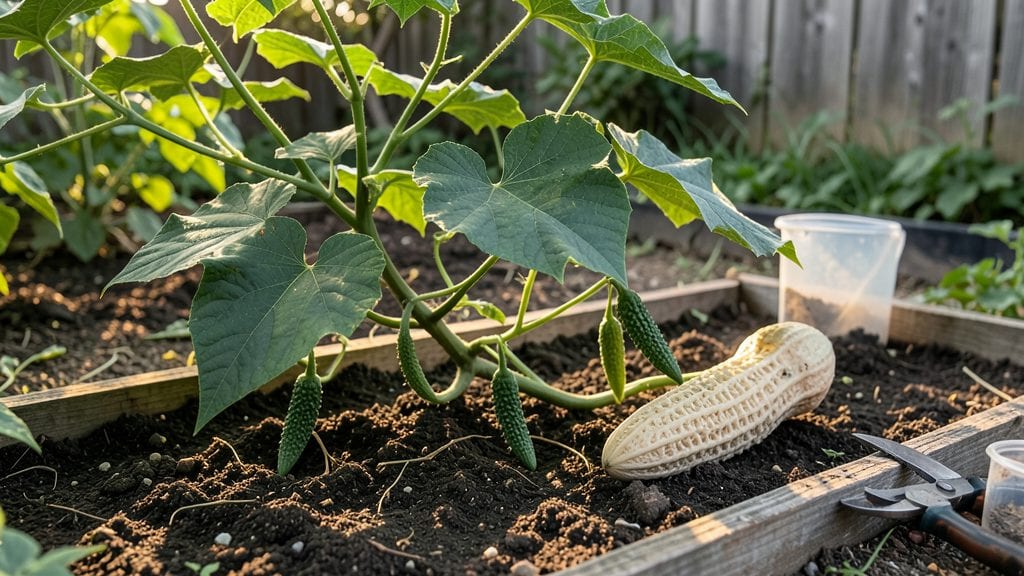
Planting ridge gourds gives you fast-growing vines that produce harvests in just six months—something I discovered after struggling with slow-moving cucurbits. 🌱 The key is getting them in the ground at the right time, with proper spacing and soil prep that encourages rapid root establishment.
Most gardeners overlook how quickly these vines spread, leading to crowded plants and missed harvests.
You’ll need well-draining soil mixed with compost, stakes or trellises for support, and a sunny spot that gets at least six hours of light daily. Ridge gourds thrive in warm climates but can also grow in cooler zones if planted after the last frost.
The secret to their speed lies in consistent moisture—keep the soil damp but never soggy during the first few weeks after planting.
By following the spacing guidelines (18-24 inches apart), you’ll avoid tangled vines and ensure each plant gets enough sunlight and nutrients. Within 3-4 weeks, you’ll see vigorous growth, and the first gourds will appear around 60-70 days after planting.
The real payoff comes when you’re harvesting 10-15 pounds of gourds over the season with minimal effort.
This method works for both in-ground planting and raised beds, making it adaptable to small spaces or urban gardens. The only rule? Don’t rush the process—ridge gourds reward patience with a bountiful, low-maintenance harvest. Ready to grow yours?
📚 In This Guide
- What you need
- Instructions
- Tips and common mistakes
- Wrapping up and next steps
What you need
- ● Ridge gourd seeds: 10–20 seeds (choose disease-resistant varieties like "Pusa Madhavi" or "Arka Suryamukhi").
- ● Well-draining soil: Mix garden soil with compost (ratio 3:1) or use potting mix for containers.
- ● Fertilizer: Organic: Cow dung manure (2 kg per 10 sq ft) or vermicompost.
- ● Synthetic: 10-10-10 NPK fertilizer (1 tbsp per plant at planting).
- ● Watering can or hose: With a fine nozzle for gentle watering.
- ● Trellis or support: Bamboo sticks, wire mesh, or a sturdy fence (6–8 ft tall).
- ○ Pesticides (optional): Neem oil (2%) or copper-based spray to deter pests.
- ● Sunlight: Full sun (6–8 hours daily).
- ● Climate: Warm season (70–90°F). Ridge gourds hate frost!
- ● Space: 3–4 ft between plants or 6 ft apart in rows.
- ○ Containers (optional): 5-gallon pots with drainage holes for balconies.
Step-by-step instructions for ridge gourd planting
Here’s how to coax these vigorous vines into action—fast germination and rapid growth are the name of the game.
🌱 Step 1: Prepare Seeds and Planting Site
Ridge gourd seeds germinate best when pre-soaked for 6-8 hours in lukewarm water. Place them in a bowl, cover, and let them soak until the outer coating softens noticeably. This trick cuts germination time from 10-14 days to just 5-7 days—real talk, it’s worth the wait.
Choose a site with full sun exposure (6+ hours daily) and well-draining soil. Ridge gourds despise soggy roots, so if your soil feels heavy, amend it with 2-3 inches of compost mixed into the top 6 inches. Work the soil until it crumbles easily between your fingers—this ensures roots spread quickly rather than struggling through compacted earth.
🌱 Step 2: Sow Seeds at the Right Depth and Spacing
Plant seeds 1 inch deep, spacing them 3-4 feet apart in rows that run 6 feet apart. Ridge gourds sprawl aggressively, so give them room to stretch without competing for nutrients. I like to draw a light grid in the soil with a stick to keep rows straight—it’s a small effort that pays off when vines take off.
Cover the seeds lightly with soil and water gently to avoid displacing them. A fine mist from a spray bottle keeps the soil surface moist without creating mud. Here’s the thing—ridge gourds hate being disturbed, so mark each seed’s location with a small stake or biodegradable marker to avoid accidentally digging up a sprout later.
☀️ Step 3: Provide Warmth and Consistent Moisture
Germination thrives in soil temperatures between 70-85°F. If your climate runs cooler, use a black plastic mulch sheet to warm the soil. Lay it down a week before planting to create a microclimate that speeds up sprouting. Water the area lightly every 2-3 days until you see the first true leaves—this keeps the soil evenly moist without drowning the seeds.
Once seedlings emerge, reduce watering to 1-2 inches per week, focusing on deep soakings rather than frequent light waterings. Ridge gourds develop deep root systems, and shallow moisture encourages weak, surface roots. You’ll know you’re on track when the vines start climbing vigorously within 3-4 weeks.
🪴 Step 4: Train Vines and Support Growth
Ridge gourds need sturdy support to thrive. Install 6-foot tall trellises or strong stakes near each plant as soon as vines reach 12 inches tall. Weave the vines gently through the trellis or tie them to stakes with soft plant ties—never use wire, which can damage tender stems. This keeps fruits off the ground, reducing rot and making harvesting easier.
Watch for the first male flowers to appear (they have a slender stem and no bulb at the base). These are followed by female flowers, which have a tiny gourd forming at the base. Here’s where it gets fun—ridge gourds are self-pollinating, but a light shake of the vines in the morning encourages cross-pollination and heavier fruit sets.
✂️ Step 5: Harvest and Maintain Through the Season
Ridge gourds are ready to harvest when they reach 12-18 inches long and the skin turns a dull green with faint ridges. Use a sharp knife to cut the fruit from the vine, leaving a 1-inch stem attached. This prevents the vine from splitting and encourages more flowers to form. Harvest every 3-5 days during peak production to keep the plant focused on fruit rather than seed development.
Continue watering deeply 2-3 times per week throughout the season, and fertilize lightly with a balanced organic fertilizer (10-10-10) every 4-6 weeks. Prune any yellowing or diseased leaves immediately to keep the plant healthy. With this care, you’ll enjoy a 6-month harvest window—far longer than most gardeners expect!
Tips & tricks for fast ridge gourd growth
Fast germination and vigorous growth start with these precise techniques—don't skip these details if you want that 6-month harvest window.
Soaking Secret: The 6-8 hour soak isn't just about speed—it's about breaking dormancy. Test your seeds by dropping them in water: they're ready when they sink to the bottom with a soft coating. I've seen seeds that didn't sink properly take twice as long to germinate, so don't rush this step!
Soil Temperature Matters: Those 70-85°F soil temps are critical for fast germination. Use a soil thermometer to check—if your climate runs cooler, lay down that black plastic mulch a full week before planting. I've watched germination times drop from 10 days to 5 days just by warming the soil properly.
Vine Support Strategy: Don't wait until vines reach 12 inches to install trellises—set them up right after planting. Ridge gourds grow aggressively, and giving them support early prevents tangled messes. I use bamboo stakes tied with soft twine for flexibility as vines grow.
Harvest Timing: The 12-18 inch size range is your sweet spot—harvesting earlier gives you tender, smaller gourds perfect for stir-fries, while waiting longer produces the classic ridge gourd texture. I check for that dull green skin with faint ridges every 3-5 days during peak season.
Pro Tips for Ridge Gourd Planting
- Fast germination and vigorous growth start with these precise techniques—don't skip these details if you want that 6-month harvest window.
- Soaking Secret: The 6-8 hour soak isn't just about speed—it's about breaking dormancy.
- Soil Temperature Matters: Those 70-85°F soil temps are critical for fast germination.
Frequently asked questions
Got questions about growing ridge gourd? You’re not alone! Here are some of the most common concerns—and straightforward answers—to help you grow like a pro.
When is the best time to plant ridge gourd?
Ridge gourd thrives in warm weather, so plant seeds after the last frost when soil temps hit 60°F (15°C). In most regions, this means late spring to early summer. For tropical climates, you can plant year-round, but avoid heavy rains during flowering.
How long does it take for ridge gourd to grow and harvest?
With the right conditions, ridge gourd vines can sprout in 7–10 days and produce fruit in 60–90 days. Harvest when gourds are 4–6 inches long and firm—younger gourds are sweeter! Overripe ones turn bitter, so check them weekly.
Can ridge gourd grow in containers or small spaces?
Ridge gourd is a vining plant but adapts well to containers (at least 10–12 inches deep). Use a trellis or cage to save space. Just ensure 6+ hours of sunlight daily and water consistently—containers dry out faster than garden beds.
What pests or diseases should I watch for?
Common issues include aphids, powdery mildew, and cucumber beetles. Prevent pests with neem oil or companion planting (try marigolds!). For mildew, improve airflow and avoid overhead watering. Remove infected leaves immediately to stop spread.
What can I do if my ridge gourd plants aren’t flowering?
Lack of flowers? Check these fixes:
- Sunlight: Needs 6+ hours/day—move to sunnier spot if needed.
- Water: Keep soil consistently moist but not soggy.
- Fertilizer: Use a balanced 10-10-10 or compost tea when vines start.
- Pollinators: Hand-pollinate if bees are scarce (use a soft brush to transfer pollen).
Wrapping up and next steps
Ridge gourd planting is a rewarding journey that yields fast-growing vines and delicious, nutrient-packed harvests in just six months! With the right soil, spacing, and care, you’ll enjoy a bountiful crop—whether for fresh eating, stir-fries, or pickling. 🌱
Ready to dig in? Start by gathering your supplies, then pick a sunny spot in your garden. Once your seeds sprout and vines climb, you’ll be savoring homegrown ridge gourds in no time. Happy planting! 🌿