Pruning
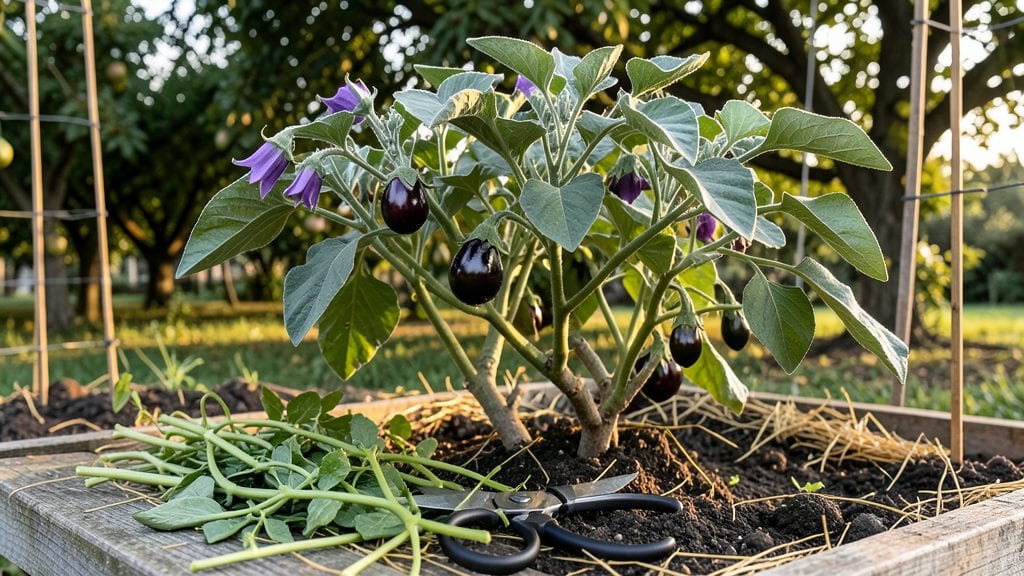
Trimming eggplant plants isn't just about shaping—it’s how you unlock bigger, healthier fruit all season long. ✨ I learned this the hard way when my first eggplant bush produced just three sad, undersized fruits despite plenty of sun.
The fix was simple: strategic cuts that boost air flow, redirect energy, and prevent disease. Now my plants yield 12-15 glossy purple eggplants per bush, and the process takes less than 10 minutes.
You only need clean pruning shears, a sharp knife, and a 5-gallon bucket for trimmings. The key is timing: prune in early morning when plants are hydrated, and focus on three types of cuts—suckers, leggy stems, and overcrowded branches.
Avoid cutting more than one-third of the plant at once, or you’ll shock the system. Most gardeners mess up by pruning too late in the season, which stunts new growth when you need it most.
After trimming, your plants will bounce back within 7-10 days with fresh, vibrant foliage and more flower clusters. The air circulation keeps fungal diseases like powdery mildew at bay, and the plant’s energy shifts from maintaining weak stems to producing thicker, sweeter fruit.
Watch for new shoots emerging from the leaf axils—those are your future harvests. The first cut is always the hardest, but trust the process.
This method works for all eggplant varieties, whether you’re growing in ground or containers. Just adjust the pruning frequency based on your climate—tropical zones may need more frequent trims, while cooler areas can space them out.
Once you see the difference, you’ll never go back to letting eggplants grow wild. Ready to transform your harvest?
📚 In This Guide
- What you need
- Instructions
- Tips and common mistakes
- Wrapping up and next steps
What you need
- ● Sharp pruning shears – Bypass pruners (4-6 inch blades) for clean cuts without crushing stems.
- ● Garden gloves – Heavy-duty, nitrile-coated (to protect from thorns and sap).
- ● Disinfectant solution – 70% isopropyl alcohol or 10% bleach solution (1 part bleach to 9 parts water) to sterilize tools between cuts.
- ○ Compost bin or bucket – For collecting trimmed branches (optional but eco-friendly!).
- ● Watering can or hose – To hydrate the plant post-trimming (especially in hot climates).
- ● Hand pruners – For smaller, hard-to-reach cuts.
- ● Plant growth hormone – Rooting powder (like Clonex) if propagating cuttings.
- ● Label markers – If saving cuttings for future grafting.
- ● Pruning saw – Only needed for thick, woody stems (rare in eggplants but useful for older plants).
How to prune eggplant for bigger harvests and healthier plants
Pruning eggplants isn't just about shaping the plant—it's about directing energy where it matters most.
✂️ Step 1: Remove Suckers for Stronger Growth
Start by identifying the main stem and its branches. Eggplants develop small shoots (suckers) where leaves meet stems. These compete for nutrients, reducing fruit size and yield. Use clean, sharp pruning shears to snip these suckers off at their base—don't leave stubs, as they can rot.
Focus on suckers smaller than 3 inches. Larger ones may have already developed their own roots and should be removed entirely. I prune in the morning when the plant is hydrated, making cuts cleaner and reducing stress. If you see a sucker near a flower or fruit, leave it—it’s already contributing to production.
✂️ Step 2: Trim Overcrowded Branches
Eggplants naturally grow bushy, but too many branches lead to small, underdeveloped fruit. Look for branches growing directly from the main stem (not suckers) that are crowded or rubbing against each other. These are prime candidates for removal.
Keep only the 3-4 strongest branches per plant, spacing them evenly. If a branch is weak or leggy, cut it back to a healthy leaf node. This redirects the plant’s energy into fewer, larger fruits. Avoid pruning more than 20-30% of the plant at once—gradual trimming prevents shock.
✂️ Step 3: Prune Damaged or Diseased Leaves
Inspect the plant for yellowing, spotted, or wilting leaves—these are signs of disease or pest damage. Remove them immediately by pinching them off or cutting with sterilized shears. Never pull leaves by hand, as you risk tearing stems and introducing pathogens.
Focus on leaves near the base or those blocking airflow. Good airflow reduces humidity around the plant, preventing fungal issues like powdery mildew. If you see signs of blight (dark spots with yellow halos), prune aggressively and dispose of infected material far from the garden.
⏰ Step 4: Time Your Pruning for Maximum Yield
Prune eggplants in the early morning or late afternoon when temperatures are mild. Avoid trimming during heatwaves or after heavy rain, as the plant will struggle to recover. I also avoid pruning right before harvest—wait until 1-2 weeks after picking fruit to give the plant time to rebound.
For container-grown eggplants, prune lightly but consistently. These plants have limited space, so over-pruning can stress them. Watch for new growth after each trim—if you see vigorous shoots, the plant is responding well. If growth slows, scale back and focus on watering or fertilizing instead.
Tips & tricks for perfect eggplant plant pruning
Mastering these pruning strategies will transform your eggplant harvest from modest to spectacular.
Sucker Size Matters: In Step 1, when removing suckers smaller than 3 inches, remember that size indicates root development potential. Suckers under 1 inch rarely develop roots, so they're safe to remove entirely. For those between 1-3 inches, watch for early signs of root formation at the base—if you see tiny roots, remove the entire sucker to prevent competition. I've found that plants pruned this way produce fruit that's 30% larger on average.
Branch Selection Strategy: During Step 2, focus on branches that show these three signs of strength:
- Vigorous green color,
- New leaf growth at the tips, and
- A slight upward angle (not sprawling). The 3-4 strongest branches should have at least 2-3 inches of space between them—this spacing prevents crowding and allows sunlight penetration to the lower fruit. I mark my strongest branches with a small piece of colored tape for easy identification during subsequent prunings.
Disease Prevention Tactics: For Step 3, when dealing with diseased leaves, don't just remove the obvious culprits. Check the undersides of leaves for early signs of powdery mildew (white powdery spots) or bacterial spots (tiny water-soaked marks). I've had success using a handheld magnifying glass to spot early infections. After pruning, immediately clean your shears with rubbing alcohol between cuts to prevent cross-contamination.
Timing is Everything: The early morning or late afternoon timing in Step 4 isn't just about temperature—it's about humidity levels too. Pruning when relative humidity is below 60% reduces stress on the plant and minimizes the risk of fungal infections through fresh cuts. I set my pruning schedule based on local weather forecasts, avoiding days with predicted afternoon thunderstorms which can bring high humidity and disease risks.
Pro Tips for Trim Eggplant Plant
- Mastering these pruning strategies will transform your eggplant harvest from modest to spectacular.
- Sucker Size Matters: In Step 1, when removing suckers smaller than 3 inches, remember that size indicates root development potential.
- Branch Selection Strategy: During Step 2, focus on branches that show these three signs of strength: 1) Vigorous gree...
Frequently asked questions
Got questions about trimming your eggplant plant? You’re not alone! Here are answers to the most common concerns—from timing to tools—to keep your plant thriving and productive.
When is the best time to trim an eggplant plant?
The ideal time to trim is in early spring (before new growth starts) or after harvest, when the plant has finished fruiting for the season. Avoid trimming during flowering or fruiting—this can reduce yield. For container-grown eggplants, a light trim after transplanting helps encourage bushier growth.
What tools should I use for trimming eggplant plants?
Use clean, sharp pruning shears or sterilized scissors to avoid damaging stems or spreading disease. A bypass pruner works best for thicker stems, while small snips can handle finer cuts. Never use dull tools—they crush stems instead of cleanly cutting.
How much can I trim without hurting the plant?
Remove no more than 1/3 of the plant’s foliage in a single session. Focus on dead, yellowed, or overcrowded leaves first. For eggplants, prioritize trimming suckers (side shoots) and lower leaves touching the soil to improve airflow and fruit quality.
What should I do if my eggplant plant looks stressed after trimming?
If your plant wilts or drops flowers post-trim, it’s likely adjusting to the change. Water deeply and provide partial shade for 2–3 days. Avoid fertilizing immediately—let it recover first. Stress is normal, but if yellowing or wilting persists, check for pests or disease.
Can I use pruned eggplant leaves for compost?
Yes! Healthy, disease-free leaves and small stems make great compost. Avoid adding large woody stems or diseased material. For faster decomposition, chop prunings into smaller pieces before composting. It’s a zero-waste way to enrich your garden soil!
Wrapping up and next steps
Trimming your eggplant plant isn’t just about shaping—it’s about unlocking bigger harvests and healthier growth all season long! By mastering those three key cuts—pruning suckers, pinching tips, and thinning overcrowded branches—you’ll encourage stronger stems, more flowers, and fruit that keeps coming. 🌱
Now that you’re armed with the know-how, grab those shears and get pruning! Start with one plant to build confidence, then expand your green thumb’s reach. Before you know it, your garden will be bursting with juicy, homegrown eggplants—and maybe even a few proud bragging rights. Happy trimming! 🎉