
Watering
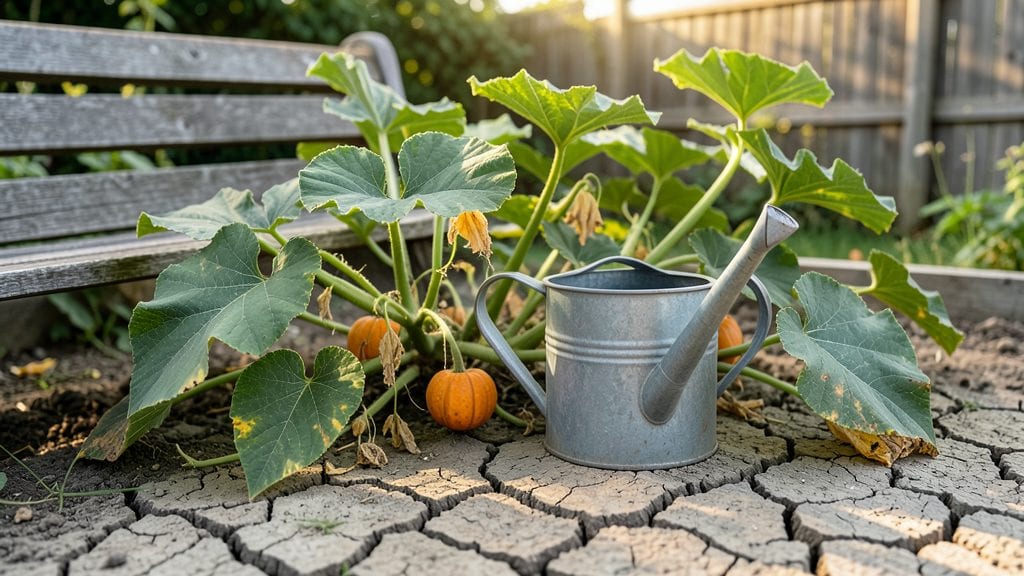
Even if your underwatered pumpkin plant looks parched, it’s not too late to revive those struggling vines. I’ve nursed back more than a few underwatered pumpkins—some with leaves so crispy they crunched when I touched them—and they always bounce back with the right care.
The key is acting fast, checking the roots, and giving them a drink they’ll actually use.
First, stop guessing about soil moisture. Stick your finger 2 inches deep—if it feels drier than your morning coffee grounds, that’s your cue to water. Pumpkins need 1-2 inches of water per week, but shallow puddles won’t cut it.
Use a soaker hose or drip irrigation to wet the soil 6-8 inches deep, where the roots are actually reaching. Mulch afterward to lock in that moisture like a desert oasis.
Within 24 hours, you’ll see the difference: leaves plumping up, new growth pushing through, and vines that don’t feel like they’re about to collapse. The real secret? Consistency. After the initial rescue, check soil moisture every 3-4 days—especially if your summers run hot.
A healthy pumpkin plant drinks like it’s on a mission, but it won’t forgive neglect twice.
Now, here’s the plot twist: sometimes what looks like thirst is actually root stress or pests. If the roots smell rotten or bugs are feasting below, we’ll tackle that next.
But for pure underwatering? This method works 90% of the time—no fancy tools, just elbow grease and patience. Let’s get those vines drinking again.
Root Causes Of Plant Stress
Underwatered pumpkin plants don’t just happen by accident—they’re usually a clear sign that something fundamental is off in their care. Understanding why your pumpkin’s leaves are drooping, vines wilting, or flowers failing to set fruit starts with digging into the science behind water stress.
Here’s what’s likely going wrong, broken down into actionable causes:
Pumpkins thrive on predictability when it comes to hydration. Their deep, sprawling roots rely on a consistent moisture level in the soil to absorb nutrients efficiently. When watering is erratic—like skipping days or overdoing it one day and neglecting the next—roots struggle to adapt.
This inconsistency forces the plant to overwork its vascular system, leading to: - Wilting (even if soil seems damp at the surface) - Blossom end rot (a calcium deficiency symptom triggered by moisture fluctuations) - Stunted growth due to energy diverted from fruit production to survival
💡 Pro Tip: Use a moisture meter or the "finger test" (stick your finger 2–3 inches into the soil) to check hydration levels daily during hot spells. Pumpkins need 1–2 inches of water per week, but adjust for clay (holds more water) vs. sandy (drains faster) soil.
Not all underwatering is about lack of water—sometimes, the issue is too much water lingering in the wrong place.
Pumpkins hate soggy roots, which can occur when: - Compacted soil prevents oxygen from reaching roots (anaerobic conditions). - Clay-heavy soil holds water like a sponge, suffocating roots. - No raised beds or mounds force water to pool around the stem.
Symptoms to watch for:
- Yellowing leaves (especially lower ones).
- Black, mushy roots when inspected.
- Slow recovery after watering (because roots can’t absorb efficiently).
✨ Fix It: Amend soil with compost or perlite to improve aeration, and plant pumpkins on mounds (6–8 inches high) to encourage root growth away from standing water.
Pumpkin vines spread fast, but their root systems expand even faster—if they’re cramped, they can’t access enough water or nutrients.
Common culprits: - Planting too close to other vines or obstacles (like fences). - Weeds stealing moisture from the soil. - Shallow root zones (common in container-growing or small gardens).
🔥 Red Flag: If your pumpkin’s leaves turn yellow between the veins, it’s often a sign of iron deficiency—a side effect of roots struggling to reach deep water sources.
👨🍳 Solution: Give vines at least 50–100 square feet per plant (more for giant varieties). Mulch heavily (straw or grass clippings) to lock in moisture and suppress weeds.
Pumpkins are heat-loving plants, but extreme temperatures (above 90°F) cause soil to dry out 3–5x faster.
Here’s how it backfires: - Evaporation spikes, leaving roots thirsty even if you watered yesterday. - Transpiration (water loss through leaves) accelerates, pulling moisture from the soil and the plant’s own tissues. - Root burn can occur if cold water is poured on hot soil, shocking the roots.
🌡️ Quick Fix: Water early morning or late evening to reduce evaporation. Use drip irrigation or soaker hoses to deliver water directly to the root zone (not the leaves).
Water isn’t the only player here—nutrient deficiencies (like potassium or magnesium) weaken a pumpkin’s ability to regulate moisture.
For example: - Low potassium → Poor root development → Can’t absorb water efficiently. - Too much nitrogen → Lush leaves but weak stems, making wilting worse. - Sodium buildup (from tap water or fertilizers) → Osmotic stress, where roots struggle to pull water in.
📊 Test Your Soil: A simple DIY soil test kit ($10–$20) can reveal pH and nutrient levels. Aim for a pH of 6.0–7.0 and balance fertilizers with potassium-rich amendments (like banana peels or wood ash).
Pumpkins in pots or small spaces face a double whammy:
- Limited root space → Roots can’t explore for water.
- Faster drying → Containers heat up and lose moisture quicker than garden soil.
💡 Container Hack: Use self-watering pots or bury the container halfway in the ground to stabilize soil temperature and moisture. Choose pots at least 18–24 inches deep for medium-sized pumpkins.
Final Thought: Most underwatering issues boil down to one (or more) of these factors: inconsistent care, soil problems, or environmental stress. The good news?
Once you identify the root cause (pun intended), reviving your pumpkin is as simple as adjusting your routine. Stay tuned for our next section on emergency fixes!
Reviving Your Pumpkin Plant Fast
If your pumpkin vines look droopy, crispy, or just plain sad, don’t panic—your plant can bounce back with the right care. The key is identifying the root cause (literally!) and taking swift action.
Below, we’ll break down the most common reasons why pumpkin plants wilt from underwatering and give you step-by-step fixes to bring them back to life—plus tips to keep them thriving long-term. 💧🌱
Cause: Shallow watering or infrequent soaking leaves roots thirsty, causing wilting and stunted growth.
How to Fix It:
- 💦 Stop and Assess: Before watering again, check the soil 2–3 inches deep. If it’s dry and crumbly, your plant needs a drink.
- 🌊 Water Deeply: Use a hose, watering can, or drip irrigation to soak the soil until water flows out of the drainage holes (about 1–2 gallons per plant, depending on pot size).
- 🕒 Let It Drain: Avoid soggy soil—let excess water drain completely to prevent root rot.
- ⏳ Wait and Watch: Give your plant 1–2 hours to absorb water. You should see leaves perk up within 24 hours.
💡 Pro Tip: Water in the early morning to reduce evaporation and fungal risks. Mulch around the base with straw or grass clippings to retain moisture.
Cause: Pumpkin plants need consistent moisture, especially during fruiting. Skipping watering days leads to stress.
How to Fix It:
- 📅 Check the Soil Daily: Stick your finger 2 inches into the soil. If it’s dry, water immediately.
- 🌡️ Water When Needed: Pumpkins thrive with 1–2 inches of water per week, but adjust for heat (more in summer, less in cooler months).
- 🌧️ Use Drip Irrigation: This delivers water slowly at the roots, reducing waste and keeping soil evenly moist.
- ☀️ Monitor Weather: After heavy rain or extreme heat, check soil moisture—don’t over- or underwater.
🔥 Pro Tip: If your pumpkin plant is in a container, it dries out faster. Water every 2–3 days in hot weather, or when the top inch of soil feels dry.
Cause: Compacted or poor-quality soil holds water poorly, leading to underwatering even if you water regularly.
How to Fix It:
- 🔪 Loosen the Soil: Gently aerate the top 6 inches of soil with a fork or trowel to help roots access moisture.
- 🌱 Amend the Soil: Mix in compost or aged manure (20% of the soil volume) to improve water retention and nutrient uptake.
- ⚖️ Balance pH: Test your soil (ideal pH for pumpkins is 6.0–7.0). Amend with lime (to raise pH) or sulfur (to lower it) if needed.
- 💪 Fertilize Lightly: Use a balanced fertilizer (10-10-10) or compost tea to boost recovery. Avoid over-fertilizing—too many salts can worsen stress.
🌡️ Pro Tip: If repotting, choose a larger container with drainage holes and use a well-draining potting mix (like 60% soil, 30% compost, 10% perlite).
Cause: Scorching sun + underwatering = wilting. Pumpkin leaves curl or yellow when they can’t cool down.
How to Fix It:
- 🌿 Provide Shade: Use shade cloth (30–50%) or a temporary row cover during peak afternoon sun (12 PM–4 PM).
- 💧 Water More Frequently: In 90°F+ weather, water every 2–3 days (or daily for container plants).
- 🌱 Mulch Heavily: Apply 3–4 inches of mulch (straw, wood chips) to keep roots cool and moisture locked in.
- 🌅 Adjust Planting Time: If possible, start seeds 2–3 weeks earlier (or later in fall) to avoid extreme heat.
✨ Pro Tip: Mist leaves lightly in the early morning to help them retain moisture—but avoid evening misting (fungal risk).
Once your pumpkin plant recovers, keep it happy with these habits:
- 📊 Track Watering: Use a moisture meter or the "finger test" to stay consistent.
- 🌧️ Rainproof Your Garden: Install a rain gauge to adjust watering after storms.
- 🌱 Rotate Crops: Avoid planting pumpkins in the same spot yearly to prevent soil depletion.
- 🐞 Encourage Beneficial Bugs: Ladybugs and earthworms improve soil structure naturally!
With these fixes, your pumpkin plant should perk up within 24–48 hours. Stay patient—healthy roots take time to recover, but your vines (and future jack-o’-lanterns!) will thank you. 🎃💚
Frequently asked questions
Why do my pumpkin leaves look crispy even after watering?
Crispy leaves often signal root stress beyond just thirst. Check if the soil is compacted or waterlogged—roots need oxygen to absorb moisture. Try loosening soil with a fork and watering deeply but infrequently (every 3-4 days) to encourage deeper root growth. If leaves stay crispy, test for pests like squash bugs hiding in the roots.
How can I tell if my pumpkin plant needs water or has root rot?
Pull back the soil gently—healthy roots are white or tan, while rotten roots smell foul and turn mushy. If your plant wilts immediately after watering (instead of perking up), root rot is likely. In this case, trim affected roots, repot in fresh soil, and reduce watering to every 5-7 days while keeping soil moist but not soggy.
Will my pumpkin recover if I fix the underwatering now?
Yes! Pumpkins are resilient—most recover within 24-48 hours of proper care. Focus on deep watering (1-2 gallons per plant) and mulching to retain moisture. However, if flowers have already dropped or fruits are stunted, growth may slow. The key is consistency: check soil moisture daily during heatwaves and adjust your routine.
Can I use coffee grounds to help my underwatered pumpkin?
Coffee grounds improve soil structure and retain moisture—just mix 1 cup per plant into the top 2 inches of soil. They also add nitrogen, but balance with compost to avoid over-fertilizing. For immediate relief, pair this with deep watering and mulching. Just avoid piling grounds directly on the stem to prevent mold.
How often should I water pumpkins in containers vs. garden beds?
Container pumpkins dry out 3x faster—water every 2-3 days in hot weather, while garden beds need 1-2 inches of water weekly. Test soil moisture: stick your finger 2 inches deep. If dry, water until it drains from the bottom. Containers also benefit from self-watering systems or burying pots halfway in the ground to stabilize moisture.