
Diseases
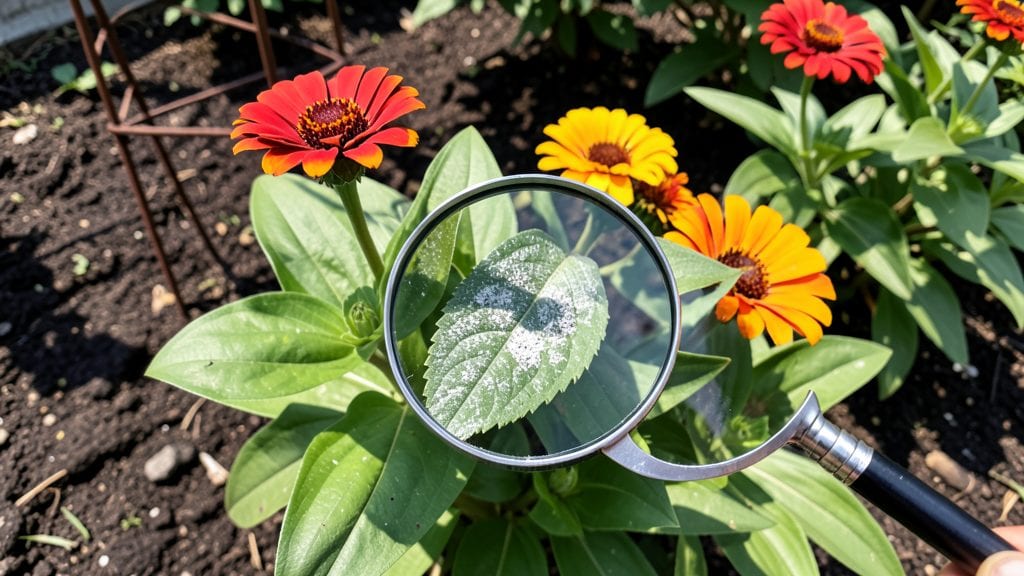
Zinnia plant diseases can turn your vibrant blooms into sad, spotted messes if you don’t catch them early. I’ve seen my once-proud zinnias go from bold reds to brown, wilted husks in just a few days—until I learned the warning signs and how to fight back.
The key is spotting the right symptoms: powdery white spots? Fungal infection. Blackened stems? Bacterial rot. Knowing the difference saves your garden.
Most zinnia diseases start with poor air circulation or overwatering—two easy fixes most gardeners overlook. I learned the hard way that crowded plants and soggy soil create the perfect breeding ground for fungal spores.
The good news? Spacing your plants 12–18 inches apart and watering at the base (not overhead) cuts down on 80% of fungal risks. A simple adjustment that makes all the difference.
Once you spot trouble, act fast with organic treatments like neem oil or copper fungicide. I’ve revived plants with just a few sprays and proper pruning—though some cases call for tougher measures.
The goal isn’t just to save the plant but to stop the spread before your entire bed looks like a disease zone. With the right approach, your zinnias can bounce back stronger.
This works for both garden beds and containers, and the same principles apply whether you’re dealing with powdery mildew or bacterial leaf spot. The secret is staying ahead of the problem—so you’re not playing catch-up when the first spots appear. Let’s get your zinnias back to their showstopping best.
The Hidden Triggers Behind Zinnia Struggles
Zinnia plants may look vibrant and resilient, but they’re not immune to disease—especially when specific conditions align like a perfect storm. Understanding why these issues arise helps you take proactive steps to protect your garden.
Let’s break down the root causes, from environmental factors to human habits, so you can nip problems in the bud before they bloom into full-blown crises.
Zinnias thrive on space and circulation, but when plants grow too close together, humidity lingers and leaf surfaces stay damp—ideal conditions for fungal pathogens like Alternaria and powdery mildew. Poor airflow also traps spores, giving them a foothold to spread rapidly.
- Why it happens:
- Dense foliage blocks sunlight, weakening stems and making plants more susceptible to stress.
- Stagnant air prevents moisture evaporation, creating a high-humidity microclimate where fungal spores germinate.
- Overwatering in crowded beds exacerbates the issue by keeping soil and leaves soggy for extended periods.
Actionable fix: Space zinnias 12–18 inches apart and prune regularly to improve airflow. Avoid mulching too heavily near the base—keep it light to allow evaporation.
Zinnias despise wet feet. Overwatering or irregular watering creates stress, inviting diseases like bacterial leaf spot and root rot. Meanwhile, underwatering weakens plants, making them easier targets for pests and pathogens.
- Why it happens:
- Excess moisture (from overhead watering or poor drainage) softens plant tissue, allowing bacteria (Pseudomonas syringae) to enter through stomata or wounds.
- Inconsistent watering causes rapid moisture fluctuations, shocking the plant’s immune response.
- Fungal spores in soil or splashed water latch onto leaves, especially in humid climates.
Actionable fix:
- Water at the base (not overhead) in the early morning to allow foliage to dry quickly.
- Use drip irrigation or soaker hoses to avoid wetting leaves.
- Ensure pots or garden beds have adequate drainage—zinnias hate soggy roots!
Fungal diseases like powdery mildew and rust don’t just appear—they hitchhike on wind, tools, or even neighboring plants. Spores overwinter in soil, debris, or infected plant material, lying in wait for the right conditions to strike.
- Why it happens:
- Previous infections in your garden leave behind spores that survive in organic matter (e.g., old mulch, fallen leaves).
- Wind or rain spreads spores from infected zinnias or nearby crops (like tomatoes or marigolds).
- High nighttime humidity (above 75%) triggers spore germination, especially on susceptible varieties like ‘Benary’s Giant.’
Actionable fix:
- Rotate crops annually to break the fungal lifecycle.
- Clean up debris in fall—remove and discard (don’t compost) infected plant material.
- Space out susceptible plants to reduce spore drift.
Bacterial diseases like bacterial wilt (Ralstonia solanacearum) or leaf spot (Xanthomonas) spread via contaminated tools, hands, or even water droplets. Once established, they can persist in soil for years.
- Why it happens:
- Dirty pruners or gloves transfer bacteria from infected to healthy plants.
- Splashing water during rain or irrigation carries bacteria from soil to leaves.
- Wounded stems (from pruning or pests) provide entry points for bacterial invasion.
Actionable fix:
- Sanitize tools between uses with 70% rubbing alcohol or a 10% bleach solution.
- Wear gloves when handling plants to avoid cross-contamination.
- Avoid overhead watering—use drip systems to minimize splash.
Stressed zinnias—whether from nutrient deficiencies, pests, or extreme heat—have compromised defenses, making them easy prey for diseases. Think of it like a person with a cold: their immune system is already fighting, so secondary infections take hold faster.
- Why it happens:
- Nitrogen deficiency (yellowing leaves) weakens cell walls, making them vulnerable to fungal penetration.
- Pest damage (e.g., aphids or spider mites) creates wounds where bacteria or fungi can enter.
- Heat stress (above 90°F) disrupts photosynthesis, reducing the plant’s ability to fight pathogens.
Actionable fix:
- Fertilize regularly with a balanced 10-10-10 formula to avoid deficiencies.
- Monitor for pests and treat early with neem oil or insecticidal soap.
- Provide shade cloth in extreme heat to reduce stress.
Unhealthy soil—whether too acidic, alkaline, or compromised by past infections—sets the stage for disease. Some fungi thrive in specific pH ranges, while others exploit imbalanced microbial communities.
- Why it happens:
- Low pH (below 6.0) can encourage fungal dominance, suppressing beneficial bacteria.
- High pH (above 7.5) may lead to nutrient lockout, weakening plants.
- Past infections (e.g., from tomatoes or peppers) leave behind dormant pathogens in the soil.
Actionable fix:
- Test your soil (pH kits are cheap!) and amend with lime (to raise pH) or sulfur (to lower pH) as needed.
- Add compost to improve microbial diversity and plant resilience.
- Consider solarization (covering soil with plastic in hot sun for 4–6 weeks) to kill dormant pathogens before planting.
Zinnias are not fans of prolonged dampness. Frequent rain or high humidity (especially at night) creates the perfect breeding ground for fungal spores, while sudden temperature drops can shock plants into susceptibility.
- Why it happens:
- Back-to-back rainy days keep leaves wet for more than 12 hours, promoting fungal growth.
- Morning dew on leaves provides a moisture film where spores can germinate.
- Temperature swings (e.g., hot days, cool nights) weaken plant defenses.
Actionable fix:
- Choose disease-resistant varieties like ‘Profusion’ or ‘Crystal’ if your climate is humid.
- Mulch lightly to reduce soil splashing onto leaves.
- Plan for rain-free days—if forecasted, consider row covers to protect zinnias temporarily.
Many zinnia diseases go unnoticed until they’re too late because gardeners wait for visible symptoms (like spots or wilting) before acting. By then, the pathogen has already spread.
- Why it happens:
- Delayed pruning of infected leaves allows spores to multiply.
- Using infected cuttings for propagation spreads disease to new plants.
- Skipping preventive sprays (like copper fungicide) leaves plants defenseless.
Actionable fix:
- Inspect plants weekly—look for yellowing, spots, or unusual growth.
- Remove and destroy infected leaves immediately (don’t toss them in the compost).
- Apply preventive sprays (e.g., neem oil or baking soda mix) every 7–10 days in high-risk seasons.
Pro Tip: 💡 Keep a garden journal! Track when diseases appear, weather patterns, and your watering/fertilizing habits. Over time, you’ll spot trends and adjust your care routine to prevent rather than treat.
How to Fix Zinnia Ailments
Zinnias are resilient bloomers, but when diseases strike, quick action can save your garden. Below are practical, step-by-step solutions tailored to the most common fungal and bacterial threats—plus prevention tips to keep your zinnias thriving. Think of this as your emergency repair kit for wilting, spotted, or sad-looking zinnias.
Fungi thrive in damp, crowded conditions, but you can starve them out with these fixes.
🔥 Treat Powdery Mildew (White Dusty Coating)
Cause: Erysiphe cichoracearum or Golovinomyces orontii love humid mornings and poor airflow. Fix:
- 🌿 Prune for airflow – Remove crowded stems and dead leaves to let sunlight and air circulate. Think "less touching, less fungus."
- 💦 Spray with baking soda mix – Combine 1 tsp baking soda + 1 tsp dish soap + 1 quart water.
Spray early in the morning (avoid hot sun—it burns leaves). Repeat every 7–10 days until gone. 3. 🍄 Apply fungicide – Use neem oil (2 tsp/qt water + 1 tsp soap) or a copper-based fungicide (like Bonide Copper Fungicide). Spray weekly until symptoms fade.
- 🌞 Boost sunlight – Move pots to sunnier spots or thin seedlings to prevent future outbreaks.
💡 Prevention Pro Tips:
- Space plants 12–18 inches apart to reduce humidity.
- Water at the base (not overhead) to keep foliage dry.
- Choose resistant varieties like ‘Benary’s Giant’ or ‘Crystal’ zinnias.
🍅 Fix Leaf Spot (Brown/Black Spots)
Cause: Alternaria or Septoria fungi spread via splashing water or infected debris. Fix:
- 🧹 Clean up debris – Remove all fallen leaves and spent blooms. Fungi party in dead plant matter!
- 🔪 Snip infected leaves – Cut off only the worst spots (not whole stems) to prevent spread.
- 💧 Water wisely – Switch to drip irrigation or water early morning so leaves dry by night.
- 🍄 Fungicide blast – Spray with chlorothalonil (like Daconil) or potassium bicarbonate (2 tbsp/gal water). Reapply every 10–14 days.
💡 Prevention Pro Tips:
- Rotate crops – Don’t plant zinnias in the same spot next year.
- Sterilize tools – Wipe pruners with rubbing alcohol between cuts.
- Avoid overhead watering – Use a soaker hose instead.
Bacteria spread fast—act quickly to contain them.
🍃 Stop Bacterial Leaf Spot (Water-Soaked Spots)
Cause: Pseudomonas syringae thrives in wet conditions. Fix: 1. 🚫 Remove infected plants – Do not compost them! Bag and trash to prevent spread.
- 🧼 Sterilize soil – Mix 1 cup copper sulfate per 5 gallons of water and drench the soil (wear gloves).
- 💧 Adjust watering – Water only at soil level and never in the evening.
- 🛡️ Copper spray – Use copper fungicide (like TriBasic Copper) as a preventative weekly spray.
💡 Prevention Pro Tips:
- Space plants widely – 18+ inches apart reduces bacterial splash.
- Avoid overhead sprinklers – Use drip systems or hand watering.
- Rotate crops – Don’t replant zinnias in infected soil for 2+ years.
💀 Cure Bacterial Wilt (Sudden Wilting)
Cause: Ralstonia solanacearum clogs xylem vessels—no cure, but you can contain it. Fix: 1. 🔥 Pull and destroy – Remove the entire plant (roots and all) and do not compost.
- 🌱 Quarantine the area – Don’t plant tomatoes, peppers, or other solanaceae in that spot for 3+ years.
- 💦 Disinfect tools – Soak pruners in bleach water (1:10 ratio) for 10 minutes.
- 🌱 Start fresh – Plant zinnias in sterile potting mix or a new garden bed.
💡 Prevention Pro Tips:
- Buy disease-free seedlings – Check for wilting before purchasing.
- Test soil – If bacterial wilt is common in your area, test soil before planting.
- Avoid injured plants – Don’t overcrowd or damage stems (bacteria enter through wounds).
No matter the disease, these universal fixes help:
- 🌞 Improve sunlight – Zinnias need 6+ hours of sun daily to stay strong.
- 💧 Water deeply but less often – 1 inch per week (adjust for rain).
- 🌱 Feed lightly – Use a balanced fertilizer (10-10-10) once when planting, then switch to compost tea for immunity.
- 🔄 Rotate crops – Don’t plant zinnias in the same spot year after year.
🎯 Final Thought: Most zinnia diseases are preventable with good airflow, smart watering, and quick action. Catch problems early, and your zinnias will bounce back—bold and beautiful as ever! 🌼💪
Frequently asked questions
What are the first signs of fungal infections in zinnias?
Watch for white powdery coatings (powdery mildew) or dark brown/black spots with yellow halos (leaf spot). These appear first on lower leaves where humidity lingers. Early detection is key—act within 3–5 days to prevent spread.
Can I save a zinnia plant with bacterial wilt?
Unfortunately, no—bacterial wilt (Ralstonia solanacearum) has no cure. Remove the entire plant (roots and all) immediately to prevent soil contamination. Avoid composting infected material, as bacteria can survive for years.
How often should I spray zinnias with fungicide?
Apply preventive sprays (like neem oil or copper fungicide) every 7–10 days during humid seasons. For active infections, increase to weekly until symptoms disappear. Always spray early morning to avoid leaf burn.
Are some zinnia varieties more disease-resistant?
Yes! Varieties like ‘Profusion’, ‘Crystal’, and ‘Benary’s Giant’ are bred for better resistance to powdery mildew and leaf spot. Choose these if your climate is humid or prone to fungal outbreaks.
What’s the best way to sterilize garden tools to prevent disease spread?
Wipe pruners and shears with 70% rubbing alcohol or soak in a 1:10 bleach-water solution for 10 minutes between uses. Rinse and dry thoroughly to avoid corrosion. This stops bacterial/fungal hitchhiking between plants.