
Blooming
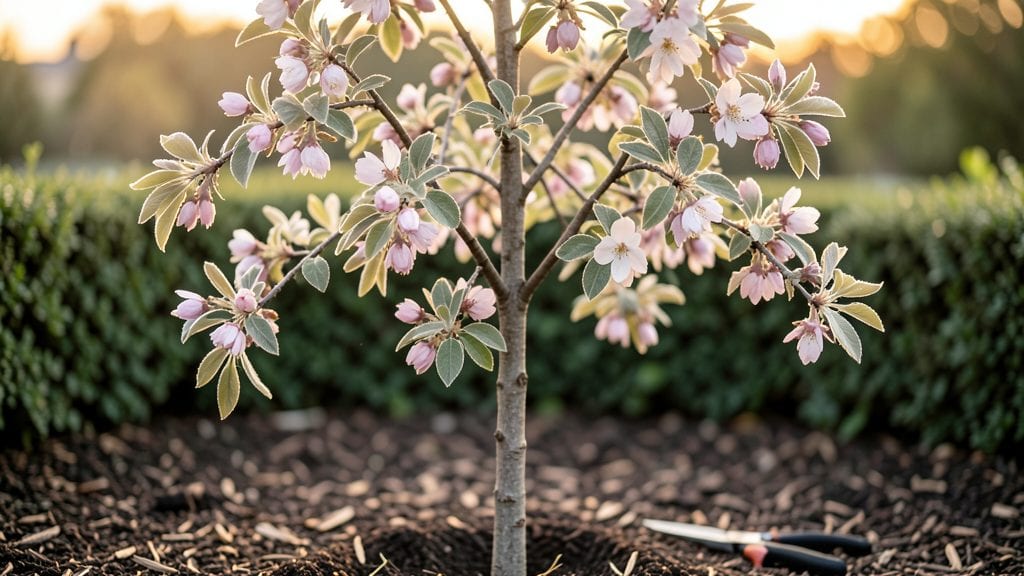
My almond blossom plant transformed my spring with clouds of fragrant pink blooms that lasted for weeks. 🌸 Pruning isn't just about shaping—it's the secret to coaxing those delicate flowers back year after year, even in my Zone 7 garden where summers can be brutal.
The right cuts encourage new growth while keeping the tree healthy enough to reward you with another spectacular show.
You'll need sharp pruning shears, a ladder for taller branches, and about 30 minutes to an hour on a calm day. Focus on removing dead wood first, then thin out crowded branches to let light reach the center.
I always prune right after the blooms fade, before the tree sets fruit—this gives it energy for next season's flowers instead of nuts. For ornamental varieties, you can go even bolder with shaping cuts.
What you'll get is a tree that blooms more abundantly each year, with flowers that fill your yard with that almond-scented perfume for weeks. The fragrance alone makes it worth the effort, but the sight of those blossoms against spring greenery?
Pure magic. Plus, the tree stays compact and productive, whether you're growing for beauty or hoping to harvest nuts someday.
Works for both ornamental varieties like 'Fountainwood' and nut-bearing types in mild climates. The same principles apply whether you're pruning a young tree or maintaining an established one. Here's how to make those cuts count for next spring's show.
📚 In This Guide
- What you need
- Instructions
- Tips and common mistakes
- Wrapping up and next steps
What you need
- ● Almond blossom plant (Prunus dulcis or Prunus amygdalus) – Choose a healthy, mature tree (3+ years old) or a potted dwarf variety for easier pruning.
- ● Sharp pruning shears – Bypass pruners (for clean cuts) or anvil pruners (for thicker branches). Size: 6–8 inches for small branches, 10+ inches for larger limbs.
- ○ Sterilized pruning saw – Optional but helpful for branches thicker than 2 inches. Look for a bow saw or folding pruning saw with a fine-tooth blade.
- ● Rubbing alcohol (70% isopropyl) or bleach solution – For sterilizing tools between cuts (1 part bleach to 9 parts water).
- ○ Pruning sealant (optional) – Wound dressing (like Tanglefoot Tree Wound Pruning Seal) to protect large cuts from pests/disease.
- ● Gloves – Garden gloves (nitrile-coated for grip) to protect hands from thorns and sap.
- ● Ladder or step stool – For reaching higher branches safely. Height: 6–12 feet, depending on tree size.
- ● Marking twine or flags – To tag branches for removal (e.g., brightly colored surveyor’s tape).
- ● Disposable bags or bucket – For collecting pruned branches (great for composting or mulch!).
- ○ Safety gear (optional) – Safety glasses if working near the face or with large limbs.
- ● Knowledge of tree anatomy – Familiarize yourself with terminal buds, water sprouts, and scaffold branches (watch a quick YouTube tutorial if needed!).
- ● Best pruning time – Late winter/early spring (just before buds swell) or summer after blooming for minimal stress.
- ● Weather check – Avoid pruning during wet or freezing conditions (cuts heal slower).
- ● Tree health assessment – Look for signs of disease (fungus, cankers) or pests before pruning. Treat issues first!
Step-by-step pruning guide for your almond blossom tree
Here’s how to coax those signature fragrant blooms year after year—no guesswork, just proven techniques.
✂️ Step 1: Prune in Late Winter Before Bud Break
Wait until late winter when the tree is still dormant but just before buds swell—this is your 3-4 week window before spring growth begins. I always check for tight, brown buds clustered along branches as my cue. Use clean, sharp pruners (sterilized with rubbing alcohol) to make cuts at a 45-degree angle, about ¼ inch above a bud or branch collar.
Remove any dead, diseased, or crossing branches first—they compete with healthy growth and block sunlight. Thin out overcrowded areas to improve airflow, which prevents fungal issues. I promise, you’ll see stronger blooms and healthier wood if you skip the urge to prune lightly.
🌿 Step 2: Shape the Canopy for Sunlight Access
Step back and visualize sunlight paths—your goal is to create an open, rounded shape that lets light reach all branches, even the inner ones. Start by removing any branches growing inward (they’ll rub against others as they grow). Cut back suckers (shoots from the base or trunk) immediately—they drain energy from blooms.
For mature trees, shorten overlong branches by ⅓ of their length, always cutting just above an outward-facing bud. This encourages new growth that will bear more blossoms. If a branch is thicker than your thumb, avoid heavy pruning—it stresses the tree and reduces flowering.
⏰ Step 3: Light Summer Pruning After Blooming
About 6-8 weeks after blooms fade, do a light maintenance prune to tidy up. Remove any deadheading (spent blossoms) and shoots growing from the trunk. This keeps the tree’s energy focused on next year’s buds rather than wild growth. I use bypass pruners for small branches and loppers for thicker ones—never prune when the tree is wet.
Watch for water sprouts (fast-growing, vertical shoots)—they’re a red flag that the tree is stressed. Snip them off at the base immediately. This summer session is all about preventing clutter so winter pruning stays effective. You’ll notice fewer suckers and more uniform blooms next season.
☀️ Step 4: Autumn Cleanup for Winter Health
In early autumn, rake up all fallen leaves and debris—this removes overwintering pests and diseases. Prune any damaged branches from storms or pests, cutting back to healthy wood. Avoid heavy pruning now; the tree needs to harden off before winter. Sterilize your tools again to prevent spreading pathogens.
Apply a thin layer of mulch (about 2-3 inches) around the base, keeping it 6 inches away from the trunk. This protects roots from freeze-thaw cycles. I like to water deeply before the first frost to ensure the tree enters dormancy hydrated. You’ll see fewer winter dieback issues and more vibrant blooms the following spring.
Tips & tricks for pruning your almond blossom tree
Real talk: Pruning your almond blossom tree isn't just about cutting branches—it's about crafting a future full of fragrant blooms. Here's what nobody tells you until you've already made a few mistakes.
Timing is Everything: That 3-4 week window in late winter isn't just a suggestion—it's when your tree's energy is still dormant but ready to respond. I learned this the hard way after pruning too early and seeing delayed blooms. Check for those tight, brown buds clustered along branches—they're your green light to start. And trust me, if you wait until buds swell, you'll be cutting off next year's blossoms before they even form.
The 45-Degree Rule: When you make those cuts at a 45-degree angle about ¼ inch above the bud or branch collar, you're not just following a rule—you're creating a perfect environment for new growth. This angle prevents water from pooling on the cut, which would otherwise invite fungal infections. I've seen pruners skip this detail and end up with weak regrowth or even branch dieback. Take the extra second to angle your cut properly.
Visualize the Sun: Step back and imagine sunlight streaming through your tree's canopy. That's your goal: an open, rounded shape where every branch gets equal access to light. I always sketch a quick outline in my notebook before making any cuts. Focus first on removing branches growing inward—they'll rub against others as they grow, creating wounds that compromise the tree's health. Remember, almond trees need sunlight to produce those signature fragrant blooms, so don't let any branch hog the light.
Tool Maintenance Matters: Sterilizing your pruners with rubbing alcohol between cuts isn't just good practice—it's essential. I keep a small bottle of rubbing alcohol in my gardening toolbox and wipe down my pruners after every 3-4 cuts, especially when dealing with diseased branches. Clean tools prevent spreading pathogens that can devastate your tree's health. And here's another pro move: sharpen your blades regularly. Dull pruners tear rather than cut cleanly, which creates larger wounds that take longer to heal.
Pro Tips for Almond Blossom Plant
- Real talk: Pruning your almond blossom tree isn't just about cutting branches—it's about crafting a future full of fragrant blooms.
- Timing is Everything: That 3-4 week window in late winter isn't just a suggestion—it's when your tree's energy is still dormant but ready to respond.
- The 45-Degree Rule: When you make those cuts at a 45-degree angle about ¼ inch above the bud or branch collar, you're not just following a rule—you're creating a perfect environment for new growth.
Frequently asked questions
Got questions about growing and maintaining your almond blossom plant? You’re not alone! Here are some of the most common queries—and their answers—to help you keep those fragrant blooms thriving year-round.
When is the best time to prune my almond blossom plant?
The ideal time to prune is late winter or early spring, just before new growth begins. This ensures you remove dead or weak branches without disrupting the plant’s flowering cycle. Avoid pruning during fall or winter, as cold stress can harm the tree.
Can I prune almond blossom plants in cold climates?
Yes, but with caution! Wait until after the last frost to prune, as cold snaps can stress the tree. If you live in a harsh climate, consider light pruning in late fall to remove only damaged branches—just avoid heavy cuts that expose the trunk to freezing.
What should I do if my almond blossom plant isn’t blooming?
Lack of blooms often signals poor pruning, overcrowding, or nutrient deficiencies. Try these fixes:
- Prune to improve airflow and sunlight exposure.
- Fertilize with phosphorus-rich soil amendments in early spring.
- Ensure the plant gets 6+ hours of sunlight daily.
How much can I cut back without harming the plant?
For young trees, limit pruning to 15-20% of the canopy per year. Mature trees can handle up to 30%, but never remove more than one-third of the branches at once. Focus on dead wood, crossing branches, and inward growth to encourage healthy blooms.
Are there alternatives to almond blossom plants for fragrant gardens?
If almond blossoms don’t suit your climate or space, try these fragrant bloomers:
- Cherry blossoms – Early spring blooms, similar care.
- Fruit trees (e.g., peach, plum) – Edible + fragrant!
- Jasmine or mock orange – Low-maintenance shrubs with intoxicating scents.
- Lilacs – Hardy and long-lasting blooms.
Wrapping up and next steps
Cultivating your almond blossom plant for year-round fragrance is a rewarding journey—one that combines patience, precision, and a touch of creativity! 🌸 By mastering the right pruning techniques, you’ll not only encourage vibrant blooms but also maintain a healthy, thriving tree.
Whether you’re a seasoned gardener or just starting, every trim brings you closer to that dreamy, fragrant orchard vibe.
Ready to take the next step? Start small:
- 📝 Jot down your pruning notes—track what works and what doesn’t!
- 🌱 Experiment with a single branch this season to refine your skills.
- 🌿 Share your progress with fellow plant lovers for inspiration and tips!