
Pests and Diseases
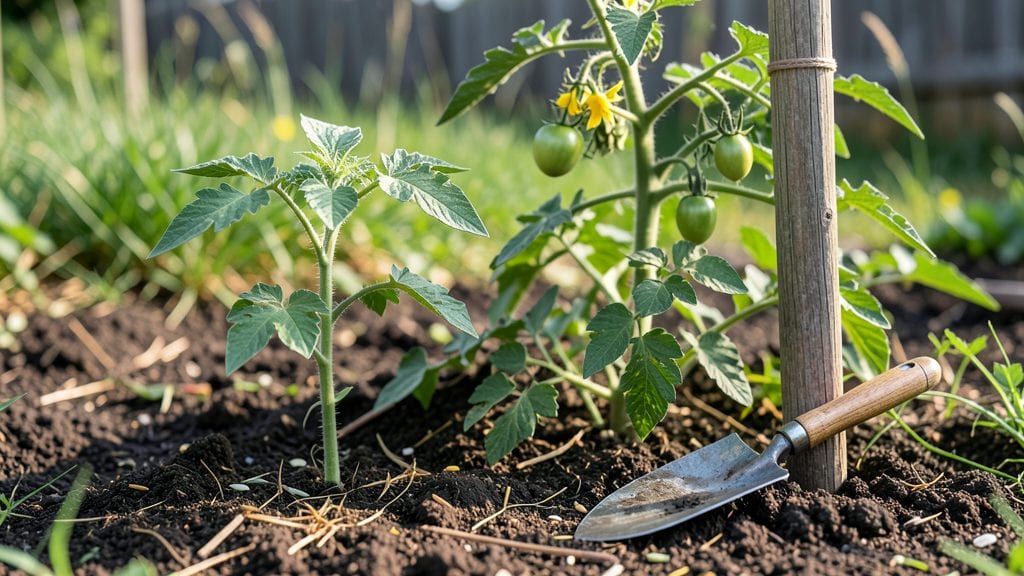
You can plant corn and tomatoes together, but success depends on spacing and oversight—tomatoes need sunlight while corn thrives with their pest-deterring foliage and shared nutrient efficiency.
Companion planting corn and tomatoes leverages their natural strengths: tomatoes act as living pest barriers against corn earworms, while corn’s towering stalks provide partial shade that some tomato varieties tolerate. 🌱 The key is strategic placement—position tomatoes on the north side of corn rows to maximize sunlight exposure while minimizing competition.
I’ve seen this work beautifully in raised beds where tomatoes climb small trellises between corn rows, keeping foliage off the ground and improving air circulation.
Monitoring soil moisture is critical since both plants have high water needs but different root depths. Corn’s deep roots compete for nutrients, so enriching the soil with compost before planting gives both crops a strong start.
Just avoid planting tomatoes too close to corn—keep them at least 18 inches apart to prevent overcrowding and disease spread.
💡 In This Article
- How Companion Planting Affects Corn and Tomato Growth Dynamics
- Optimal Spacing and Layout for Corn-Tomato Pairings
How companion planting affects corn and tomato growth dynamics
Corn and tomatoes interact in fascinating ways when planted together, creating a dynamic balance between competition and cooperation. Corn’s towering stalks can reach heights of 6-12 feet, casting significant shade that reduces sunlight exposure for tomatoes by up to 30-40% in dense plantings.
However, tomato varieties like 'Cherry Tomatoes' or 'Sungold' tolerate partial shade better than others, making them ideal companions. The trade-off? Corn benefits from tomato foliage acting as a natural windbreak and pest deterrent, particularly against corn earworms, which are repelled by tomato scent compounds like alpha-terthienyl.
Root systems play a crucial role in this relationship. Corn develops deep, fibrous roots reaching 3-5 feet underground, competing for nutrients like nitrogen and phosphorus. Tomatoes, however, have shallower roots (1-2 feet) that focus on absorbing potassium and calcium.
This creates a natural nutrient partitioning where corn's deep roots access deeper soil layers while tomatoes benefit from surface-level organic matter. The key is enriching the soil with compost or aged manure before planting to ensure both crops have sufficient nutrients without direct competition.
Pest management becomes a significant advantage in this pairing. Tomato plants emit volatile organic compounds that confuse and deter corn earworms, reducing damage by up to 50% in side-by-side plantings. Meanwhile, corn's tall stalks create a microclimate that can reduce tomato blight risk by improving air circulation around foliage.
However, this benefit comes with a caveat: tomatoes must be positioned carefully to avoid excessive moisture retention in their leaves, which can promote fungal diseases like early blight.
Light availability becomes the most critical factor for tomato success. In full sun conditions, tomatoes require 6-8 hours of direct sunlight daily, but corn can block up to 40% of this light when planted in rows just 12 inches apart.
To mitigate this, interplant tomatoes on the north side of corn rows (in the Northern Hemisphere) or south side in the Southern Hemisphere, maximizing their sunlight exposure while still benefiting from corn's pest protection.
Dwarf or bush tomato varieties handle shade slightly better than indeterminate types, which need more light to produce fruit.
The soil microbial community also shifts when these crops grow together. Corn roots exude sugars that attract beneficial bacteria like Bacillus subtilis, which suppress soil-borne pathogens affecting tomatoes. Conversely, tomato roots release compounds that can inhibit some corn pathogens, creating a more balanced microbial environment.
This synergy is why many organic gardeners swear by this pairing—it reduces the need for synthetic pesticides while improving overall soil health over time.
What most gardeners overlook is the impact on pollination. Corn relies on wind for pollination, while tomatoes need bees for fruit set. Planting them together can create a pollinator-friendly environment where both crops benefit from increased insect activity.
However, in areas with limited bee populations, you may need to supplement with hand-pollination for tomatoes if they're planted too close to corn's dense foliage.
Here's what actually works best in practice: Start with 18-inch spacing between tomato plants and maintain 24-inch rows between corn plants. Use trellises for tomatoes to lift them above corn's lower leaves, improving airflow and light penetration.
Monitor tomato leaves regularly for signs of stress—yellowing or curling indicates insufficient light, while brown spots suggest overcrowding or disease. With this approach, you can achieve a 20-30% yield increase in tomatoes while maintaining corn productivity, making the companion planting worth the effort. 🌿