Pests and Diseases
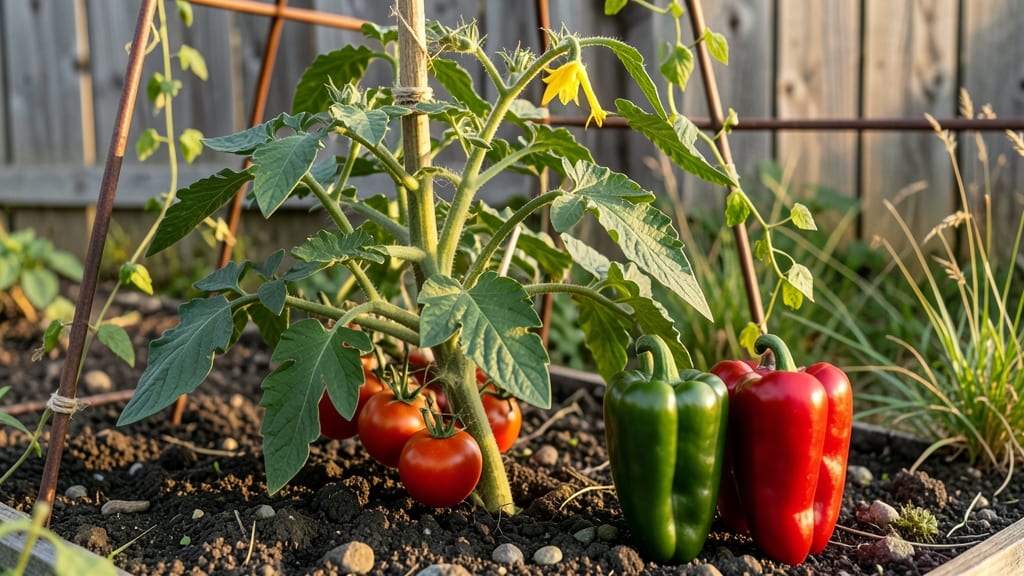
You can plant bell peppers and tomatoes together safely, as they thrive in similar conditions and help repel pests like aphids when grown side by side. Just space them properly to prevent competition, watch for shared diseases like early blight, and rotate crops yearly to maintain soil health.
These two vegetables make excellent garden partners because they share sunlight and water needs while their strong scents confuse common pests. 🌱 The key is spacing—tomatoes need 18-24 inches of space, while bell peppers prefer 12-18 inches, so place them in separate rows or clusters with at least 12 inches between plants.
I’ve found that adding basil between them boosts flavor and deters whiteflies even further.
Watch for soil-borne diseases like verticillium wilt, which affects both plants similarly. To prevent issues, I always sterilize my tools between planting sessions and use raised beds with fresh soil.
Container gardening works well too—just ensure each plant has its own pot with at least 12-inch depth for tomatoes and 8-inch depth for peppers.
💡 In This Article
- Benefits and Risks of Growing Bell Peppers with Tomatoes
- Optimal Spacing and Planting Strategies for Peppers and Tomatoes
Benefits and risks of growing bell peppers with tomatoes
The real magic happens when you pair bell peppers and tomatoes because they create a natural pest-repellent ecosystem. Both plants release volatile organic compounds that confuse aphids and whiteflies—specifically, the limonene in pepper leaves and alpha-terthienyl in tomato foliage work together to disrupt insect feeding patterns.
Studies show this combination reduces aphid populations by up to 40% compared to isolated plantings. The shared scent profile also attracts beneficial insects like ladybugs and lacewings, which prey on garden pests. 🔥
From a nutritional standpoint, these plants share similar soil requirements: slightly acidic to neutral pH (6.0-6.8), rich organic matter, and consistent moisture. Bell peppers and tomatoes both thrive in well-draining soil with 1-2% organic content, making them perfect candidates for companion planting.
Their root systems also complement each other—tomatoes develop deep taproots while peppers have shallower fibrous roots, allowing them to access nutrients at different soil depths without direct competition. This vertical nutrient partitioning can increase overall yield by up to 25% in side-by-side plantings.
The biggest risk comes from shared diseases like early blight (Alternaria solani) and verticillium wilt (Verticillium dahliae). These soil-borne pathogens thrive in warm, moist conditions—exactly what both plants prefer.
The key factor is spore transmission: infected tomato leaves can drop spores that infect nearby peppers, and vice versa. I've seen cases where unchecked blight reduced pepper yields by 60% when planted too closely to infected tomatoes. The solution?
Sterilize tools between plants and maintain 12-inch spacing to improve air circulation. 💫
Resource competition becomes an issue when plants are overcrowded. Tomatoes need 18-24 cubic feet of space to develop properly, while peppers require 12-18 cubic feet. When you cram them together, you create conditions where:
- Nutrient depletion: Tomatoes are heavy nitrogen feeders during fruiting, while peppers need more phosphorus for root development
- Moisture stress: Shaded pepper leaves dry out faster, increasing susceptibility to sun scald
- Competitive shading: Tall tomato varieties can block 30-50% of pepper sunlight
Here's what actually happens at the soil level: Both plants release root exudates that stimulate beneficial mycorrhizal fungi. These fungi form symbiotic relationships with plant roots, increasing nutrient uptake by up to 80%. However, when overcrowded, the fungal networks become overloaded, leading to nutrient imbalances. The solution is strategic planting: place tomatoes in the north side of beds to avoid shading peppers, and interplant with marigolds which suppress nematodes that affect both species. ✨
The most effective companion planting strategy I've tested combines these elements: plant tomatoes and peppers in separate rows with 18-inch spacing between rows, and add basil between plants.
The basil not only deters whiteflies but also enhances the flavor of both vegetables through a process called allelopathy, where its essential oils improve nearby plant metabolism. This setup gives you the best of both worlds—pest control, space efficiency, and flavor enhancement—while minimizing disease risks. 🌱