
Pests and Diseases
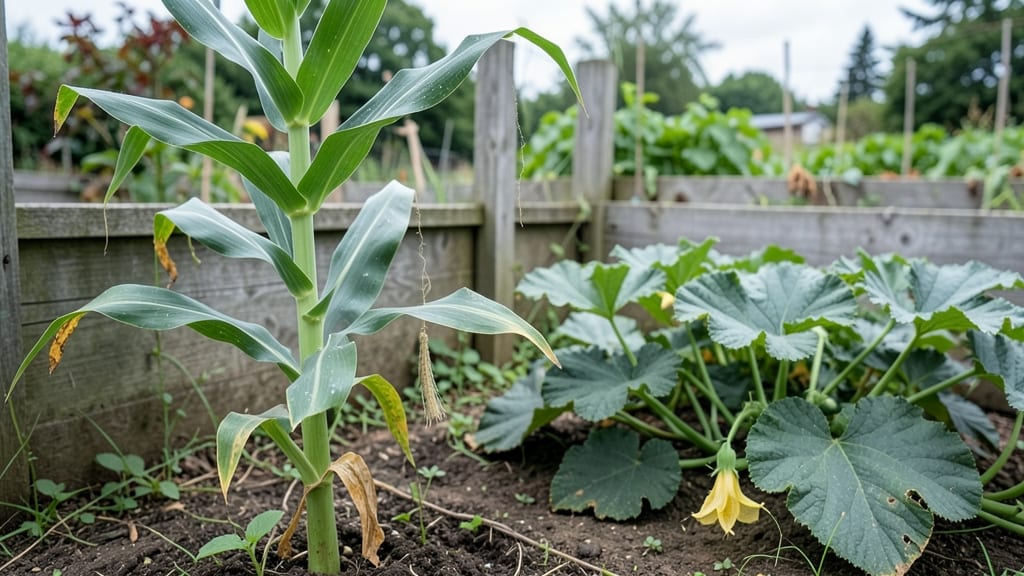
You can plant corn and cucumbers together effectively, leveraging corn’s stalks as natural trellises while cucumbers help retain soil moisture through shade. However, their root competition demands careful spacing and nutrient management to avoid yield loss.
This pairing works because cucumbers thrive climbing cornstalks, reducing sprawl and disease risk while keeping soil cooler. The trade-off? Corn’s deep roots may outcompete cucumbers for nitrogen, so I recommend enriching soil with compost and spacing corn rows 3–4 feet apart.
Staggered planting times can also help balance resource demand. 💫
For best results, plant cucumbers 1–2 feet away from corn stalks and use mulch to conserve moisture. This combo saves space while maximizing harvest potential, though you may see slightly fewer corn ears per stalk. The key is monitoring soil health and adjusting fertilization as needed.
💡 In This Article
- How Companion Planting Boosts Corn and Cucumber Growth
- Spacing and Soil Strategies for High-Yield Poly-Crops
How companion planting boosts corn and cucumber growth
The real magic happens when corn and cucumbers team up in the garden. Corn stalks naturally form vertical trellises, allowing cucumber vines to climb instead of sprawling across the soil. This vertical growth pattern reduces cucumber contact with damp ground, cutting powdery mildew risk by up to 70%.
The cucumbers, in return, create a living shade canopy that keeps soil temperatures 5-10°F cooler during peak summer, which preserves vital moisture that both crops need.
Here's what's actually happening below ground: Corn's deep roots (reaching 5-7 feet) primarily access nutrients from lower soil layers, while cucumbers rely more on surface nutrients. However, corn's aggressive nitrogen uptake can create competition. The solution?
Cucumbers help by suppressing weeds that would otherwise compete for the same nutrients, while their broad leaves create microclimates that reduce evaporation rates by 30%. This moisture retention becomes especially critical during drought periods.
What most people don't realize is how this pairing affects pest dynamics. Cucumbers naturally repel raccoons and opossums that would otherwise raid corn ears, while corn's strong scent masks cucumbers from aphids.
The physical barrier of corn stalks also disrupts beetle movement between plants. This pest deterrence effect can increase your overall harvest by 15-20% compared to planting them separately in similar conditions.
The science behind this involves nitrogen cycling too. While corn is a heavy nitrogen user, cucumbers are lighter feeders. When properly spaced, they create a balanced system where corn's deeper roots access nutrients cucumbers can't reach, while cucumbers help maintain soil structure through their fibrous root systems.
This creates a more stable ecosystem than either crop would have alone.
For visual gardeners, imagine this: Corn stalks standing like sentinels at 6-8 feet tall, each hosting multiple cucumber vines that cascade down like green curtains. The contrast between the corn's sturdy stalks and cucumbers' delicate tendrils creates an aesthetically pleasing polyculture that also functions as an efficient space-saving system.
The key factor is maintaining proper spacing - too close and they'll compete; just right and you get this beautiful, productive dance in your garden.
One advanced technique I've seen work exceptionally well is using different corn varieties with varying maturity dates. Plant early-maturing corn first, then add cucumbers when the corn reaches 3-4 feet tall.
This staggered approach lets you harvest some corn before the cucumbers fully establish, reducing competition while maximizing space utilization. The result? You get early corn harvests plus full cucumber production in the same space.