
Pests and Diseases
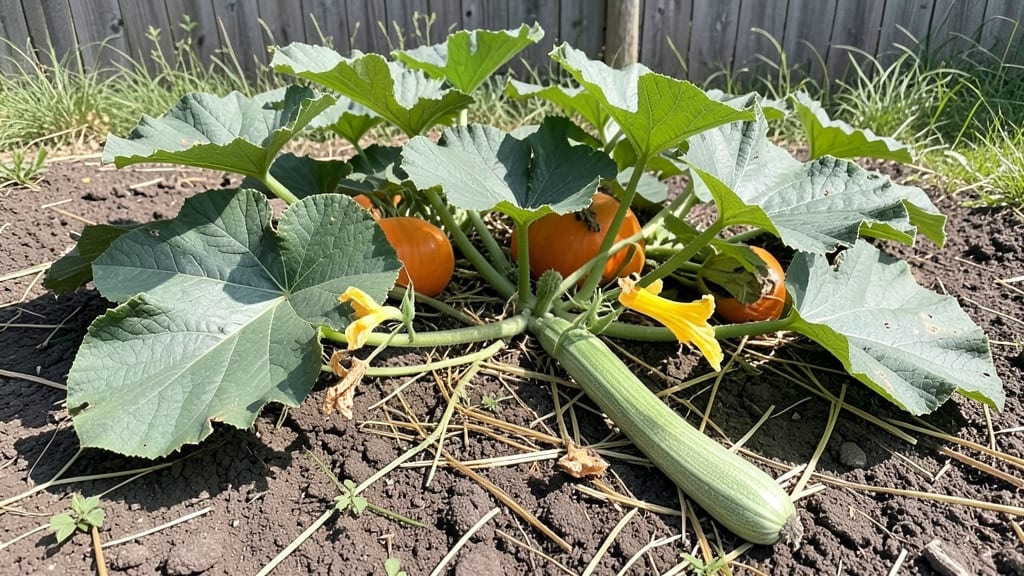
You can plant pumpkins and squash together since they're both cucurbit family members, but they need strategic spacing and companion planting to succeed. These sprawling vines thrive when given ample room, sturdy trellising, and nutrient-rich soil to prevent competition.
These fast-growing plants share similar care needs, making them ideal neighbors in the garden. 🌱 Their sprawling vines create natural shade that helps conserve soil moisture, while their shared pollinators (like bees) improve fruit set.
I always plant them with marigolds nearby—they repel squash bugs that target both crops. The key is giving each plant at least 4-6 feet of space to prevent disease spread from crowded foliage.
For best results, choose varieties with similar maturity timelines—this prevents one crop from outcompeting the other for sunlight. Raised beds work exceptionally well for these heavy feeders, as they allow better drainage and easier pest monitoring.
Just remember: while they're compatible, they're not identical—pumpkins typically need slightly more space than squash varieties.
💡 In This Article
- Why Pumpkins and Squash Grow Well Together
- Optimal Spacing and Companion Planting Tips
Why pumpkins and squash grow well together
Both pumpkins and squash belong to the Cucurbita genus, meaning they share identical root systems, leaf structures, and even pest vulnerabilities. This botanical kinship creates natural synergy in the garden.
Their sprawling vines grow aggressively—often reaching 10-20 feet—which helps suppress weeds while creating dense ground cover that conserves moisture through evaporation reduction. The shared leaf structure also provides similar microclimates that attract the same pollinators, particularly bees and hoverflies, which boost fruit production for both crops.
The science behind their compatibility lies in their nitrogen-fixing root associations. Both plants develop beneficial relationships with soil microbes that improve nitrogen availability—critical for their heavy fruit production. Pumpkins typically require 1.5-2 pounds of nitrogen per 100 feet of row, while squash need slightly less (1-1.5 pounds).
When planted together, their combined root systems create a more efficient nutrient uptake network, reducing competition for essential minerals like potassium and phosphorus.
Here's what most gardeners miss: their shared pest vulnerabilities actually work in their favor when planted strategically. Both crops attract squash vine borers and cucumber beetles, but planting them together allows you to concentrate natural predators like parasitic wasps in one area.
The dense foliage also creates physical barriers that deter deer and rabbits, which often target solitary plants. This mutual defense system is why experienced growers often plant entire cucurbit family blocks together.
One often-overlooked benefit is their shade compatibility. Pumpkin vines can reach heights of 6-10 feet when trellised, creating natural shade that protects squash from sun scald while maintaining optimal temperatures for fruit development.
The ideal scenario is planting squash varieties like butternut (which matures in 85-100 days) near pumpkin varieties like Howden (which matures in 100-110 days), allowing the squash to benefit from early shade while the pumpkins develop their full canopy.
Their growth habits also create a natural mulching system. Large pumpkin leaves can reach 12-18 inches wide, creating a living mulch that:
- Reduces soil temperature fluctuations by up to 10°F during hot days
- Suppresses weeds by blocking 90%+ of sunlight to the soil
- Retains moisture by reducing evaporation rates by 30-40%
What's fascinating is how their flowering periods align. Both produce male and female flowers on the same plant, but the timing is slightly different—pumpkins typically flower 3-5 days earlier than squash. This staggered bloom creates a continuous food source for pollinators throughout the growing season, ensuring better fruit set.
The shared nectar production also attracts beneficial insects that prey on common cucurbit pests, creating a natural pest control ecosystem.
The only caveat is their disease transmission risk. Both are susceptible to powdery mildew and downy mildew, which spread rapidly in crowded conditions. This is why proper spacing (4-6 feet between plants) becomes critical when growing them together.
The good news? Their shared vulnerability means you can implement the same disease prevention strategies for both crops, from copper sprays to proper air circulation.