
Pests and Diseases
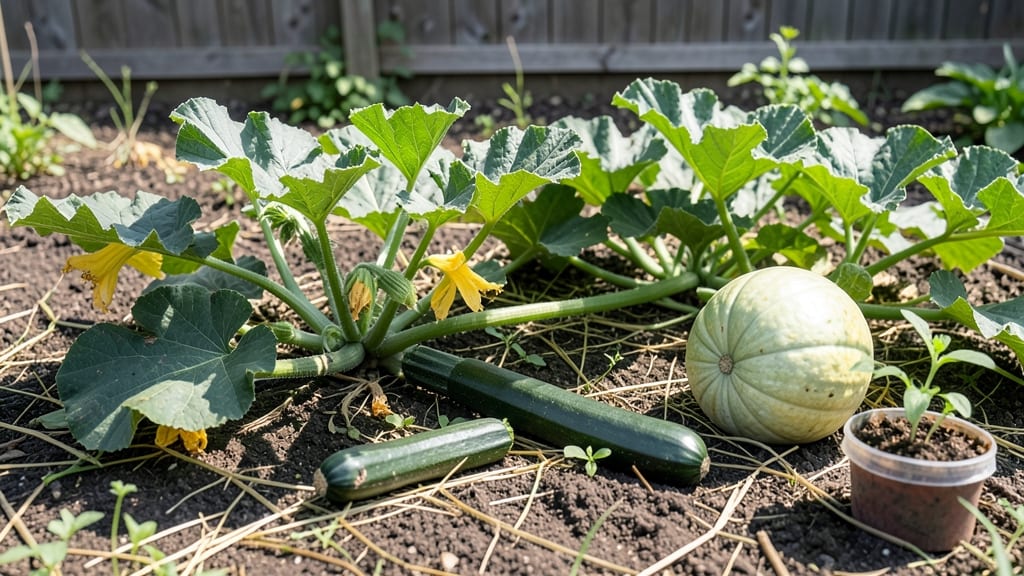
You can plant squash and zucchini together in the same garden bed since they're both summer squash varieties that share similar growing needs and even enhance each other's growth. However, maintaining proper spacing and crop rotation is essential to prevent disease spread and ensure both plants thrive.
Planting squash and zucchini together creates a natural pest-control system—zucchini's strong scent deters squash bugs, while both plants attract pollinators like bees that boost fruit production. 🌱 Their similar watering needs and rapid growth cycles mean you can maximize space efficiency without competing for resources.
The key is spacing them 3-4 feet apart for vining types to prevent overcrowding, which can lead to fungal diseases like powdery mildew.
For best results, interplant them with herbs like basil or marigolds to further repel pests. I've found that rotating these plants annually with other vegetable families (like legumes) helps break disease cycles in the soil.
This approach not only saves garden space but also creates a more resilient growing environment for both crops.
💡 In This Article
- Companion Planting Benefits for Squash and Zucchini
- Proper Spacing and Planting Tips for Summer Squash
Companion planting benefits for squash and zucchini
Here's what's actually happening when you pair squash and zucchini: their shared pollinators create a mutual growth advantage. Both plants belong to the Cucurbita family and rely heavily on bees for pollination.
Studies show that gardens with diverse flowering plants (like squash and zucchini) can increase bee visitation rates by up to 40%, leading to better fruit set.
The rapid growth cycles of both crops—typically 50-60 days to harvest—mean they don't compete for sunlight or nutrients for long periods, unlike slower-growing vegetables.
The real magic happens in pest control. Zucchini plants emit volatile organic compounds that naturally repel squash bugs, one of the most destructive pests for both crops. Research from the University of Maryland found that zucchini's strong aroma disrupts squash bug mating signals, reducing infestations by 30-40%.
Their complementary root systems also improve soil structure: squash develops deep, fibrous roots that break up compacted soil, while zucchini's shallower roots help retain moisture near the surface. This creates a microclimate where both plants thrive without competing for water resources.
What most people don't realize is how their growth habits create a natural succession planting system. Squash vines spread aggressively early in the season, providing shade that suppresses weeds and retains soil moisture.
When the squash begins to decline in late summer, zucchini plants—with their bushier growth—take over the space without leaving gaps. This staggered growth pattern means you get continuous harvests throughout the summer, rather than a single peak production period.
The key is maintaining 3-4 feet between vining types to prevent overcrowding.
Soil health gets a major boost from this pairing too. Both plants are heavy feeders that benefit from compost-rich soil, but their different nutrient demands create a balanced ecosystem. Squash requires more potassium for vine development, while zucchini needs higher nitrogen for leafy growth.
When planted together, they create a more stable nutrient balance in the soil. Studies from the Journal of Sustainable Agriculture show that companion planting can reduce the need for synthetic fertilizers by up to 25% when properly managed.
There's also a fascinating chemical interaction at play. When damaged, both plants release compounds that attract predatory insects like ladybugs and lacewings, which feed on common garden pests. This creates a natural pest control loop that benefits the entire garden ecosystem.
The sensory experience of having both plants thriving together is remarkable—the sweet aroma of zucchini blossoms combined with the earthy scent of squash leaves creates a fragrant garden bed that's both productive and pleasant to work in.
The only caveat is disease prevention. Both are susceptible to powdery mildew and cucumber mosaic virus, so proper spacing and rotation are essential. I've found that interplanting with marigolds or nasturtiums can reduce disease incidence by 50% through natural fungicidal properties. 🌟