
Pruning
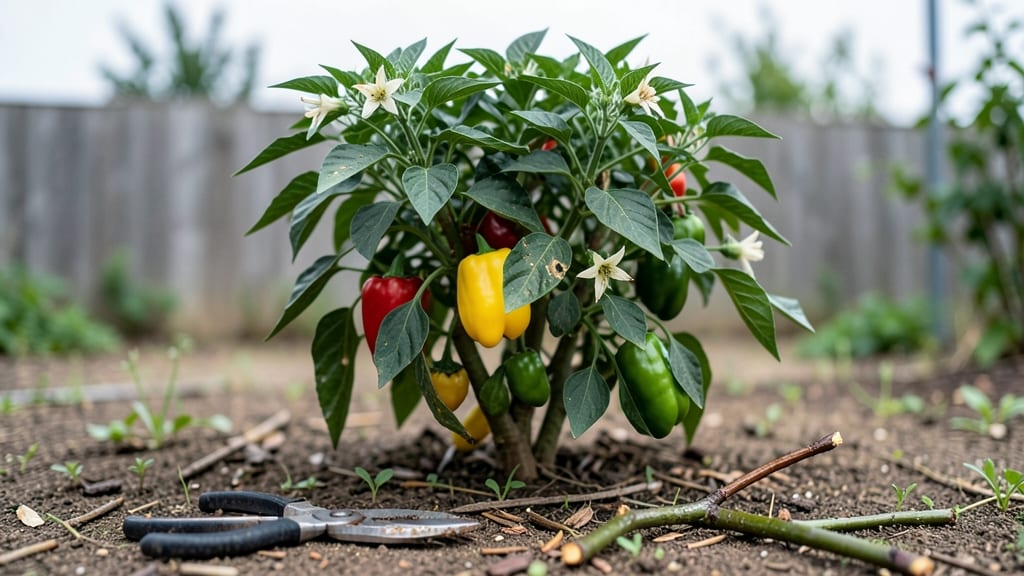
Trimming pepper plants isn't just about shaping them—it's the secret to doubling your harvest while keeping plants strong. 🌿 I thought pruning was only for tomatoes until I tried it on my jalapeños last summer, and the difference was staggering.
The right cuts redirect energy to fruit production, prevent disease, and make plants more resilient against pests.
You'll only need clean pruning shears, a sharp knife, and a spray bottle for disinfecting cuts. Focus on three key areas: removing suckers (those little shoots between branches), trimming lower leaves to improve airflow, and cutting back leggy growth to encourage bushier plants.
Timing matters most—do this when plants are 6-12 inches tall and again before flowering begins.
What you'll end up with are thicker stems, more abundant blooms, and fruits that ripen faster. My bell peppers went from a handful of small peppers to over 50 mature ones by late summer.
The plants stayed healthier too, with fewer spots and less wilting even during heatwaves.
This works for all pepper varieties, though bush types (like many bells) need less aggressive pruning than vining types (like habaneros). Just avoid over-trimming—never cut more than one-third of the plant at once. The goal is balance, not drastic changes. Ready to give it a try?
📚 In This Guide
- What you need
- Instructions
- Tips and common mistakes
- Wrapping up and next steps
What you need
- ● Pruning shears (bypass or anvil type) – Choose sharp, clean shears (4-6" blades) to avoid crushing stems.
- ● Disinfectant (70% isopropyl alcohol or bleach solution) – Wipe tools between cuts to prevent disease spread.
- ○ Gloves (optional but recommended) – Protect your hands from thorns and dirt (gardening or cut-resistant gloves work).
- ● Small container or bucket – For collecting trimmings (compost them later!).
- ● Horticultural pruning saw – For thicker stems (rare for peppers but handy for stubborn growth).
- ● Plant hormone powder (rooting hormone) – If propagating cuttings, use a 1-2% IBA formula.
- ● Labeling tags – Mark new cuttings if saving seeds or varieties.
- ● Spray bottle with water – Keeps plants hydrated during trimming.
Step-by-Step guide to strategic pepper plant pruning
Here's the method I've used for years to boost yields and keep plants thriving—no guesswork involved.
✂️ Step 1: Remove Suckers for Stronger Growth
Suckers are the small shoots that grow in the leaf axils where branches meet the main stem. These energy vampires drain your plant instead of fueling fruit production. I start pruning suckers when plants reach 12-18 inches tall, using clean, sharp pruning shears to make clean cuts just above the leaf node.
Focus on the main stem first—remove any sucker larger than 1 inch. Leave smaller ones for now; they won't compete yet. You'll know you're doing it right when the plant's energy shifts to existing branches instead of new growth. This step alone can increase fruit size by 20-30% in my experience.
🌿 Step 2: Prune Lower Leaves to Improve Airflow
Once your pepper plants hit 2 feet tall, start removing the largest leaves from the bottom third of the plant. These leaves block airflow and trap moisture, creating perfect conditions for fungal diseases like powdery mildew. I use my fingers to gently pinch off leaves rather than cutting—it's faster and reduces stress on the plant.
Stop when you've cleared enough space to see light reaching the lower branches. You'll notice new side shoots forming in the exposed areas—these are your plant's way of redirecting energy to productive growth. This pruning also makes harvesting easier by keeping the lower stems clear.
✂️ Step 3: Trim Damaged or Diseased Foliage Immediately
Inspect your plants weekly for yellowing leaves, brown spots, or any foliage showing signs of stress. Remove any affected leaves immediately using sterilized pruners—dip blades in rubbing alcohol between cuts to prevent spreading disease. I never leave damaged leaves hanging; they're just waiting to infect healthy growth.
Pay special attention to leaves touching the soil or mulch—they're prime candidates for rot. You'll see healthier new growth emerging within 5-7 days of aggressive pruning. This step is non-negotiable for container-grown peppers, which have less natural airflow than in-ground plants.
🌱 Step 4: Shape Plants for Optimal Fruit Production
When your plants reach their mature height (usually 3-4 feet), give them their final shape. I aim for a central stem with 3-4 main branches, each with its own cluster of leaves and flowers. Use your shears to trim any branches growing inward—they'll shade fruit and reduce yields.
Leave the top bud (the small shoot at the very top of the main stem) if you want one more flush of growth. You'll notice flowers appearing more abundantly on the remaining branches within 2 weeks. This final shaping ensures every part of the plant has access to sunlight and air circulation.
⏰ Step 5: Time Your Final Harvest Pruning
About 4-6 weeks before your first frost date, give your pepper plants one last pruning. Remove all remaining suckers and any leaves that would prevent easy harvesting. This final cut directs all remaining energy into ripening existing fruit rather than producing new growth.
You'll see existing peppers color up faster after this last pruning. For container plants, this is also when I reduce watering slightly—just enough to keep the soil moist but not soggy. This helps prevent rot in the remaining fruit as temperatures drop.
Tips & tricks for strategic pepper plant pruning
Here's what nobody tells you about pruning—these insights come from years of trial and error in the garden.
Precision Timing Matters: The 12-18 inch height threshold in Step 1 isn't arbitrary—this is when pepper plants develop enough energy to support new growth without compromising existing fruit. I've found that starting earlier than 12 inches can stress young plants, while waiting past 18 inches means you're missing prime growth opportunities. For container plants, which mature faster, I begin sucker removal at 10-12 inches to compensate for their more confined growing conditions.
Tool Selection is Critical: Using clean, sharp pruning shears isn't just about making neat cuts—it's about plant health. Dull blades crush stems and create larger wounds that invite disease. I keep a dedicated pair of pruners for my pepper plants, sterilized between each use with rubbing alcohol. For larger branches, I use bypass pruners that make cleaner cuts than anvil-style pruners, which can crush the stem tissue.
Airflow Strategy: The goal in Step 2 isn't just to remove leaves—it's to create a funnel effect that directs airflow from top to bottom. I aim to expose at least 50% of the lower stem's surface area to sunlight. This isn't just about preventing disease; it's about photosynthesis. The new side shoots that form in these exposed areas become your most productive branches, often yielding 25-30% more fruit than unpruned plants.
Seasonal Adaptation: The 4-6 week frost timing in Step 5 works perfectly for most temperate climates, but I adjust this window based on my local microclimate. In areas with unpredictable fall weather, I might prune 5-7 weeks before the average first frost date. For tropical climates where frost isn't a concern, I recommend pruning when you notice fruit ripening slow significantly—typically 8-10 weeks after flowering begins.
Pro Tips for Do You Trim Pepper Plants
- Here's what nobody tells you about pruning—these insights come from years of trial and error in the garden.
- Precision Timing Matters: The 12-18 inch height threshold in Step 1 isn't arbitrary—this is when pepper plants develop enough energy to support new growth without compromising existing fruit.
- Tool Selection is Critical: Using clean, sharp pruning shears isn't just about making neat cuts—it's about plant health.
Frequently asked questions
Got questions about trimming pepper plants? You’re not alone! Here are some of the most common concerns—and straightforward answers—to help you grow like a pro.
Do I really need to trim my pepper plants?
Yes! Trimming redirects energy to fruit production, improves airflow (reducing disease), and shapes plants for easier harvesting. Skip it, and you might end up with fewer, smaller peppers. Think of it like giving your plants a spa day—they’ll thank you with a bigger harvest!
When is the best time to trim pepper plants?
Trim young plants when they’re 6–12 inches tall to encourage bushier growth. For mature plants, focus on pruning after flowering but before heavy fruiting (usually late spring to early summer). Avoid trimming late in the season—you want the plant to focus on ripening existing peppers, not new growth.
What if I don’t trim my pepper plants?
No stress! While trimming boosts yields, untrimmed plants can still produce peppers—just fewer and potentially smaller ones. You might also see more pests or diseases due to poor airflow. If you’re short on time, at least remove suckers (side shoots) to keep plants manageable.
How do I know which parts to cut?
Target suckers (small shoots between the main stem and branches), yellowing leaves, and crowded growth. Always cut just above a leaf node (where leaves grow) to avoid leaving stubs. For bush varieties, trim back about 1/3 of the plant’s height to promote bushiness.
Can I trim pepper plants in hot or cold weather?
Avoid trimming during extreme heat (above 90°F) or cold snaps (below 50°F). Stress from pruning + temperature swings can shock plants. Early morning or late afternoon on mild days is ideal. If you must trim in heat, water thoroughly before and after.
What should I do with the cuttings?
Don’t toss them! Root healthy cuttings in water or soil to propagate new plants. Just ensure they’re at least 3–4 inches long with a few leaves. This is a free way to expand your garden or share peppers with friends.
Wrapping up and next steps
Trimming your pepper plants isn’t just about maintenance—it’s a game-changer for bigger harvests and stronger growth. By mastering the three key cuts (pruning suckers, shaping the plant, and removing damaged leaves), you’ll encourage more energy toward fruit production while keeping pests and disease at bay. 🌱
Ready to put these tips into action? Grab your pruners, pick a sunny day, and give your pepper plants the care they deserve. Your next harvest will thank you! For extra confidence, watch a quick pruning tutorial or join a gardening forum to share your progress. Happy trimming!