
Companion Plants
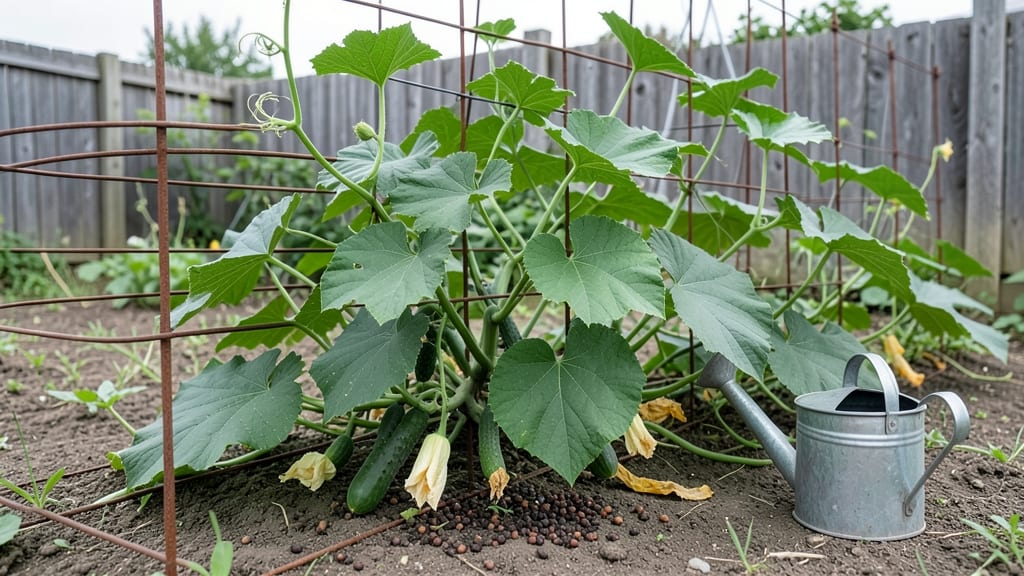
Feeding cucumber plants with the right nutrients turns vines into bushel-producing powerhouses. 🌱 I learned the hard way—my first year, my cucumbers grew leaves but barely any fruit because the soil was all wrong. The fix? A balanced approach that boosts growth and production, without burning the plants.
Start with rich, well-draining soil mixed with compost before planting. Then, feed lightly at three key stages: when vines start running, when flowers appear, and again when fruit sets.
Organic options like fish emulsion or worm castings work great, but a balanced 10-10-10 fertilizer in small doses does the trick too. The goal? Strong stems that can support heavy fruit and enough nitrogen to keep leaves lush but not so much they choke out flowers.
You’ll see the difference in 3-4 weeks: vines thicken, leaves stay vibrant, and cucumbers appear faster. My plants now produce 3-4 times more than before, with fewer yellowing leaves or stunted growth.
The secret isn’t just feeding—it’s feeding smart, matching nutrients to what the plant needs at each stage.
Container growers, take note: use half the recommended dose of fertilizer since roots have less space to absorb nutrients. And watch for overfeeding—wilting or leaf burn means you’ve gone too far. Adjust and observe: that’s how you get cucumbers that taste sweeter and grow in abundance.
📚 In This Guide
- What you need
- Instructions
- Tips and common mistakes
- Wrapping up and next steps
What you need
- ● Balanced fertilizer (10-10-10 or 5-5-5): 1–2 cups per 10 sq ft of planting area (organic or synthetic).
- ● Compost or well-rotted manure: 2–3 inches mixed into the soil before planting or as a top-dressing.
- ● Nitrogen-rich amendments: Blood meal: 1 tbsp per plant (sprinkle around roots).
- ● Fish emulsion: 1 tbsp per gallon of water (diluted fertilizer).
- ● Alfalfa meal: 1 cup per 10 sq ft (slow-release nitrogen).
- ● Calcium source (to prevent blossom-end rot): Crushed eggshells or crushed limestone (1 tbsp per plant).
- ● Garden trowel or hand fork (for mixing amendments into soil).
- ● Watering can or hose with a gentle spray nozzle (for applying liquid fertilizers).
- ● Gloves (to protect hands from soil and amendments).
- ● Measuring cups/spoons (for precise fertilizer application).
- ● Epsom salt (1 tbsp per gallon of water): Boosts magnesium for greener leaves.
- ● Seaweed extract: 1 tbsp per gallon (enhances root growth and stress resistance).
- ● Mulch (straw or grass clippings): Retains moisture and regulates soil temp.
- ● pH test kit: Ensures soil pH is between 6.0–6.8 (ideal for cucumbers).
Step-by-Step instructions for feeding cucumber plants
Here's the precise method I use to transform weak vines into prolific producers.
🌱 Step 1: Prepare the Soil with Organic Matter
Cucumbers are heavy feeders, so begin by amending the soil with 2-3 inches of compost mixed into the top 12 inches of soil. This establishes a nutrient-rich foundation that supports vigorous root development. I like to work in a 5-10-10 fertilizer at planting time—this balanced ratio gives cucumbers the phosphorus for root growth and potassium for disease resistance while keeping nitrogen moderate at first.
For container-grown cucumbers, blend 1 cup of compost with 1 gallon of potting mix before planting. The key is loose, well-draining soil that won't compact around roots. Press your finger into the soil—it should feel like a damp sponge, not mud.
💧 Step 2: Apply Nitrogen-Rich Fertilizer Early
When vines reach 12 inches tall (about 3-4 weeks after planting), switch to a high-nitrogen fertilizer like 10-10-10 or 21-0-0 to fuel leafy growth. I use ½ cup of 10-10-10 dissolved in 1 gallon of water as a foliar spray and soil drench every 2 weeks. This timing ensures lush foliage that shades fruit and prevents sunscald.
Watch for dark green, vigorous leaves—this is your signal the nitrogen is working. If leaves turn yellow with green veins, you're overdoing it. Reduce fertilizer by half and increase watering to flush excess salts from the soil.
☀️ Step 3: Boost with Liquid Fertilizer During Flowering
When flowers appear, switch to a balanced liquid fertilizer like fish emulsion (5-1-1) or seaweed extract (0-0-2) mixed at ½ strength. Apply this every 7-10 days to support both fruit production and plant health. The extra micronutrients in fish emulsion also prevent blossom-end rot, a common cucumber problem.
I apply fertilizer in the early morning when temperatures are below 80°F—this prevents leaf burn. Water the soil first to avoid root damage, then apply fertilizer to damp (not soggy) soil. You'll see sturdier stems and more consistent flowering within two weeks of this switch.
✂️ Step 4: Maintain with Mulch and Side Dressing
Spread 2-3 inches of straw mulch around plants to retain moisture and slowly release nutrients. Every 4-6 weeks, add a side dressing of 1 cup compost or ½ cup 10-10-10 fertilizer along the base of vines. Gently scratch this into the top 1 inch of soil to avoid disturbing roots.
This mid-season boost prevents nutrient depletion in heavy producers. You'll notice larger leaves, more flowers, and heavier fruit set after each side dressing. Always water thoroughly after applying fertilizer to help nutrients penetrate the soil.
🌿 Step 5: Adjust for Fruit Production
When cucumbers begin forming, switch to a low-nitrogen, high-phosphorus fertilizer like 0-20-20 to encourage fruiting. Use this every 3-4 weeks until harvest. The phosphorus boosts energy transfer from leaves to fruit, resulting in thicker skins and sweeter flavor. I mix 1 tablespoon of 0-20-20 in 1 gallon of water and apply it directly to the soil.
Monitor plant color—yellowing leaves mean too much nitrogen, while purplish stems signal phosphorus deficiency. Adjust your mix accordingly. Healthy cucumber plants have dark green leaves, strong stems, and consistent fruit production without gaps.
Tips & tricks for feeding cucumber plants
Real talk: Cucumber plants don't just need feeding—they need a strategic nutrient timeline to go from scraggly vines to bushels of fruit. Here's what nobody tells you about maximizing your harvest.
Soil Texture Matters More Than You Think: In Step 1, when you're amending that 12 inches of soil, don't just focus on the compost and fertilizer. The real secret is creating a crumbly, sponge-like texture. I take it a step further by adding perlite or coarse sand (about 10% of the soil volume) to prevent compaction. This mimics the airy conditions cucumber roots love in their native tropics. Press your finger in—it should spring back immediately, not hold an indent. For containers, I actually mix in vermiculite to improve moisture retention without suffocating roots.
Nitrogen Timing Is Everything: That 3-4 week window in Step 2 for nitrogen feeding is critical, but here's the thing: I start monitoring leaf color at week 2.5. If you see just a hint of yellow between veins (chlorosis), you're already too late—reduce your next application by 50% immediately. Pro tip: Split your high-nitrogen fertilizer (like 10-10-10) into three equal applications over those 2 weeks rather than one big dose. This prevents salt buildup that can actually burn roots.
Liquid Fertilizer Application Technique: When you're applying that fish emulsion or seaweed extract in Step 3, temperature really is everything. I've ruined batches by applying fertilizer when temps hit 85°F—even though instructions say "below 80°F." Here's my rule: If your hand feels warm on the soil surface, wait. I actually use a soil thermometer to confirm temps are below 78°F before applying. Also, always water first to avoid root burn, then apply fertilizer to damp soil—never soggy. The ideal is when water just starts to pool on the surface but hasn't yet run off.
Mulch Thickness Has Surprising Benefits: That 2-3 inches of straw mulch in Step 4 isn't just about moisture—it's a slow-release nutrient system. I double it to 3-4 inches in hot climates because the mulch breaks down and feeds the soil continuously. For extra insurance, I top it with a thin layer of grass clippings (if you don't have weeds) which adds nitrogen as they decompose. This creates a self-sustaining nutrient cycle that reduces your need for additional side dressings.
Pro Tips for Feeding Cucumber Plants
- Real talk: Cucumber plants don't just need feeding—they need a strategic nutrient timeline to go from scraggly vines to bushels of fruit.
- Soil Texture Matters More Than You Think: In Step 1, when you're amending that 12 inches of soil, don't just focus on the compost and fertilizer.
- Nitrogen Timing Is Everything: That 3-4 week window in Step 2 for nitrogen feeding is critical, but here's the thing: I start monitoring leaf color at week 2.5.
Frequently asked questions
Got questions about keeping your cucumber plants thriving?
Here are answers to the most common ones—so you can grow bigger, healthier harvests with ease!
How often should I feed cucumber plants?
Feed cucumber plants every 2–4 weeks during the growing season (spring to fall) with a balanced fertilizer (like 10-10-10) or compost tea. For organic boosts, use fish emulsion or worm castings every 3–4 weeks. Overfeeding can burn roots—always water first!
When is the best time to fertilize cucumbers?
Start feeding 2 weeks after planting when vines begin growing. For container cucumbers, fertilize lightly every 2 weeks. Avoid feeding right after transplanting—let roots establish first. Late summer? Reduce feeding to let plants focus on ripening fruit, not foliage.
Can I use coffee grounds or eggshells to feed cucumbers?
Coffee grounds
(used, composted) add nitrogen, while crushed eggshells provide calcium to prevent blossom-end rot. Mix them into soil or compost tea. Pro tip: Balance with phosphorus/potassium (like banana peels) for stronger vines and fruit. No fresh eggshells—they can mold!
Why are my cucumber leaves yellowing after feeding?
Yellow leaves often mean over-fertilizing (too much nitrogen) or root burn. Flush soil with water, reduce feeding frequency, and switch to a lower-nitrogen fertilizer (like 5-10-10). Check for pests (aphids) or underwatering too—healthy leaves need balance!
What’s a quick fix for wilting cucumber plants?
Wilting can signal thirst, heat stress, or nutrient deficiency. First, water deeply at the base (not leaves). For a fast boost, mix 1 tbsp Epsom salt in a gallon of water (magnesium helps chlorophyll). If soil is compacted, loosen roots gently and top-dress with compost.
Wrapping up and next steps
Feeding your cucumber plants the right nutrients doesn’t have to be complicated—just simple, consistent, and rewarding! 🌱 With the right mix of organic boosters, compost, and companion plants, you’ll be harvesting crisp, thriving cucumbers in no time.
Whether you’re a seasoned gardener or just starting out, every healthy plant begins with the right care.
Now that you’re armed with the best feeding strategies, why not take the next step? Try experimenting with a few of these tips in your garden this season and watch your cucumbers flourish. Share your progress—we’d love to see (and celebrate!) your green thumbs at work! 🎉