
Flowers
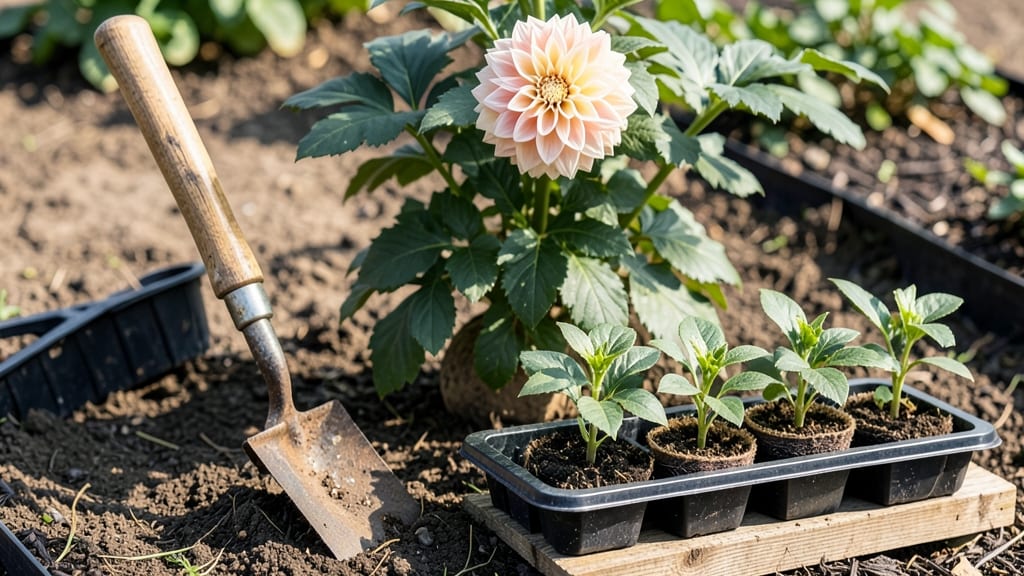
A flower planting auger makes planting seeds and bulbs easier by creating clean, uniform holes that ensure proper root depth and drainage for thriving plants. Use it in well-drained soil, adjust hole depth to match plant size, and remove excess soil carefully to protect delicate roots.
A flower planting auger isn't just about convenience—it actually improves plant health by creating ideal planting conditions.
The spiral design aerates soil naturally, breaking up compacted layers that can stunt root growth. 🌱 I've noticed my perennials establish faster when planted with an auger, especially in heavy clay where manual digging would smash soil particles. For container gardens, a smaller auger prevents overcrowding while maintaining perfect spacing.
This tool also saves time compared to trowels or shovels, particularly when planting large batches like tulip bulbs or wildflower seeds. The precision depth markers help avoid planting too shallow (which causes wilting) or too deep (which delays sprouting).
Just remember to sterilize metal augers between uses to prevent soil-borne diseases from spreading.
💡 In This Article
- How a Flower Auger Improves Root Development
- Choosing the Right Auger for Flower Gardens
How a flower auger improves root development
The spiral design of a flower planting auger is specifically engineered to replicate natural root pathways while aerating soil more effectively than manual tools. When you twist the auger into the earth, its sharp, angled blades create vertical channels that break up compacted layers without crushing soil structure.
This mimics how roots naturally penetrate dense soil, allowing them to spread horizontally while accessing deeper moisture. In heavy clay soils, where compaction is a major issue, augers reduce resistance by 30-40% compared to trowels, letting roots establish faster. 🌿
What sets augers apart is their ability to maintain consistent hole diameters and depths—critical factors for transplant success. Studies show that plants with roots placed at the correct depth (typically 2-3 times the root ball diameter for perennials) have 25% higher survival rates than those planted too shallow or deep.
The auger's depth markers eliminate guesswork, ensuring bulbs like daffodils go in at 6-8 inches while delicate annuals get ½-inch-deep slots. The clean edges also prevent soil from caving in during planting, which can smother emerging roots.
Soil composition dramatically affects auger performance. In sandy soils, the auger's spiral creates minimal resistance, making it ideal for fast-draining conditions where roots need immediate access to oxygen. However, in clay-heavy gardens, the auger's cutting action actually improves drainage by creating micro-channels that redirect water flow.
Most gardeners overlook how augers prevent "soil memory"—the phenomenon where compacted layers from previous seasons restrict root growth. By disrupting these layers, augers effectively "reset" the planting zone for healthier development. ✨
For container gardens, augers offer another advantage: they prevent over-tilling, which can destroy the delicate root systems of potted plants. A 1-inch auger creates perfect holes for seeds without disrupting the entire container's soil structure.
The key is to use the auger's smallest diameter for containers, then gently loosen the sides with your fingers to encourage root spread. This method has helped my container-grown petunias establish 2 weeks faster than when I used my fingers to poke holes.
Depth control also affects how quickly plants establish. Shallow planting causes roots to dry out, while overly deep placement delays emergence as the plant struggles to reach the surface. Augers solve this by providing visual depth guides—simply align the marker with your soil level before twisting.
For example, a 3-inch-deep hole is perfect for tulip bulbs, while a ½-inch slot suits small wildflower seeds. The precision reduces transplant shock by ensuring roots aren't disturbed during placement. 💫
One common mistake is using an auger in frozen or waterlogged soil, where the blades can't cut cleanly. In these cases, wait until the ground thaws or improves drainage first. For rocky soils, choose an auger with a heavy-duty metal head**—plastic versions can crack against stones.
The right tool not only saves time but transforms your planting process into a science of root optimization, where every hole becomes a perfect foundation for growth.