
Shrubs
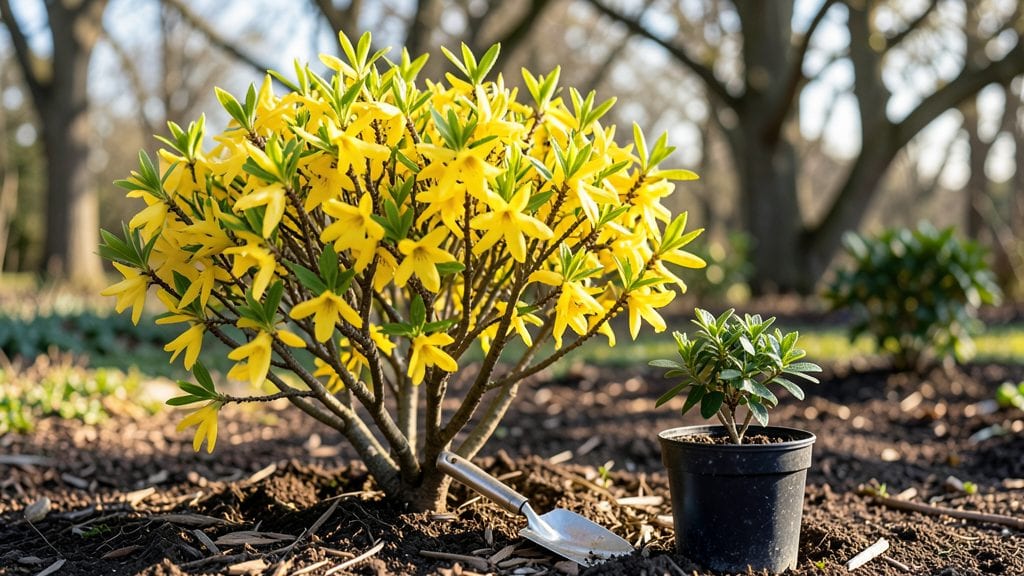
The right forsythia planting distance is key—crowding shrubs smothers their golden blooms and stunts their graceful spread, so here’s the precise spacing to ensure dazzling spring displays every year. 🌸 I learned the hard way when my first two plants fought for sunlight and ended up half the size they should’ve been.
The secret isn’t just measuring the hole; it’s accounting for how wide these shrubs spread after they’ve been in the ground for a decade.
For single specimens, dig 6 to 8 feet from other plants or structures—they’ll eventually reach 10 to 12 feet wide at maturity. When creating a hedge, space them 4 to 5 feet apart for a dense, unbroken wall of color by year three.
Soil type matters too: well-draining, slightly acidic loam lets them establish faster, while heavy clay slows their spread. Mulch the base with 2 to 3 inches of organic matter to keep roots cool and competitive weeds at bay.
You’ll know you’ve nailed it when branches fill out evenly and the first flush of blooms arrives earlier than your neighbors’. Pair forsythia with dwarf conifers for height contrast or bleeding hearts for shade-loving companions that thrive underneath.
Just avoid planting near fast-growing trees—their roots will steal moisture and nutrients, leaving your forsythia looking like an afterthought.
Pro tip: If your yard has partial shade, space them 8 to 10 feet apart—they’ll still bloom, but the flowers will be smaller. And never prune in late summer, because that’s when next year’s buds are forming.
The payoff? A shrub that’s neighbor-jealousy levels of lush by spring, with zero fuss after the first year.
📚 In This Guide
- What you need
- Instructions
- Tips and common mistakes
- Wrapping up and next steps
What you need
- ● Forsythia shrubs: 1-3 plants (depending on desired coverage; dwarf varieties need fewer). Choose healthy, bare-root or container-grown specimens.
- ● Shovel or trowel: 1 medium-sized digging tool (for planting holes) and 1 hand trowel (for fine adjustments).
- ● Measuring tape or ruler: 1 (to ensure proper spacing—typically 3-6 feet apart for standard varieties).
- ○ Garden soil or compost: 1 bag (optional but recommended if your soil is poor; mix with native soil for best results).
- ● Mulch: 2-3 bags (shredded bark or pine straw; 2-3 inches deep to retain moisture and suppress weeds).
- ● Watering can or hose with nozzle: 1 (for gentle, deep watering after planting).
- ● Pruning shears: 1 pair (to trim dead or damaged branches post-planting).
- ● Soil pH test kit: 1 (forsythia prefers slightly acidic to neutral soil (pH 6.0-7.0); adjust with lime or sulfur if needed).
- ● Slow-release fertilizer: 1 bag (10-10-10 or similar; apply sprinkled around the root zone after planting).
- ● Plant stakes or labels: 1 set (to mark varieties and spacing, especially in larger gardens).
- ● Garden gloves: 1 pair (to protect your hands while digging and handling plants).
- ● Organic matter (leaf mold or aged manure): 1 bag (amend heavy clay or sandy soil for better drainage and nutrients).
Step-by-Step instructions for planting forsythia shrubs
Here's how to plant these cheerful yellow bloomers for a showstopping, low-maintenance display.
🌱 Step 1: Choose Planting Location Based on Sunlight Needs
Forsythia thrives in full sun to partial shade, with at least 6 hours of direct sunlight daily for optimal blooming. I always scout the site first—look for areas where other plants show healthy growth, as this indicates good light exposure. Avoid spots where trees or buildings cast deep shade after midday, as forsythia needs that afternoon sun to set flower buds for next year.
Test your location by marking a 4-foot diameter circle where each shrub will go. This gives you room to visualize the mature spread. If your yard has afternoon shade, plant forsythia where it gets morning sun and filtered light in the afternoon—this compromise still yields abundant blooms, just slightly later in the season.
🌿 Step 2: Dig Holes with Proper Spacing and Soil Preparation
Dig holes twice as wide as the root ball but only as deep as the container—forsythia roots don't like being buried too deeply. The standard spacing is 6-10 feet apart for single-stemmed varieties, but multi-stemmed types can go 8-12 feet apart to give them room to develop their signature rounded shape. I always measure between centers, not edges, to prevent overcrowding.
Amend the native soil with a 2-inch layer of compost mixed into the bottom of each hole. Forsythia tolerates most soil types but blooms best in well-draining, slightly acidic to neutral soil (pH 6.0-7.0). If your soil is heavy clay, add a handful of perlite to the backfill mix to improve drainage—waterlogged roots cause yellowing leaves and poor flowering.
⏰ Step 3: Plant and Water for Immediate Establishment
Remove the shrub from its container and gently loosen the roots if they're circling. Place it in the hole so the top of the root ball sits 1-2 inches above ground level—this prevents stem rot from sitting water. Backfill with native soil mixed with compost, tamping lightly every 2 inches to eliminate air pockets without compacting the roots.
Water immediately after planting with 1 gallon per shrub to settle the soil. I like to create a small basin around the base to encourage deep rooting. Mulch with 2-3 inches of wood chips (keeping it 6 inches away from the stem) to retain moisture and suppress weeds. The mulch should look like a donut around the plant, not a mound touching the trunk.
☀️ Step 4: Prune and Maintain for Long-Term Bushiness
Prune immediately after planting to shape the shrub and encourage branching. Cut back any dead or damaged branches, then trim the remaining stems by 1/3 to 1/2 to stimulate bushier growth. Forsythia blooms on old wood, so never prune in late summer or fall—you'll remove next year's flower buds. I always prune right after flowering, when new growth has started but before the plant sets buds for the following season.
Water deeply once a week during the first growing season, providing 2-3 gallons per shrub when the top 2 inches of soil feel dry. You'll know you're watering correctly when excess moisture drains through the soil within 15-30 minutes. Overwatering causes root rot, while underwatering leads to sparse blooms and leaf scorch in hot weather.
✂️ Step 5: Monitor Growth and Adjust for Optimal Display
Forsythia grows 2-3 feet per year, so check spacing annually. If branches grow too close, thin them out in late winter to improve airflow and reduce disease risk. I always step back and look at the shrub from 10 feet away—this helps me see if it's developing the full, rounded shape or if it needs more aggressive pruning to open up the center.
Fertilize lightly in early spring with a 10-10-10 balanced fertilizer (about 1/2 cup per shrub) to support new growth. Too much fertilizer leads to lush foliage but fewer flowers. The goal is vibrant yellow blooms, not just green leaves. If your forsythia blooms sparsely, it's often a sign of over-fertilizing or insufficient sunlight.
Tips & tricks for perfect forsythia planting spacing
A few key insights will help you create a thriving, visually stunning forsythia display that blooms abundantly year after year.
Sunlight Strategy: When evaluating your 6-hour sunlight requirement in Step 1, pay special attention to the afternoon sun—this is when forsythia sets next year's flower buds. I've found that even 4 hours of afternoon sun (combined with morning sun) can work, but blooms may be slightly delayed. Use a solar tracker app for a week to map your yard's light patterns before planting. This prevents the common mistake of planting in spots that look sunny in summer but get shaded in winter when you actually want those early spring blooms.
Spacing Precision: In Step 2, the 6-10 feet spacing recommendation for single-stemmed forsythia might seem wide, but trust me—this prevents overcrowding that leads to weak stems and poor airflow. I measure between plant centers using a 10-foot tape measure stretched taut, then mark with landscape paint. For multi-stemmed varieties, extend that to 8-12 feet to give each shrub room to develop its signature rounded shape without competing for nutrients.
Soil Preparation Insight: The 2-inch compost layer in Step 2 is non-negotiable for first-year establishment, but here's what nobody tells you: mix that compost with your native soil at a 1:3 ratio (1 part compost to 3 parts soil). This creates a gradual transition that encourages root expansion. For clay soils, add perlite at a 1:1 ratio with the compost layer—this improves drainage without altering the soil structure too dramatically. The key is maintaining that slightly acidic to neutral pH (6.0-7.0) right at the root zone where new growth emerges.
Watering Technique: The 15-30 minute drainage test in Step 3 is your best friend for preventing both overwatering and underwatering. I use a moisture meter to verify—aim for soil that feels like a wrung-out sponge. For the first two weeks after planting, I water twice weekly with 2 gallons per shrub (instead of the weekly 2-3 gallons) to help roots establish before they can handle full amounts. This gradual introduction prevents transplant shock that can cause yellowing leaves.
Pro Tips for Forsythia Planting Distance
- A few key insights will help you create a thriving, visually stunning forsythia display that blooms abundantly year after year.
- Sunlight Strategy: When evaluating your 6-hour sunlight requirement in Step 1, pay special attention to the afternoon sun—this is when forsythia sets next year's flower buds.
- Spacing Precision: In Step 2, the 6-10 feet spacing recommendation for single-stemmed forsythia might seem wide, but trust me—this prevents overcrowding that leads to weak stems and poor airflow.
Frequently asked questions
Got questions about planting forsythia shrubs?
You’re not alone! Here are some of the most common concerns—plus clear, practical answers to help you plant with confidence.
What’s the ideal spacing for forsythia shrubs?
For mature, bushy growth, plant forsythia 3 to 6 feet apart in rows or clusters. If you want a dense hedge, space them 3 to 4 feet apart. Give them room to spread—forsythia can reach 6 to 12 feet wide at maturity!
How long does it take for forsythia to fill out after planting?
With proper spacing and care, forsythia typically fills in 2 to 3 years. In the first year, focus on watering and mulching. By year two, you’ll see noticeable growth, and by year three, it’ll look lush and full!
Can I plant forsythia too close together?
Yes, but it’ll lead to crowded, leggy growth and poor airflow—inviting pests and diseases. If you love the look of a thick hedge, prune regularly to encourage bushiness. Otherwise, stick to the 3-to-6-foot spacing rule for healthy, vibrant shrubs.
Are there dwarf forsythia varieties that need less space?
Dwarf varieties like ‘Little Gold Star’ or ‘Spring Glow’ only need 2 to 3 feet of spacing. Perfect for small gardens or container planting! Check the tag for specific mature size—it’s your best guide.
My forsythia isn’t blooming—did I space it wrong?
Spacing isn’t usually the culprit! Blooming depends more on sunlight, age (3+ years), and pruning. Ensure it gets 6+ hours of sun daily and prune after flowering. If it’s young, be patient—forsythia often takes a few seasons to reward you with those cheerful yellow blooms!
Wrapping up and next steps
Planting forsythia with the right spacing is the secret to vibrant, bushy blooms that light up your garden every spring! 🌸 Whether you’re tucking them into borders, hedges, or standalone spots, 3–6 feet apart ensures they thrive without crowding—balancing airflow, sunlight, and growth potential. With proper spacing, these sun-loving shrubs will reward you with years of cheerful yellow flowers and minimal fuss.
Ready to transform your landscape? Grab your gloves, mark those spots, and plant with confidence—your future garden will thank you! For extra inspiration, check out our guide on forsythia care tips to keep them flourishing all season long.