
Planting
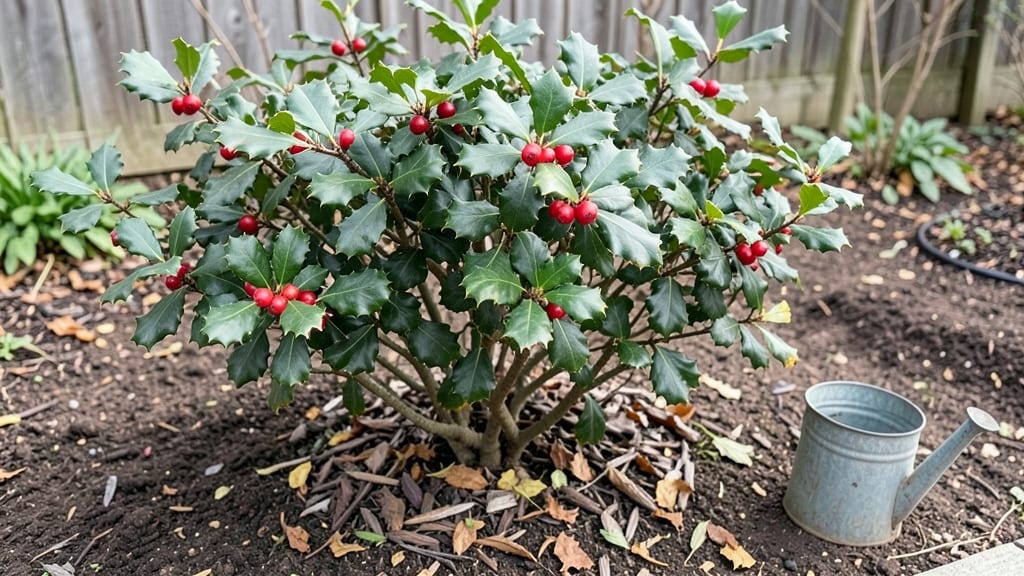
Caring for holly plants transforms your yard into a year-round holiday display without the holiday price tag. 🌿 I've kept mine thriving for over a decade by mastering just three key habits: watering only when the top inch of soil feels bone-dry, planting in full sun with afternoon shade in hot climates, and pruning only after berries fade.
The thorns might seem intimidating, but they're actually the plant's way of protecting those bright red berries that birds adore—and that you'll want to show off.
The real secret isn't complicated: holly plants reward patience. They handle drought better than most evergreens but still need well-draining soil mixed with compost at planting time. A 5-gallon container works for small varieties, while mature specimens need at least 6 feet of space.
The first two years are critical—keep them consistently moist, and you'll establish a plant that needs watering only every 1-2 weeks once established.
By winter, you'll have glossy leaves year-round and berries that last until spring if you leave them on the plant. The fragrance from crushed leaves is surprisingly pleasant, and the structure provides perfect cover for birds while adding architectural interest to your landscape.
Prune in late winter to shape the plant, but never remove old wood—it's where those iconic berries form.
This works equally well in containers or planted beds, from Zone 5 through Zone 9. The only real challenge? Keeping curious pets away from the berries until they're fully ripe.
With these basics, your holly will outlast every other plant in your yard—and become the green centerpiece you never knew you needed.
📚 In This Guide
- What you need
- Instructions
- Tips and common mistakes
- Wrapping up and next steps
What you need
- ● Holly plant: 1 nursery-grown holly (preferred for faster growth) OR
- ● Seeds or cuttings (if propagating from scratch)
- ● Well-draining potting mix: 2–3 bags (10–15 lbs each) of a peat-based or acidic mix (pH 4.5–6.0). Avoid garden soil—it’s too dense!
- ● Container or garden space: For pots: 1–2 containers (12–18" diameter) with drainage holes. Pro tip: Terracotta pots help prevent root rot! 🌡️
- ● For in-ground planting: A hole twice as wide as the root ball, with loose, amended soil.
- ● Slow-release fertilizer: 1–2 packets of acid-loving plant fertilizer (e.g., 10-10-10 or holly-specific formula).
- ● Mulch: 1–2 bags of pine bark or wood chips (2–3 inches thick) to retain moisture and acidity.
- ● Watering can or hose with a gentle spray nozzle.
- ● Soil pH test kit (to monitor acidity levels).
- ● Pruning shears (for shaping or removing dead branches).
- ● Epsom salt (1 tbsp/month in water for magnesium boosts).
- ● Plant support stakes (if growing tall varieties like Ilex opaca).
- ● Decorative rocks or pebbles (for a polished pot look!).
Step-by-Step guide to keeping holly plants thriving all year
Holly plants are tough, elegant, and perfect for year-round structure. Here’s how to keep them healthy with minimal effort.
🪴 Step 1: Choose the Right Location for Sun and Soil
Holly thrives in full sun to partial shade, with at least 4-6 hours of direct sunlight daily. I always place mine where they get morning sun and afternoon shade—this prevents leaf scorch while keeping the foliage vibrant. The soil should be well-draining but consistently moist, so avoid heavy clay unless amended with compost.
If your holly looks stressed, check the leaves: yellowing means too much water or poor drainage, while brown edges signal too much sun or dry soil. Amend the soil with a 2-3 inch layer of mulch to retain moisture and regulate temperature.
💧 Step 2: Water Deeply but Infrequently
Holly plants hate soggy roots, so I water deeply once a week during dry spells, allowing the top 2-3 inches of soil to dry out between waterings. Stick your finger in the soil—if it feels dry at that depth, it’s time to water. Overwatering causes root rot, which holly is particularly susceptible to.
In winter, reduce watering significantly unless you’re in a very dry climate. A lightly mulched holly can go weeks without water, as the mulch protects roots from freezing and evaporation. Watch for wilting leaves—this is a late sign of drought stress in holly.
☀️ Step 3: Prune for Shape and Health in Late Winter
The best time to prune holly is late winter or early spring, just before new growth begins. I remove dead, diseased, or crossing branches first, then shape the plant by trimming back overgrown areas. Holly responds well to pruning, so you can be bold—just avoid cutting into old wood, as it won’t regrow.
Use clean, sharp pruners to make cuts just above a leaf node or bud. This encourages bushier growth. If your holly hasn’t flowered yet, avoid heavy pruning now—wait until after the berries form to maintain its fruiting potential.
✂️ Step 4: Fertilize Lightly for Strong Growth
Holly doesn’t need much fertilizer, but a balanced, slow-release fertilizer in early spring gives it a gentle boost. I use a 10-10-10 or 20-20-20 formula at half-strength, applied in early April. Avoid high-nitrogen fertilizers—they promote leafy growth at the expense of berries.
If your holly isn’t producing berries, it might need more phosphorus. Switch to a 5-10-10 fertilizer for a season to encourage flowering. Always water before and after fertilizing to prevent root burn.
🌱 Step 5: Protect from Pests and Winter Damage
Holly is relatively pest-resistant, but spider mites and scale can still appear. I treat infestations with a strong spray of water first, followed by insecticidal soap if needed. For winter protection, wrap young holly plants in burlap or use a frost cloth if temperatures drop below 10°F.
Mature holly can handle cold well, but newly planted ones need extra care. Mulch heavily around the base to insulate roots. If your holly loses leaves in winter, don’t panic—it’s normal for some varieties to go dormant.
Tips & tricks for perfect holly plant care
Keeping holly plants thriving takes just a few smart strategies—here's what I've learned from years of growing them without fuss.
Sunlight Strategy: In Step 1, when choosing your holly's location, remember that morning sun and afternoon shade is ideal for most varieties. If you notice brown leaf edges, it's a clear sign your holly is getting too much direct afternoon sun—try moving it slightly or providing afternoon shade with a sheer curtain. The 4-6 hours of sunlight should be spread throughout the day, not concentrated in just a few hours.
Watering Wisdom: The once-a-week watering guideline in Step 2 works perfectly for most climates, but your holly's needs change with seasons. In summer, check that top 2-3 inches of soil are dry before watering, but in winter, you might only need to water every 3-4 weeks unless you're in an exceptionally dry area. Overwatering is the #1 killer of holly plants—always let excess water drain completely.
Pruning Precision: When pruning in late winter (Step 3), focus your cuts just above a leaf node or bud to encourage new growth. I've made the mistake of cutting into old wood—don't make it! Also, if your holly has berries, wait until after they've dropped before doing any major pruning. The 10°F cold tolerance mentioned for winter protection means most holly varieties can handle typical winter conditions, but newly planted ones need that extra burlap wrapping for their first few winters.
Fertilizer Fine-Tuning: For Step 4, if you're using that 10-10-10 fertilizer at half-strength, you can actually split the application into two smaller doses—once in early April and again in early June. This gives your holly a steady supply of nutrients without overwhelming it. And if you notice your holly isn't producing berries, that phosphorus boost with 5-10-10 for a season often works wonders. Just remember to water before and after fertilizing to prevent root burn.
Pro Tips for Holly Plant Care
- Keeping holly plants thriving takes just a few smart strategies—here's what I've learned from years of growing them without fuss.
- Sunlight Strategy: In Step 1, when choosing your holly's location, remember that morning sun and afternoon shade is ideal for most varieties.
- Watering Wisdom: The once-a-week watering guideline in Step 2 works perfectly for most climates, but your holly's needs change with seasons.
Frequently asked questions
about holly plant care—because even low-maintenance plants need a little guidance!How often should I water my holly plant?
Water holly plants deeply but infrequently—about once a week, or when the top 1-2 inches of soil feel dry. Overwatering causes root rot, so ensure pots have drainage holes. During winter, reduce watering to every 2-3 weeks unless indoors, where humidity levels may require more frequent checks. Pro tip: Stick your finger in the soil—if it’s damp past your first knuckle, wait a day or two!
Can holly plants survive winter outdoors?
Most holly varieties (like Ilex crenata or Ilex opaca) are hardy to USDA Zones 5-9, but young plants or tender types need protection. Mulch the base with 2-3 inches of shredded bark or leaves, and wrap the trunk with burlap if temperatures dip below 10°F. Evergreen hollies won’t lose leaves, but their berries may drop in harsh winters—don’t worry, they’ll bounce back!
Why aren’t my holly berries ripening?
Holly berries need both male and female plants to pollinate (yes, even if they’re the same species!). If you have only one plant, add a pollinator-friendly neighbor like boxwood or another holly variety. Poor berry development can also signal low sunlight (aim for 6+ hours daily) or over-fertilizing with nitrogen—switch to a balanced 10-10-10 formula in early spring.
How do I prune holly for fuller growth?
Prune hollies after flowering (late winter/early spring) to shape them or remove dead wood. Use clean, sharp shears to make cuts at a 45° angle just above a bud. Avoid heavy pruning—hollies grow slowly, and over-trimming can stress the plant. For dense growth, trim selective branches rather than hacking back randomly. Warning: Holly leaves are spiky—wear gloves!
What pests should I watch for on holly plants?
Holly plants are tough, but scale insects, aphids, and spider mites can still appear. Check undersides of leaves for sticky residue (honeydew) or tiny webs. Treat mild infestations with a soapy water spray (1 tsp mild dish soap per quart of water). For severe cases, use neem oil or insecticidal soap. Prevention tip: Encourage natural predators like ladybugs by planting companion flowers nearby!
Wrapping up and next steps
Caring for a holly plant is simpler than you think—just a little light, water, and love will keep it thriving year-round! 🌿 With the right soil, pruning know-how, and a dash of patience, you’ll enjoy its stunning berries and glossy leaves for seasons to come.
Whether you’re a plant novice or a seasoned gardener, holly’s resilience makes it the perfect low-maintenance addition to your home or garden.
Ready to give your holly the care it deserves? Start by assessing its current needs—adjust sunlight, hydration, or soil as needed—and watch it flourish! For extra inspiration, browse our plant care guides or share your progress with fellow plant lovers online. Happy gardening! 🌟