
Companion Plants
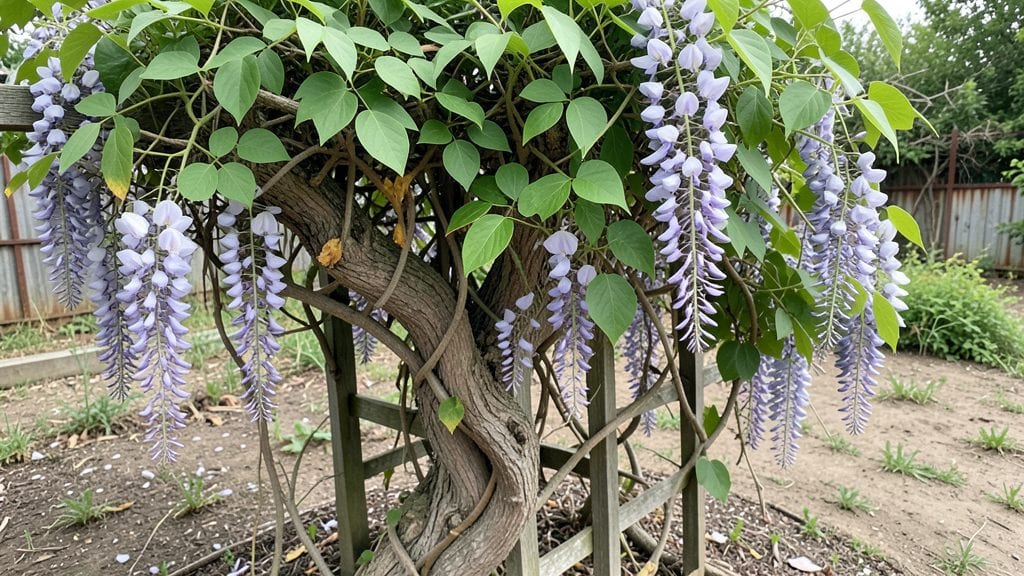
Buying live wisteria plants means you're getting a head start on those breathtaking purple cascades that make neighbors stop and stare.
I've grown wisteria for over a decade, and the key to success starts with choosing the right plant—whether it's bare-root or potted—because that decision sets the tone for years of fragrant blooms.
The real magic happens when you match wisteria to its perfect spot: 6+ hours of sunlight daily, well-draining soil that’s rich but not soggy, and something sturdy to climb—trellises, arbors, or even strong branches.
Most people overlook the soil prep, but amending with compost makes all the difference in root strength and bloom abundance.
Once planted, wisteria rewards patience with 3-5 years of minimal care before full bloom glory. Pruning in late winter keeps growth manageable, and a little regular watering (but not drowning) ensures those iconic flowers return every spring. The fragrance alone makes the effort worth it.
Whether you're training vines or controlling aggressive growth, this guide covers the tricks I've learned—including how to handle those pesky seed pods that pop up unexpectedly. Let's get those vines thriving!
📚 In This Guide
- What you need
- Instructions
- Tips and common mistakes
- Wrapping up and next steps
What you need
- ● Live wisteria plant: 1-2 plants (choose between Wisteria sinensis or Wisteria floribunda for vibrant blooms)
- ○ Optional: Pre-rooted cuttings for faster growth
- ● Growing space: Outdoor: Full sun (6+ hours/day), sturdy trellis, or arbor (8+ ft tall for climbing varieties)
- ● Indoor: Large container (15+ gallon) with drainage, bright indirect light (south-facing window ideal)
- ● Soil: Well-draining, slightly acidic mix (pH 6.0–7.0): Outdoor: Native soil amended with compost (50/50 mix)
- ● Indoor: Potting mix + perlite (60/40 ratio) or cactus/succulent blend
- ● Fertilizer: Balanced, slow-release granular (10-10-10) or organic options like worm castings
- ● Liquid bloom booster (e.g., fish emulsion) during spring/summer
- ● Planting tools: Trowel or shovel (for outdoor planting)
- ● Glove (wisteria thorns are sharp!)
- ● Pruning shears (sterilized, sharp)
- ● Support structures: Trellis, arbor, or sturdy fence (galvanized metal or wood)
- ○ Optional: Decorative lattice for aesthetic appeal
- ● Watering supplies: Hose with gentle spray nozzle or watering can (drip irrigation for containers)
- ● Mulch (wood chips or straw) to retain moisture
- ● Prerequisites: Patience! Wisteria grows slowly but thrives with consistency.
- ● Cold-hardiness zone check (USDA 5–9 for outdoor planting)
Step-by-Step instructions for planting and caring for live wisteria plants
Wisteria thrives when planted correctly and given consistent care—here’s how to set it up for stunning, long-lasting blooms.
Choose the Perfect Planting Location
Wisteria needs strong sunlight to support its heavy vines, so select a spot that receives at least 6 hours of direct sunlight daily. A south- or west-facing wall or fence works best. Avoid low-lying areas where cold air settles, as wisteria is sensitive to frost damage.
Check the soil’s drainage before planting—wisteria roots rot easily in soggy conditions. Dig a hole twice as wide as the root ball but only as deep as the container it’s in. Loosen the soil around the edges to encourage root spread. If your soil is heavy clay, mix in a few shovelfuls of compost to improve aeration.
Plant with Proper Support and Spacing
Install a sturdy trellis, arbor, or pergola before planting to give the wisteria something to climb. The support should be at least 10 feet tall to accommodate mature growth. Space multiple plants 15-20 feet apart to allow room for their sprawling vines—crowding leads to weak stems and fewer blooms.
Place the wisteria in the hole so the top of the root ball sits 1-2 inches below ground level. This ensures stability and prevents the plant from drying out. Backfill with native soil, tamping gently to remove air pockets. Water deeply right after planting to settle the soil and encourage root contact.
Water and Mulch for Healthy Growth
Keep the soil consistently moist for the first 4-6 weeks after planting, watering deeply 2-3 times per week unless rain provides adequate moisture. Wisteria roots run deep, so aim for 1-2 inches of water per session—let it soak in rather than pooling on the surface. Overwatering is worse than underwatering for this plant.
Spread a 2-3 inch layer of mulch around the base, keeping it 6 inches away from the trunk to prevent rot. Use organic mulch like wood chips or shredded bark, which breaks down slowly and enriches the soil. Replenish the mulch annually to maintain moisture and suppress weeds.
Prune Strategically for Blooms and Shape
Prune wisteria in late winter or early spring before new growth begins. Remove dead, diseased, or crossing branches first to improve airflow. Then, cut back last year’s growth to 2-3 buds from the main stem—this encourages stronger flowering on new wood. Avoid heavy pruning in autumn, as it stimulates tender growth that won’t survive winter.
Train young vines along the support structure by tying them loosely with soft twine or plant clips. Never wrap tightly, as this can girdle the stems. Once established, wisteria will climb vigorously on its own, but guiding it early ensures a neat, balanced shape.
Feed and Protect for Long-Term Beauty
Apply a balanced, slow-release fertilizer in early spring to support new growth. Use a 10-10-10 or 20-20-20 formula at half strength to avoid burning the roots. Water the soil thoroughly before and after applying to help distribute nutrients evenly. Skip fertilizer in autumn, as wisteria needs to harden off for winter.
Watch for pests like aphids or spider mites, which can weaken the plant. Spray infested areas with neem oil or insecticidal soap as needed. Wisteria is generally disease-resistant, but fungal issues like powdery mildew can occur in humid climates. Improve airflow by pruning densely packed branches and avoid overhead watering.
Tips & tricks for perfect live wisteria planting and care
A few key strategies will help you avoid common pitfalls and set your wisteria up for years of stunning blooms.
Location is Everything: The 6 hours of direct sunlight requirement is non-negotiable for wisteria. I've seen plants struggle in spots that get only 5 hours—those vines need that full sun to support their weight and produce abundant flowers. If your yard doesn't have a naturally sunny spot, consider a south-facing wall or fence. In Step 1, when checking soil drainage, dig a test hole and fill it with water—if it drains completely within 2 hours, your soil is suitable. If not, you'll need to amend it with compost before planting.
Support Structure Secrets: Don't skimp on the 10-foot trellis height mentioned in Step 2. I've watched wisteria vines reach 20 feet when given proper support, but without it, they'll sprawl uncontrollably. For extra stability, bury the support's base 12-18 inches deep. When spacing multiple plants 15-20 feet apart, think about their mature size—what looks spacious now will feel crowded in 5 years. The 1-2 inches below ground level placement for the root ball isn't just about stability—it creates a natural moisture barrier that prevents the plant from drying out too quickly.
Watering Wisdom: Those first 4-6 weeks after planting are critical for root establishment. I've learned the hard way that wisteria roots need consistent moisture but hate soggy conditions. Use a moisture meter to check soil depth—aim for dampness 4-6 inches down, not just at the surface. The 2-3 times weekly watering guideline assumes average weather; adjust for rain or extreme heat. When watering, direct the stream to the base of the plant, not the leaves, to prevent fungal issues mentioned in Step 5.
Pruning Precision: The late winter/early spring pruning window in Step 4 is your best chance to shape the plant and encourage blooms. When cutting back to 2-3 buds from the main stem, make clean cuts at a 45-degree angle just above a bud. This angle helps water run off and prevents rot. For established plants, I recommend pruning in stages—remove about 20% of the oldest wood first, then wait a week to see how the plant responds before doing more. This gradual approach reduces shock to the plant.
Pro Tips for Live Wisteria Plants
- A few key strategies will help you avoid common pitfalls and set your wisteria up for years of stunning blooms.
- Location is Everything: The 6 hours of direct sunlight requirement is non-negotiable for wisteria.
- Support Structure Secrets: Don't skimp on the 10-foot trellis height mentioned in Step 2.
Frequently asked questions
How fast do live wisteria plants grow, and when will I see blooms?
Wisteria grows 1–3 feet per year (sometimes faster in ideal conditions!). Most varieties take 3–5 years to bloom, but dwarf or grafted wisteria (like Wisteria floribunda ‘Amethyst Falls’) may flower sooner—sometimes within 1–2 years. Patience pays off with spring or early summer showers of fragrant blossoms!
Can I keep live wisteria indoors year-round, or does it need winter dormancy?
While wisteria loves outdoor growing, you can overwinter it indoors in a cool, bright spot (like a sunroom) with minimal water. However, it thrives best outdoors and may drop leaves without dormancy. For container-grown wisteria, move it inside before 25°F (-4°C) and resume outdoor care in spring.
What’s the easiest way to prune live wisteria without killing it?
Prune right after blooming (late spring/early summer) to shape and encourage flowers. Never cut back old wood—new growth emerges from last year’s stems! Use clean, sharp shears and remove only weak or crossing branches. Pro tip: Thin out 20–30% of growth annually to prevent overcrowding.
Are live wisteria plants toxic to pets or kids, and how do I keep pests away?
Yes, wisteria berries and seeds are toxic to pets and humans if ingested (can cause vomiting or weakness). Keep pets away from fallen berries. For pests, aphids and spider mites are common. Spray with neem oil or introduce ladybugs early. Prevent issues by ensuring good airflow and avoiding overwatering.
What’s a good alternative if I want fast blooms but less maintenance?
If wisteria’s slow start feels too long, try climbing roses (like ‘New Dawn’) or jasmine for faster, fragrant blooms. For low-maintenance vines, consider Clematis (some bloom in 1 year) or Passionflower. Just ensure they match your USDA hardiness zone and sunlight needs!
Wrapping up and next steps
Bringing live wisteria plants into your garden is a rewarding way to enjoy year-round beauty with minimal fuss—whether you’re a seasoned gardener or just starting out. Their fragrant blooms and lush vines transform any space into a serene retreat, all while thriving with simple care.
Now that you’re armed with the right tips and answers to common questions, it’s time to roll up your sleeves and plant your own!
🌱 Your next step: Pick your favorite wisteria variety, gather your supplies, and give your garden (or patio!) the magical upgrade it deserves. Happy planting—your future blooms will thank you! 🌸