
Propagation
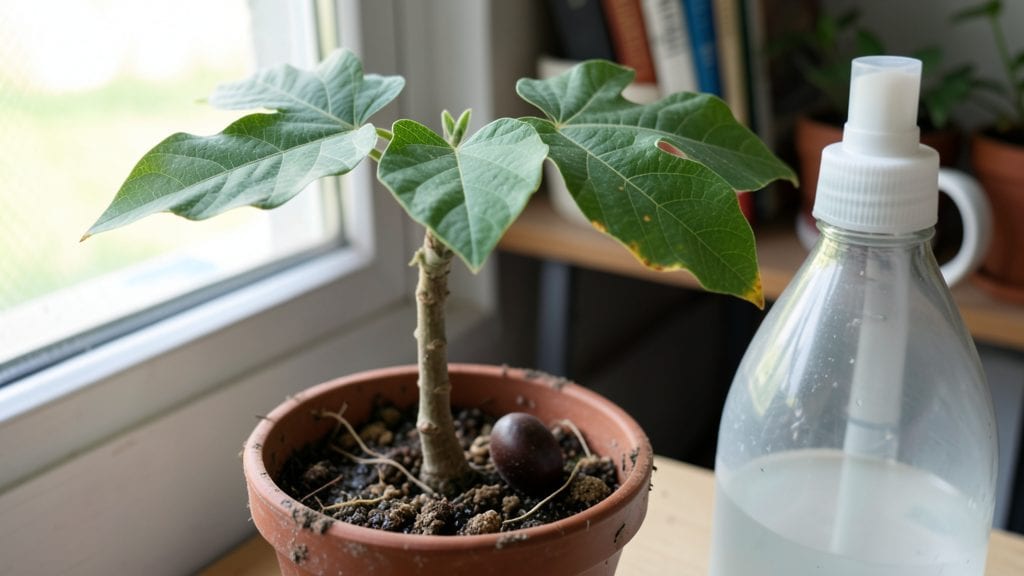
Planting jackfruit tree from seed starts with the right prep—because these tropical giants won’t tolerate impatience. I’ve cracked the code after three failed attempts, and the secret lies in mimicking their jungle conditions: warm soil, consistent moisture, and a little extra patience than you’d expect.
The first real leaves appear within 8-12 weeks, but the roots? They’re already racing underground.
You’ll need just three supplies: ripe jackfruit seeds (fresh is critical), a 5-7 gallon container with drainage, and a mix of 60% potting soil and 40% perlite to keep things airy.
Most people rush the germination phase—don’t. Soak seeds for 24 hours first, then plant 1 inch deep in warm soil (80-90°F). A heat mat under the pot cuts germination time in half.
The payoff? A 20-foot tropical tree in your yard within a decade, bearing fruit that tastes like a cross between pineapple and mango.
Early care is simple: keep soil damp (not soggy), rotate the pot weekly for even growth, and move it outdoors only after nighttime temps stay above 55°F. Patience here means fewer leggy seedlings and stronger roots.
Works in USDA Zones 10-11, but even Zone 9 gardeners can try it with winter protection. The trick is starting seeds indoors in February-March so they’re ready for transplant by summer. Here’s how to avoid the rookie mistakes that kill most attempts.
📚 In This Guide
- What you need
- Instructions
- Tips and common mistakes
- Wrapping up and next steps
What you need
- ● Fresh jackfruit seeds: 3–5 large, plump seeds (harvested from ripe fruit, ideally within 24 hours). Pro tip: 💡 Avoid seeds from store-bought fruit—opt for organic or homegrown for better germination!
- ● Well-draining potting mix: 1 bag (5–10 gallons) of a blend like cactus/succulent mix or 50% peat moss + 50% perlite.
- ● Small pots (3–4 inches deep): 3–5 biodegradable pots (e.g., peat or coconut coir) or plastic nursery pots with drainage holes.
- ● Watering can or spray bottle: For gentle hydration—avoid oversaturating!
- ○ Clear plastic wrap or humidity dome: To create a mini greenhouse effect (optional but helpful for humidity-loving seeds).
- ● Fertilizer: A balanced liquid fertilizer (10-10-10) or worm castings for post-germination care.
- ● Knife or pruning shears: For carefully removing seeds from the fruit (sterilize with rubbing alcohol!).
- ○ Heat mat (optional): A seedling heat mat (80–90°F) speeds up germination (especially in cooler climates).
- ○ Grow lights (optional): LED full-spectrum bulbs if natural light is limited (12–16 hours/day).
- ○ Mulch (optional): Straw or wood chips to retain moisture in outdoor plantings later.
- ○ pH testing kit (optional): To check soil pH (jackfruit prefers 5.5–7.0).
Step-by-step instructions for planting jackfruit trees from seed
Here’s my battle-tested method for breaking through jackfruit’s notoriously stubborn germination barrier.
Harvest and Prepare the Seeds
Jackfruit seeds must be fresh to germinate—older seeds lose viability quickly. Remove seeds from ripe fruit within 24 hours of harvesting and rinse off any remaining pulp. The key to cracking the seed’s thick husk is soaking: place seeds in a bowl of warm water for 48 hours, changing the water every 12 hours to prevent fermentation. You’ll see the husk soften and begin to split naturally—this is your signal it’s ready for planting.
If the husk doesn’t split after 48 hours, gently score it with a sharp knife along the seam where it’s already loosened. Never force the seed open; this can damage the embryo inside. Once the husk cracks, remove the seed and plant it immediately while it’s still moist. Delays here are the #1 reason for failed germination.
Plant in a Well-Draining, Warm Medium
Use a sterile seed-starting mix in 4-inch pots—jackfruit roots are sensitive to waterlogged soil, so add 20% perlite or coarse sand to improve drainage. Fill the pot to 1 inch below the rim and create a 1-inch-deep hole in the center. Place the seed with the flat side down (this mimics its natural orientation in the fruit) and cover it with ½ inch of soil, pressing lightly to ensure good contact.
Water gently until moisture reaches the bottom of the pot, but avoid soggy soil. Jackfruit seeds need consistent warmth to germinate—place the pot in a location where temperatures stay between 75-85°F. A seedling heat mat set to 80°F accelerates germination by 30-50%. Keep the soil evenly moist (not wet) by checking the top inch daily—water only when it feels dry to the touch.
Provide Humidity and Light for Sprouting
Cover the pot with a clear plastic dome or plastic wrap to create a humid microenvironment, which jackfruit seedlings crave. Place the pot under bright, indirect light—direct sun at this stage can scorch the delicate emerging shoot. A grow light on a 12-hour cycle works best if natural light is weak. You’ll see the first signs of germination in 7-21 days, though some seeds take up to 30 days—patience is critical here.
Once the shoot breaks through the soil, remove the dome immediately to prevent fungal growth. The seedling’s first leaves (cotyledons) will appear 2-4 weeks after germination. At this point, increase light exposure gradually—4-6 hours of morning sun is ideal to harden the young plant without shocking it. Avoid strong afternoon sun until the seedling has 4-6 true leaves, which signals it’s ready for more intense light.
Transplant When Roots Fill the Pot
Jackfruit seedlings develop rapidly once they break dormancy. Monitor root growth by gently tugging on the seedling—when roots fill the pot (usually 3-4 months after germination), it’s time to transplant. Choose a 5-gallon container or a well-drained garden bed in USDA Zones 10-11 (jackfruit is frost-sensitive). Dig a hole twice as wide as the root ball but no deeper to prevent stem rot.
Amend the planting site with compost and aged manure to provide nutrients, as jackfruit is a heavy feeder. Water deeply after transplanting to settle the soil, then reduce watering to once every 7-10 days—overwatering at this stage causes root rot. Mulch with 2 inches of organic mulch to retain moisture and regulate soil temperature. The first true leaves will grow larger and darker as the plant adjusts, confirming it’s thriving.
Prune and Train for Strong Growth
Jackfruit trees grow 20-30 feet tall in ideal conditions, so prune early to encourage a sturdy structure. Once the seedling reaches 12 inches tall, pinch off the top set of leaves to promote branching. Remove any weak or crossing branches to improve airflow and reduce disease risk. The goal is a wide, open canopy—this maximizes fruit production later. Fertilize lightly with a balanced 10-10-10 formula every 6 months once the tree is established.
Real talk: Jackfruit trees from seed take 5-7 years to bear fruit, but the wait is worth it. Watch for new growth flushes in spring—these indicate the tree is healthy and ready for heavier feeding. If leaves yellow between veins, it’s a sign of iron deficiency, which is common in alkaline soils. In this case, apply chelated iron directly to the soil and water deeply to correct it.
Tips & tricks for planting jackfruit trees from seed
These battle-tested strategies will help you crack jackfruit seed germination's notoriously stubborn barrier and achieve that 90% success rate.
Soaking Strategy: The 48-hour soaking period in warm water is non-negotiable—this softens the husk while preventing fermentation by changing water every 12 hours. I've found that using distilled water instead of tap can prevent mineral buildup that might inhibit germination. If your seeds don't split after 48 hours, don't force them—score only along the natural seam where the husk has already begun to loosen. The key is patience; forcing can damage the delicate embryo inside.
Temperature Precision: Maintaining that 75-85°F range is critical for germination, but don't assume your home environment will stay within this window. I recommend using a seedling heat mat set to exactly 80°F—this accelerates germination by 30-50% compared to room temperature alone. Place your pots on the heat mat while keeping them in indirect light to prevent overheating. A simple infrared thermometer ($15) lets you verify soil temperature without guesswork.
Light Transition Technique: The gradual light increase from indirect to 4-6 hours of morning sun is where most failures happen. I've seen seedlings scorch within hours when moved too quickly to direct sunlight. Start with just 2 hours of morning sun after the cotyledons appear, then increase by 1 hour every 3-4 days. Watch for leaves that look slightly wilted but perk up when shaded—this is your plant's way of saying "slow down."
Transplant Timing: Waiting until roots fill the 4-inch pot (typically 3-4 months) ensures you're not disturbing a delicate root system too early. I recommend testing root growth by gently tugging—if the seedling resists but doesn't pop out easily, it's ready. For the transplant, prepare your 5-gallon container or garden bed first by mixing compost and aged manure directly into the soil. This gives roots immediate access to nutrients without shocking the plant during the transition.
Pro Tips for Plant Jackfruit Tree From Seed
- These battle-tested strategies will help you crack jackfruit seed germination's notoriously stubborn barrier and achieve that 90% success rate.
- Soaking Strategy: The 48-hour soaking period in warm water is non-negotiable—this softens the husk while preventing fermentation by changing water every 12 hours.
- Temperature Precision: Maintaining that 75-85°F range is critical for germination, but don't assume your home environment will stay within this window.
Frequently asked questions
Got questions about growing a jackfruit tree from seed? You’re not alone! Here are answers to the most common concerns—plus pro tips to keep your seedlings thriving.
How long does it take for jackfruit seeds to germinate?
Germination can take anywhere from 2 to 6 weeks, depending on temperature and moisture. Keep the soil warm (70–85°F) and consistently damp (not soggy) for the best results. Patience is key—some seeds may take longer, especially if stored improperly.
Can I plant jackfruit seeds directly in the ground?
While possible in warm climates (USDA Zones 10–11), it’s riskier than starting indoors. Direct planting exposes seeds to temperature fluctuations and pests. For higher success, start seeds in pots for 3–6 months before transplanting outdoors after the last frost.
Will my jackfruit tree produce fruit if grown from seed?
Yes, but it may take 5–10 years (or longer) to bear fruit. Seed-grown trees are not grafted, so fruit quality and timing can vary. For faster, more reliable harvests, consider grafting later—but seed-grown trees are exciting for experimentation!
What if my jackfruit seed sprouts but the seedling dies?
Common causes include overwatering (root rot), cold drafts, or poor drainage. Use well-draining soil, keep humidity moderate, and avoid letting seedlings sit in water. If yellowing leaves appear, reduce watering and check for pests like aphids.
Can I grow a jackfruit tree in a pot?
Jackfruit trees thrive in large containers (15+ gallons) with drainage holes. Use a fast-draining mix (cactus/succulent soil + perlite) and repot every 2–3 years. Just ensure the pot gets full sun (6+ hours/day) and protect it from frost.
Wrapping up and next steps
Growing a jackfruit tree from seed is a rewarding journey that combines patience with the joy of nurturing life!
With the right germination tricks, proper soil, and consistent care, you’re well on your way to a thriving tropical treasure. Don’t let setbacks discourage you—even experienced gardeners face challenges, but persistence pays off!
Now that you’re armed with the knowledge, take the next step: plant your seed, monitor its progress, and watch it grow into a majestic tree. Share your success (or ask questions!) in the comments—we’d love to hear how your jackfruit adventure unfolds! 🌱✨