
How To
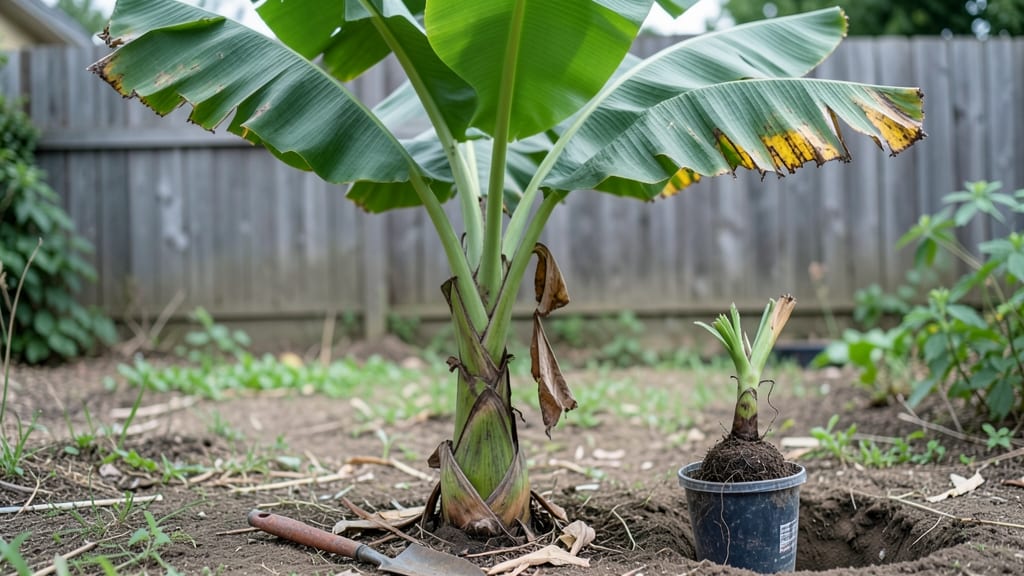
Transplanting banana plants the right way means fewer yellowing leaves and more fruit next season. ✨ I’ve moved mine twice—once as a rookie and once after learning the hard way that timing and soil make all the difference.
The key? Do it when plants are young or during dormancy, and you’ll see them take off like they’ve never been uprooted.
You’ll need a shovel, compost-rich soil, and a spot with at least 6 hours of sun—bananas hate shade. Dig a hole twice as wide as the root ball but no deeper, then loosen the roots gently before setting the plant in.
Water deeply right after, and stake it if your zone gets windy (like mine in Florida).
📚 In This Guide
- What you need
- Instructions
- Tips and common mistakes
- Wrapping up and next steps
What you need
- ● Banana plant(s): Healthy, mature plants with visible suckers (1–3 per transplant, depending on size).
- ● Shovel or digging spade: A sturdy, sharp-edged spade (18–24 inches long) for digging roots.
- ● Pruning shears or knife: For trimming excess leaves or roots (sterilized with rubbing alcohol).
- ● Garden hose or watering can: With a gentle spray nozzle for post-transplant hydration.
- ○ Compost or well-aged manure: 5–10 gallons per plant to enrich the soil (optional but recommended).
- ● Mulch (straw, pine needles, or wood chips): 2–3 inches thick to retain moisture and regulate temperature.
- ○ Planting hole dugger or auger: For larger plants (optional but helpful for deeper holes).
- ● Root stimulator or mycorrhizal fungi: Boosts root growth and stress recovery.
- ● Support stakes or trellis: If transplanting near windy areas (banana plants are top-heavy!).
- ● Garden gloves: Protect your hands from thorns and rough soil.
- ● Wheelbarrow or tarp: For easy transport of soil, mulch, or plants.
- ● pH testing kit: Ensures soil is slightly acidic (5.5–7.0, ideal for bananas).
Step-by-Step instructions for transplanting banana plants
Here's the method I've used to successfully move banana plants without shock or setbacks.
🪴 Step 1: Choose the Right Time and Location
Bananas thrive when transplanted during their active growth phase, ideally in spring or early summer when temperatures stay above 60°F at night. Avoid moving them during extreme heat or cold snaps—roots need time to establish before stress hits. Pick a spot with full sun (6+ hours daily) and well-draining soil, since soggy roots invite fungal diseases.
If you're growing in containers, ensure the new pot is at least 2-3 inches larger in diameter than the current one. Bananas need room for their sprawling root systems. I always check the drainage holes first—bananas hate wet feet, so make sure excess water can escape freely.
🌱 Step 2: Prepare the New Planting Site
Loosen the soil in the new location to a depth of 12-18 inches using a garden fork or tiller. Bananas love rich, slightly acidic soil (pH 5.5-7.0). Mix in a 2-inch layer of compost or well-rotted manure to provide nutrients without overwhelming the plant. Avoid fresh manure—it burns tender roots.
For container transplants, fill the new pot halfway with a mix of potting soil and perlite (70/30 ratio). Tap the pot gently to settle the mix, then water it until moisture runs out the drainage holes. This pre-moistening helps reduce transplant shock by keeping roots hydrated during the move.
✂️ Step 3: Carefully Remove the Banana Plant
Water the banana plant thoroughly 24 hours before transplanting. This ensures the soil is moist but not waterlogged, making the roots easier to handle. Gently dig around the base of the plant in a wide circle, following the root spread. Use a sharp spade to cut through any stubborn roots—banana roots can be fibrous, so take your time.
Lift the plant carefully, keeping as much of the root ball intact as possible. Shake off excess soil to inspect the roots. Healthy roots are white or tan; any black or mushy roots should be trimmed away with clean pruners. Wrap the root ball in a burlap sack or old towel if you're moving it a distance—this protects the roots from drying out.
💧 Step 4: Transplant with Minimal Root Disturbance
Place the banana plant in its new location, ensuring the top of the root ball sits 1-2 inches below soil level. This slight burial prevents the pseudostem (the thick, false stem) from drying out. Backfill with the prepared soil, pressing lightly to remove air pockets but avoiding compaction. Water deeply immediately after planting to settle the soil and eliminate gaps.
For container transplants, add the remaining soil mix around the roots, leaving a 1-inch gap at the top for watering. Place the pot in a shaded area for 3-5 days to help the plant recover. During this time, water lightly every 2-3 days—just enough to keep the soil moist but not soggy.
☀️ Step 5: Support and Maintain for Strong Recovery
After transplanting, install a stake or support system if your banana plant doesn’t already have one. Bananas grow top-heavy, and new roots need time to anchor. Tie the pseudostem loosely to the stake with soft ties, leaving room for growth. Avoid tightening the ties too much—you want to support, not strangle.
Monitor the plant closely for the first 2-3 weeks, watching for signs of stress like yellowing leaves or wilting. If you see wilting, water deeply and provide afternoon shade until the plant recovers. Once new growth appears (usually within 3-4 weeks), you can resume normal care—fertilizing monthly with a balanced, water-soluble fertilizer during the growing season.
Tips & tricks for stress-free banana plant transplants
Moving banana plants can be tricky, but these practical tips will help you avoid common pitfalls and ensure your plants thrive in their new home.
The 24-Hour Watering Rule: The 24-hour watering before transplanting is your secret weapon. This timing ensures the soil is perfectly moist—not soggy, not dry—making the roots more pliable and easier to handle. I've seen roots tear when plants were lifted from dry soil, so don't skip this step. If you forget, give the plant a thorough watering at least 12 hours before moving day.
Root Inspection is Critical: When you shake off excess soil in Step 3, take a moment to really examine those roots. Healthy roots should be firm and white or tan, but any black, mushy, or slimy roots need to go—they're signs of rot or disease. Trim these with clean pruners and dip the cut ends in cinnamon powder (it's a natural antifungal). This small step can mean the difference between a plant that recovers and one that struggles.
Shade is Your Best Friend After Transplanting: That 3-5 day shaded recovery period in Step 4 is non-negotiable for container transplants. Banana plants are tropical—they're used to bright light, but their roots need time to adjust after the shock of moving. I've seen plants wilt dramatically when moved directly into full sun too soon. Use shade cloth or move the pot to a sheltered spot like under a patio cover. Think of it as giving your plant a spa day after the stress of transplanting.
Support System Matters: Don't underestimate the importance of that stake or support system in Step 5. Banana plants grow fast and top-heavy, especially after transplanting when they're putting all their energy into root establishment. Use soft plant ties (like velcro or fabric strips) rather than wire—they won't cut into the pseudostem as the plant grows. I've seen plants topple over within days of transplanting when they weren't properly supported, and it's heartbreaking to watch.
Pro Tips for Transplant Banana Plants
- Moving banana plants can be tricky, but these practical tips will help you avoid common pitfalls and ensure your plants thrive in their new home.
- The 24-Hour Watering Rule: The 24-hour watering before transplanting is your secret weapon.
- Root Inspection is Critical: When you shake off excess soil in Step 3, take a moment to really examine those roots.
Frequently asked questions
Got questions about transplanting banana plants? You’re not alone! Here are the most common concerns—and straightforward answers to keep your tropical friends thriving after the move.
When is the best time to transplant banana plants?
The ideal window is during the plant’s dormant season (late fall to early spring in most climates) or after heavy rains soften the soil. Avoid extreme heat or frost—bananas hate stress! If you’re in a warm zone, transplant on a cloudy day to reduce shock.
How do I know if my banana plant is ready for transplanting?
Look for these signs: mature pseudostems (3+ feet tall), crowded roots poking out of drainage holes, or yellowing leaves from overcrowding. If your plant is still small (under 2 feet) or flowering, wait—it’s not ready yet!
Can I transplant banana plants year-round in tropical climates?
Yes, but with caution! In frost-free zones, you can transplant anytime, though early morning or late afternoon minimizes heat stress. Water deeply 2–3 days before and after moving to help roots adjust. Just avoid heavy fruiting periods—prioritize the plant’s energy over harvests.
What should I do if my banana plant’s leaves turn yellow after transplanting?
Yellowing leaves are often transplant shock, but don’t panic! It’s normal for 2–4 weeks. Boost care by:
- Keeping soil consistently moist (not soggy).
- Avoiding fertilizer for 4–6 weeks to reduce stress.
- Providing partial shade for 1–2 weeks.
Can I transplant banana plants into containers instead of the ground?
Use a large pot (15+ gallons) with drainage holes and well-draining soil mix (60% potting soil, 30% compost, 10% perlite). Dwarf varieties like ‘Lady Finger’ thrive in containers, while larger types need sturdy supports (like bamboo stakes) as they grow. Just move pots indoors if temps drop below 50°F!
Wrapping up and next steps
Transplanting banana plants might seem daunting, but with the right tools, timing, and care, you can give your tropical friends a fresh start—and watch them thrive! 🌱 Remember, patience and preparation are key: choose healthy plants, prep the soil, and handle them gently to minimize stress.
Whether you're relocating for space, better conditions, or simply expanding your garden, your efforts will reward you with lush foliage and delicious fruit for years to come.
Now that you’re armed with the know-how, roll up your sleeves and get planting! Ready to take the next step? Check out our guide on banana plant care after transplanting to keep your new location flourishing. 🌟