
Diseases
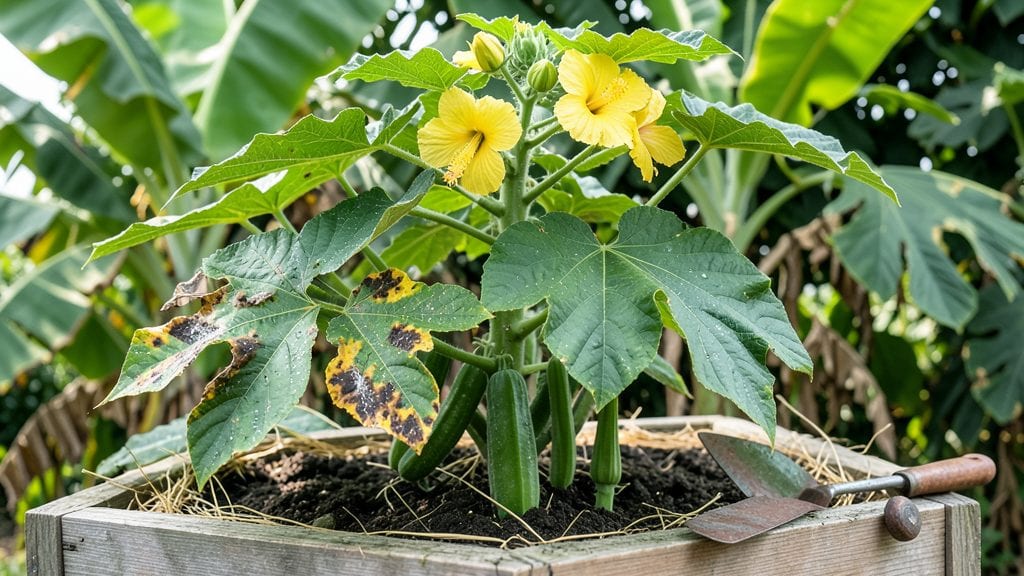
Okra plant diseases can turn your thriving crop into a sad, spotted mess if you don’t catch them early. 🌱 I’ve seen powdery mildew turn lush green leaves into ghostly white webs and bacterial blight rot stems overnight—both can wipe out a harvest if you ignore the warning signs.
The good news? Most problems start with visible symptoms, and once you know what to look for, you can act fast.
Powdery mildew leaves a chalky white dust on leaves, while leaf spot shows up as brown or yellow splotches with darker edges. Bacterial blight, on the other hand, causes wilting, yellowing, and oozing lesions on stems and pods.
The key to saving your okra is acting before the disease spreads—pruning infected leaves, improving airflow, and treating with organic sprays like neem oil or copper fungicide can turn things around.
With the right prevention—like rotating crops, watering at the base, and choosing disease-resistant varieties—you can keep your okra plants healthy all season. Early intervention means fewer losses and more pods for your table. Let’s get into the specifics so you can diagnose and treat before it’s too late.
Whether you’re dealing with a single plant or a full patch, the same principles apply. The sooner you spot the problem, the easier it is to fix. Here’s how to identify symptoms, understand what’s causing them, and stop the spread before your harvest disappears.
Understanding Root Causes
Okra plants, with their delicate pods and vibrant growth, are surprisingly vulnerable to a range of diseases—many of which stem from specific environmental, biological, or cultural factors. Understanding why these issues arise is the first step to prevention and treatment.
Below, we break down the key triggers behind the most common fungal and bacterial threats to okra, explained in clear, actionable terms.
Fungi thrive in warm, humid conditions—making okra gardens a prime target. These microscopic invaders spread through spores (tiny reproductive cells) that latch onto plant tissues, often exploiting weak spots like damaged leaves or stems.
- Overcrowded plants 🌱🔄 When okra plants grow too close together, airflow is restricted. Stagnant, moist air creates the perfect breeding ground for fungal spores like Fusarium or Phytophthora. Poor circulation also delays drying between waterings, prolonging leaf wetness—a fungal feast.
- Excessive moisture 💧🌧️ Okra needs water, but overwatering or poor drainage leads to waterlogged soil. Fungi such as Colletotrichum (cause of anthracnose) and Alternaria thrive in soggy conditions, entering plants through stomata (tiny pores) or wounds.
- Old crop debris 🗑️🍄 Leftover plant material from previous seasons harbors fungal spores. If not removed, these spores survive winter and reinfect new okra plants in spring. Rhizoctonia solani, for example, overwinters in soil and attacks young seedlings.
- Stress from heat or drought 🌡️💦 Extreme heat weakens okra’s defenses, while drought stress (followed by sudden watering) creates osmotic shock, making plants more susceptible to fungal infections like Cercospora leaf spot.
Bacterial diseases often strike when okra plants are already compromised—whether by physical damage, poor hygiene, or environmental stress. Unlike fungi, bacteria spread via water splashes, tools, or even insects, and they multiply rapidly in warm, wet conditions.
- Mechanical damage ⚔️🌿 Pruning, harvesting, or hail can create entry points for bacteria like Pseudomonas syringae (cause of bacterial blight). Even rough handling during thinning can introduce infections. Always use sterilized tools and avoid touching leaves unnecessarily.
- Contaminated water 💦🦠 Irrigation water from ponds, rain barrels, or untreated sources may carry bacterial pathogens. Xanthomonas campestris, which causes bacterial leaf spot, spreads via splash dispersion during watering. Use drip irrigation or early-morning watering to minimize droplet spread.
- Poor sanitation 🧼❌ Unwashed hands, dirty gloves, or reused pots can transfer bacteria between plants. Erwinia carotovora, which causes soft rot, thrives in contaminated soil or tools. Disinfect everything (tools, containers, hands) with a 10% bleach solution (1 part bleach to 9 parts water) before and after use.
- High humidity + wounds 🌫️🔥 Bacteria like Clavibacter michiganensis (cause of bacterial wilt) spread faster in humid conditions (above 75% relative humidity). If okra is stressed by nutrient deficiencies (e.g., low calcium) or pests (like aphids), wounds heal slower, giving bacteria a foothold.
Okra plants under stress are easier targets for diseases. When basic growing conditions aren’t met, pathogens move in like opportunistic squatters.
- Nutrient imbalances 🌱💀 A lack of nitrogen weakens foliage, making it prone to fungal infections. Conversely, excess nitrogen promotes lush, tender growth that’s more vulnerable to bacterial spots. Test soil regularly and balance NPK ratios (aim for 3-1-2 or 4-2-3 for okra).
- pH imbalances 🧪🌀 Okra prefers slightly acidic to neutral soil (pH 6.0–6.8). Soil that’s too alkaline (pH >7.5) locks out micronutrients like iron and manganese, stressing plants and inviting fungal invaders like Powdery Mildew.
- Poor air circulation 🌀🚫 Tall okra varieties in dense plantings trap humidity, creating microclimates where fungi like Downy Mildew flourish. Space plants 18–24 inches apart and prune lower leaves to improve airflow.
- Extreme temperature swings ❄️☀️ Okra struggles in cold snaps or heatwaves. Sudden temperature drops (below 50°F) or scorching heat (above 95°F) shock the plant, reducing its ability to fight off pathogens. Use row covers in early spring or shade cloth in peak summer to moderate conditions.
Some diseases don’t act alone—they hitchhike on insects or other pests that damage okra first.
- Aphids and whiteflies 🐛🍃 These sap-sucking insects weaken plants and excrete honeydew, a sticky residue that fosters sooty mold (a secondary fungal infection). They also spread viral diseases like Okra Mosaic Virus, which stresses plants and opens doors for bacterial/fungal invaders.
- Thrips and mites 🕷️🌿 Their feeding scars create entry points for bacteria and fungi. Thrips can transmit Tomato Spotted Wilt Virus (TSWV), which stunts growth and makes okra more susceptible to secondary infections.
- Slugs and snails 🐌🍽️ These nocturnal munchers chew irregular holes in leaves, leaving wounds that bacteria like Pectobacterium exploit. Beer traps or copper barriers can help control them before they cause damage.
Some diseases lurk before planting, hidden in seeds or dormant in soil.
- Infected seeds 🌱🦠 Seeds from diseased plants may carry bacterial or fungal contaminants like Xanthomonas or Fusarium. Always buy certified disease-free seeds or soak seeds in a 10% bleach solution for 10 minutes before planting.
- Dormant soil pathogens 🏚️🍄 Fungi like Verticillium dahliae or Sclerotium rolfsii can survive for years in soil as sclerotia (hard, resting structures). Crop rotation with non-host plants (e.g., grasses or legumes) disrupts their life cycle and reduces reinfection risk.
Most okra diseases don’t strike randomly—they exploit specific weaknesses in your growing setup. By addressing moisture, spacing, sanitation, and stress factors, you can dramatically reduce the risk of fungal and bacterial outbreaks.
The next section will cover how to spot these diseases early and what to do once they appear.
Quick Fixes for Sick Okra Plants
When your okra plants show signs of stress—whether it’s yellowing leaves, strange spots, or wilting stems—don’t panic! Most common okra diseases can be managed with targeted solutions.
Below, we’ll break down practical fixes for each issue, from quick remedies to long-term prevention. Think of this as your okra plant’s first-aid kit!
Fungi like powdery mildew, leaf spot, or root rot thrive in damp conditions. Here’s how to kill the infection and protect your plants:
🔥 Remove and Destroy Infected Plant Parts
- Step 1: Snip off yellow, spotted, or moldy leaves with clean shears (sterilize with rubbing alcohol).
- Step 2: Do not compost infected foliage—toss it in the trash or burn it to prevent reinfection.
- Pro Tip: 💡 If the disease is severe (e.g., root rot), pull the entire plant and replace the soil in that spot.
🍳 Apply Fungicides (Organic or Chemical)
- For mild cases: Mix 1 tbsp baking soda + 1 tsp dish soap + 1 gallon water and spray leaves every 7–10 days.
- For stubborn fungi: Use copper fungicide (like Copper Soap) or neem oil spray (1 tbsp neem oil + 1 tsp soap per quart of water).
- Prevention: 🌡️ Water at the base (not overhead) and space plants 18–24 inches apart for airflow.
⏰ Rotate Crops & Improve Soil Health
- Step 1: After harvest, plant non-host crops (like beans or peas) in the same bed to break the fungal cycle.
- Step 2: Amend soil with compost or aged manure to boost plant resilience.
Bacterial leaf spot or blight spreads quickly—act fast to save your okra!
👨🍳 Prune & Isolate Infected Plants
- Step 1: Cut off blackened, water-soaked spots immediately (use sterilized tools!).
- Step 2: Remove and destroy heavily infected plants to stop bacteria from jumping to others.
🥘 Use Copper-Based Bactericides
- Best option: Copper fungicide (effective against bacteria too!) or hydrogen peroxide spray (1 tbsp 3% H₂O₂ per quart of water).
- Apply: Spray every 5–7 days until new growth appears.
🔪 Prevent Future Outbreaks
- Step 1: Rotate crops—don’t replant okra in the same spot for 2–3 years.
- Step 2: Sterilize tools between uses (soak in bleach water or alcohol).
- Pro Tip: 🎯 Avoid overhead watering—use drip irrigation to keep leaves dry.
Pests like aphids or spider mites weaken plants, making them vulnerable to disease. Kick them out with these tricks:
🍳 Blast Them Off with Water
- Step 1: Spray plants with a strong jet of water (early morning works best) to dislodge pests.
- Step 2: Repeat every 2–3 days until pests vanish.
🔥 Introduce Beneficial Insects
- Ladybugs, lacewings, or predatory mites eat aphids and mites naturally. Buy them online or attract them with dill or fennel plants nearby.
✨ Use Soap Spray (Safe & Effective)
- Mix 1 tsp mild liquid soap + 1 quart water and spray directly on pests (avoid flowers to protect pollinators).
The best "cure" is prevention! Follow these easy habits to keep diseases at bay:
| Problem | Prevention Tip | When to Do It |
|---|---|---|
| Fungal spread | Space plants 18–24" apart | At planting |
| Bacterial infections | Sterilize tools between plants | Before/after pruning |
| Pest infestations | Plant marigolds nearby (repels pests) | Alongside okra |
| Poor airflow | Prune lower leaves for better circulation | Weekly maintenance |
| Overwatering | Use mulch to retain moisture | After planting |
Final Pro Tip: 🌿 Healthy soil = healthy plants! Test your soil’s pH (okra likes 6.0–6.8) and add compost or balanced fertilizer (like 10-10-10) before planting.
By acting fast and smart, you’ll keep your okra thriving—no diseases in sight! 🚀
Frequently asked questions about okra plant diseases
How do I tell if my okra plant has powdery mildew?
Look for a chalky white coating on leaves that resembles dust or flour. The infected areas often start as small spots that spread rapidly, especially in humid conditions. Unlike healthy okra leaves, these will feel rough to the touch and may eventually turn yellow or brown.
Can I still eat okra pods if the leaves have spots?
Only if the spots are on the leaves and haven't reached the pods. If you see brown or black spots on the pods themselves, it's best to discard them. Fungal or bacterial infections on pods can make them unsafe to eat, even after cooking.
What's the best organic treatment for bacterial blight?
Use a copper fungicide spray (like copper soap) or a homemade solution of 1 tablespoon baking soda + 1 teaspoon dish soap + 1 gallon water. Apply this mixture every 5-7 days until new growth appears. Always sterilize pruning tools with rubbing alcohol to prevent spreading the bacteria.
Why do my okra plants keep getting diseases even after treatment?
This usually happens when the root cause isn't addressed. Check for overcrowding (space plants 18-24 inches apart), poor airflow (prune lower leaves), or overwatering (water at the base only). Diseases thrive in these conditions, so improving growing practices often works better than repeated treatments.
How can I prevent diseases in my okra before they start?
Start with disease-resistant varieties like 'Clemson Spineless' or 'Emerald.' Rotate crops annually, sterilize tools between plants, and maintain good airflow. Use mulch to keep soil moist but not soggy, and avoid overhead watering to keep leaves dry.