Trees
Planting outdoor trees that thrive year-round starts with choosing the right species for your climate and soil.
I’ve learned the hard way that drought-proof trees like oak, pine, or crape myrtle need proper placement to avoid stress—too much sun or shade can stunt growth, while the wrong soil drains too quickly.
The key is matching the tree’s natural habitat to your yard’s conditions, whether that means sandy soil for pines or moist spots for willows.
Before you dig, gather essentials: a shovel, compost or mulch, and stakes if needed. Most trees should go in when dormant—fall or early spring—but evergreens can handle planting in cooler months.
Dig a hole twice as wide as the root ball but no deeper, then loosen the roots gently before setting the tree at the same depth it grew in the nursery. Backfill with native soil mixed with compost for extra nutrients.
Watering is where many new tree owners trip up. Give your tree 10-15 gallons of water right after planting, then 1-2 inches per week for the first year—more in extreme heat.
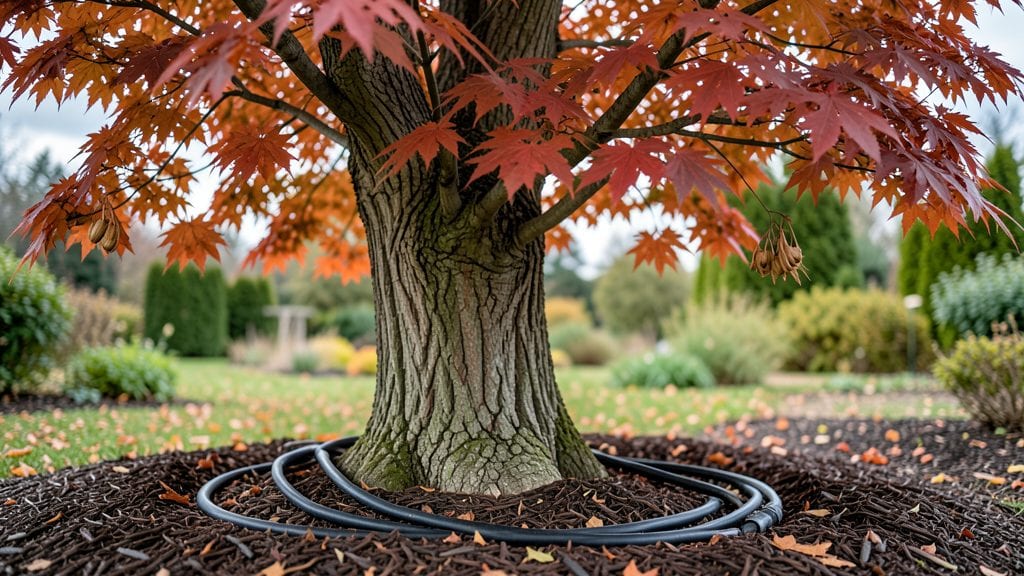
A 3-inch layer of mulch keeps moisture in and weeds out, but keep it 6 inches away from the trunk to prevent rot. Within a few months, you’ll see new growth signaling your tree has taken root.
This method works for both deciduous and evergreen trees, though evergreens need extra winter protection in cold climates. The payoff? A landscape that stays lush, provides shade, and requires less water once established. Ready to plant with confidence?
📚 In This Guide
- What you need
- Instructions
- Tips and common mistakes
- Wrapping up and next steps
What you need
- ● Tree(s) – Choose 1-3 drought-resistant species (e.g., Olive, Mesquite, or Desert Willow). Ensure they’re bare-root or potted (size depends on maturity—small: 1-3 ft, large: 6+ ft).
- ● Shovel or digging bar – A round-point shovel (18-24" wide) or digging bar for breaking soil.
- ● Garden gloves – Heavy-duty, waterproof gloves (size medium/large) to protect your hands.
- ● Mulch – 3-4 cubic feet of wood chips, straw, or gravel (avoid fresh wood chips—use aged or shredded).
- ● Compost or slow-release fertilizer – 5-10 lbs of balanced organic fertilizer (e.g., 10-10-10 or composted manure).
- ● Watering can or hose with nozzle – A soaker hose or 5-gallon watering can for deep watering.
- ○ Stakes & ties (optional but helpful) – 2-4 wooden stakes (1-2 ft long) and soft tree ties for young/sapling trees.
- ● Pruners – Bypass pruners (for clean cuts) if trimming is needed.
- ● Sunlight assessment – Confirm your tree’s sunlight needs (full sun = 6+ hrs/day, partial shade = 3-6 hrs).
- ○ Soil test (optional but recommended) – A DIY soil test kit (~$15) to check pH and drainage.
- ● Clear the planting area – Remove rocks, weeds, or debris from a 3x3 ft circle around the planting spot.
- ● Check local regulations – Some areas require permits for large trees (call your city’s urban forestry office).
- ● 🌡️ Test drainage: Dig a 12" hole first—if water pools after 30 mins, amend soil with sand or perlite.
- ● ✨ Timing matters: Plant in early spring or fall (avoid extreme heat or frost).
- ● 🔥 Go big on the hole: Dig twice as wide as the root ball (but no deeper).
Step-by-Step guide to planting drought-resilient trees
Here’s how to plant trees that thrive year-round with minimal water—no guesswork, just proven techniques.
Choose the Right Tree and Location
Select a drought-tolerant species like oak, maple, or crepe myrtle for your climate. These trees naturally resist dry spells once established. Look for a spot with at least 6 hours of sunlight daily—most drought-proof trees need full sun to develop strong root systems. Avoid low-lying areas where water pools, as even resilient trees can suffer from soggy soil.
Dig a hole twice as wide as the root ball but no deeper. Loosen the sides of the hole with a shovel to encourage root spread. The extra width gives roots room to establish without circling the tree, which weakens growth. If your soil is heavy clay, mix in 2-3 inches of compost from the ingredients list into the bottom of the hole to improve drainage.
Prepare the Tree and Planting Site
Remove the tree from its container and gently loosen the roots if they’re circling. Never pull roots apart—just tease them outward with your fingers to encourage outward growth. Check the root flare (where the roots meet the trunk) and ensure it sits 1-2 inches above ground level after planting. Burying it too deep suffocates the tree and causes rot.
Place the tree in the hole and fill the gap with the remaining 2 gallons of compost mixed with native soil. Tamp the soil lightly around the base to remove air pockets, but don’t compact it heavily. Water deeply to settle the soil and eliminate gaps. You’ll know it’s right when the soil looks firm but still allows water to drain freely.
Mulch and Water for Long-Term Resilience
Spread 3 inches of mulch evenly around the base of the tree, keeping it 6 inches away from the trunk to prevent moisture buildup. Use wood chips or shredded bark—they retain moisture while allowing rain to penetrate. Mulch also suppresses weeds, which compete for water and nutrients. Refresh the mulch layer annually to maintain its effectiveness.
Water the tree deeply once a week for the first 6 months, providing 10-15 gallons per watering. Let the soil dry out between waterings—this trains roots to seek moisture deeper in the ground. After the first year, reduce watering to every 2-3 weeks unless your area experiences prolonged drought. A mature drought-proof tree should handle dry spells with minimal care.
Monitor and Maintain for Longevity
Inspect the tree monthly for signs of stress, like yellowing leaves or wilting branches. These often signal overwatering or poor drainage, even in drought-tolerant species. If leaves yellow, reduce watering immediately—most drought-proof trees prefer dry conditions once established. Prune dead or diseased branches in late winter or early spring to encourage new growth.
After 2-3 years, the tree’s root system will be fully established, and it’ll require little to no supplemental watering. At this stage, focus on annual mulch refreshes and occasional deep watering during extreme drought. With the right care, your tree will provide year-round beauty with minimal effort.
Tips & tricks for planting drought-resilient trees
Planting trees that thrive with minimal water isn't just about choosing the right species—it's about creating the perfect conditions for long-term success. Here are the key strategies I've learned from years of working with drought-proof landscapes.
Location is Everything: That 6 hours of sunlight requirement isn't just a suggestion—it's critical for developing strong root systems. I've seen many well-intentioned plantings fail because they were placed in partial shade. Pay special attention to the western exposure where afternoon sun can be intense. If your yard has limited sun, consider drought-tolerant shrubs that thrive in partial shade instead.
Root Ball Preparation: When loosening circling roots in Step 2, I can't stress enough how important it is to be gentle. Think of it like untangling Christmas lights—you want to encourage outward growth, not create new damage. The goal is to create a natural root spread pattern that will establish quickly. If you're dealing with particularly tight roots, soak the root ball in water for 10-15 minutes before removing it from the container to make the roots more pliable.
Compost Application Strategy: The 2-3 inches of compost in the bottom of the hole serves two purposes: improving drainage and providing essential nutrients. I recommend mixing this compost with your native soil rather than creating a separate layer. This creates a gradual transition that encourages roots to spread outward rather than staying concentrated in the compost pocket. For clay-heavy soils, you might want to increase this to 3 inches and consider adding a bit of perlite or coarse sand to improve drainage.
Watering Wisdom: That initial 6-month watering schedule of 10-15 gallons weekly might seem like a lot, but it's essential for establishing deep roots. I've found that using a soaker hose or drip irrigation system works best—it delivers water directly to the root zone without wasting water through evaporation. The key is to water slowly and deeply, allowing the soil to absorb moisture rather than creating surface runoff. After the first year, you'll notice your tree's water needs decrease dramatically as its root system matures.
Pro Tips for Outdoor Planted Trees
- Planting trees that thrive with minimal water isn't just about choosing the right species—it's about creating the perfect conditions for long-term success.
- Location is Everything: That 6 hours of sunlight requirement isn't just a suggestion—it's critical for developing strong root systems.
- Root Ball Preparation: When loosening circling roots in Step 2, I can't stress enough how important it is to be gentle.
Frequently asked questions
Got questions about planting and maintaining outdoor trees? You're not alone! Here are some of the most common concerns—and their solutions—to help you grow a thriving, drought-proof landscape all year round.
What’s the best time of year to plant trees outdoors?
The ideal window is early spring or fall, when temperatures are mild and soil is workable. Avoid extreme heat or frost—root systems establish best in 50–70°F conditions. Pro tip: Planting in rainy seasons reduces early watering needs!
How often should I water newly planted trees?
Water deeply 2–3 times per week for the first year, soaking the root zone (about 12–18 inches down). After that, 1–2 times weekly (adjust for drought). Mulch helps retain moisture! Overwatering is worse than underwatering—check soil moisture before refilling.
Are there drought-proof trees that thrive with minimal care?
Top picks include Oak, Pecan, Texas Sage, Yucca, and Desert Willow. These native or adapted species store water efficiently and need less frequent irrigation once established. Always match your tree to your USDA hardiness zone for best results.
Why is my tree’s leaves yellowing or wilting after planting?
Common culprits: overwatering, poor drainage, or transplant shock. Check the soil—it should drain within 24 hours. If roots are circling (a "pot-bound" look), gently loosen them when planting. A balanced fertilizer (like 10-10-10) can help revive stressed trees.
Can I plant a tree in a small yard or container?
Yes! Dwarf varieties (e.g., Japanese Maple, Dwarf Fruit Trees) or container-friendly species like Olive or Citrus work well in tight spaces. For containers, use fast-draining soil and a pot at least 18 inches wide. Prune regularly to control size!
How do I protect my tree from pests or diseases?
Prevention is key! Inspect leaves monthly for holes, sap, or discoloration. Use neem oil for pests or copper fungicide for fungal issues. Healthy soil = resilient trees—amend with compost and avoid over-fertilizing. Remove infected branches immediately to stop spread.
Wrapping up and next steps
Transforming your outdoor space with drought-proof, evergreen trees isn’t just about aesthetics—it’s an investment in low-maintenance beauty that thrives year-round.
Whether you’re drawn to the rugged charm of olive trees, the lush elegance of cypress, or the hardy resilience of desert willows, these plants bring color, texture, and life to your landscape while standing up to Mother Nature’s challenges. 🌿
Ready to plant your vision? Start small—research one tree that excites you, check your local climate zone, and take the first step this weekend! Your future self (and the local wildlife) will thank you. Shop drought-resistant trees today!