
Watering
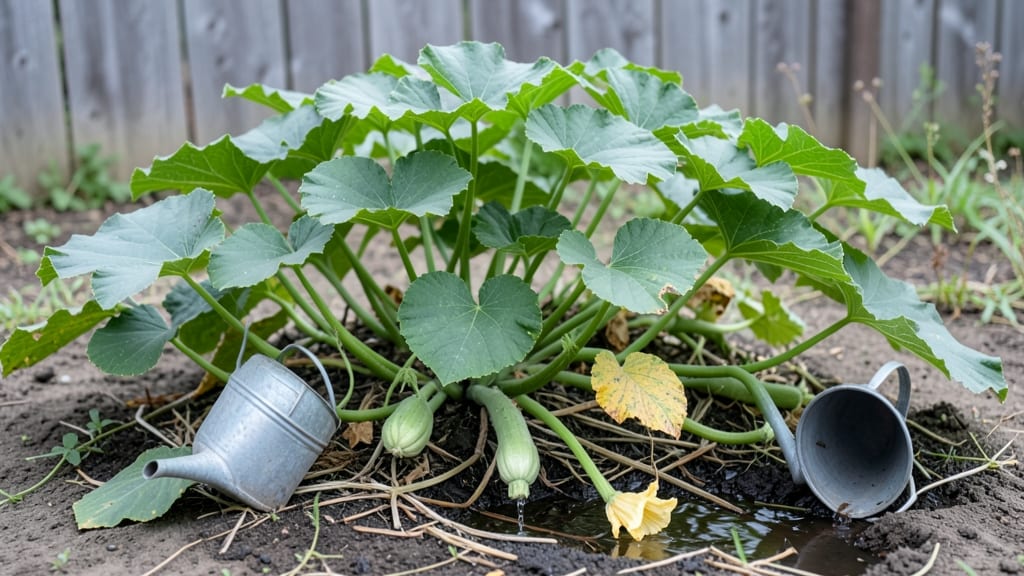
Overwatering squash plants turns your garden into a swamp—yellowing leaves, mushy stems, and that dreaded fungal smell. 🌱 I’ve seen healthy vines collapse in days from too much water, and the fix isn’t complicated once you know the signs. The key is adjusting how you water, not just how often.
Most people drown squash by watering on a schedule, not by checking the soil. Stick your finger 1-2 inches deep—if it’s damp, wait. Squash needs 1-2 inches of water per week, but heavy clay soil or containers hold moisture longer. That’s why your plants look sad even after watering.
Three simple tweaks save your plants: water deeply but less often, improve drainage with compost or sand, and prune any wilted leaves to stop rot from spreading. Within a week, you’ll see crisp green foliage and sturdy vines ready to produce.
Prevent future meltdowns by mulching with straw to slow evaporation and spacing plants for airflow. Now your squash will thrive—not just survive—next season.
Root Rot’s Silent Triggers
Overwatering squash plants isn’t just about giving them too much love—it’s often a mix of environmental, soil, and human factors working together to drown their roots. Understanding these causes is the first step to saving your squash from soggy soil syndrome. Here’s why it happens:
Squash plants thrive in well-draining soil, but when the ground holds water like a sponge, roots suffocate. Here’s the science: - Compacted or Clay-Heavy Soil: Clay particles pack tightly, trapping water and blocking oxygen flow to roots.
A simple jar test (fill a jar with soil and water, then observe drainage speed) can reveal if your soil is guilty. - Lack of Organic Matter: Soil rich in compost or aged manure creates air pockets, allowing excess water to escape.
Without it, water pools around roots, inviting root rot pathogens like Phytophthora and Pythium. - Low Elevation or Flat Gardens: Squash planted in depressions or containers without drainage holes acts like a bathtub. Actionable fix: Amend soil with perlite or sand (10-20% by volume) or plant on a slight slope.
Even the most well-intentioned gardener can overdo it. Here’s how: - Watering on a Schedule: Squash needs 1–2 inches of water per week, but daily light sprinkles keep soil saturated.
Use a moisture meter or stick your finger 1–2 inches deep—if it’s damp, wait. - Ignoring Weather: Rainfall + irrigation = double the moisture.
After heavy rain, skip watering for 2–3 days to let soil dry. - Drip Irrigation Gone Wrong: Low-flow emitters left on too long can create a "wet bulb" effect around roots. Pro tip: Set timers for 30–60 minutes max and monitor soil moisture.
Potted squash is vulnerable because containers dry out faster when wet—but also trap moisture when overwatered. - Small or Shallow Pots: Roots outgrow the space, leading to waterlogging. Rule of thumb: Choose containers at least 12–18 inches deep with drainage holes. - No Drainage Holes: Water sits at the bottom, creating anaerobic conditions where roots rot. Non-negotiable: Drill holes if your pot lacks them. - Overpotting Without Mix: Filling a large pot with regular garden soil creates a waterlogged core.
Use a fast-draining potting mix (50% peat/compost, 30% perlite, 20% vermiculite).
Hot, humid days slow evaporation, while cool, cloudy weather keeps soil damp longer.
- High Humidity: Air can’t absorb excess moisture, so water lingers. Solution: Space plants for airflow or use a fan on humid days.
- Cool Soil Temperatures: Below 60°F (15°C), roots metabolize slower, making them more susceptible to rot. Fix: Use black plastic mulch to warm soil or plant in raised beds.
Stressed squash can’t handle excess water.
Watch for: - Overcrowded Plants: Too many vines compete for space, slowing water absorption and increasing humidity around leaves. Thin seedlings to 2–3 feet apart. - Pests or Disease: Chewed leaves or fungal spots disrupt water uptake. Inspect regularly and treat with neem oil or copper fungicide if needed. - Improper Transplanting: Shocked roots struggle to establish, making them vulnerable to rot. Acclimate seedlings for 1–2 weeks before transplanting and avoid watering for 24 hours post-planting.
Key Takeaway: Overwatering is rarely just about the water—it’s about the conditions around your squash. By addressing drainage, habits, containers, climate, and plant health, you’ll give your squash the dry-but-moist balance it craves. 🌱💧
Fixing Overwatered Squash Plants
Now that you’ve identified the signs of overwatering and root rot in your squash plants, it’s time to take action. The good news? With the right steps, your plants can bounce back—even if they’re already showing stress.
Below, we’ll break down solutions tailored to the most common causes of overwatering, from soggy soil to poor drainage, plus prevention tips to keep your squash thriving.
If your squash plants are already showing signs of root rot (yellowing leaves, mushy stems, or foul-smelling soil), cut back on watering right away. Overwatering is the primary culprit, and giving the roots a break is the first step to recovery.
- How to do it: Pause watering for 3–5 days to let excess moisture evaporate and the soil dry out slightly. - Pro tip: 💡 If the ground feels damp just an inch below the surface, hold off on watering.
Stick your finger in the soil—if it’s sticky or cool, it’s still too wet.
Squash plants hate sitting in waterlogged soil. If your garden or containers don’t drain well, fix it before resuming watering.
For Garden Beds:
- 🔪 Amend the soil by mixing in compost, perlite, or coarse sand (1–2 inches deep) to break up compacted areas.
- 🌡️ Raise the bed slightly (even a few inches) if water pools after rain.
A gentle slope away from the plant helps. - ✨ Install a French drain (a trench filled with gravel) around the base if water consistently pools.
For Containers:
- 🛒 Repot in a larger container with drainage holes if your current pot lacks them.
- 🍳 Use a well-draining potting mix (avoid heavy garden soil).
A blend of coco coir, perlite, and compost works well. - 🔥 Elevate pots on feet or bricks to prevent water from sitting in saucers.
If root rot has set in, prune affected areas to prevent further spread.
- 👨🍳 Snip yellow or blackened leaves with clean scissors, cutting back to healthy green growth.
- 🔪 For severe root rot: Gently remove the plant, trim away mushy, dark roots (keep only firm, white roots), and replant in fresh, dry soil.
- ⏰ Wait 24 hours before watering again to avoid shocking the plant further.
Once your soil is dry and drainage is improved, rewrite your watering rules to prevent future overwatering.
📊 The Right Way to Water Squash:
| Method | How to Do It | Frequency |
|---|---|---|
| Deep Watering | Water slowly at the base (not overhead) until moisture reaches 6–8 inches deep. | 2–3 times per week (adjust for heat). |
| Drip Irrigation | Use a soaker hose or drip system to deliver water directly to roots. | Early morning (avoid evening). |
| Hand Watering | Use a watering can with a narrow spout to target the root zone. | Check soil moisture daily in extreme heat. |
- 🌡️ Water in the morning so leaves dry quickly, reducing fungal risks.
- ✨ Avoid wetting foliage—this encourages mildew. Water at the soil line instead.
- 🎯 Mulch heavily (2–3 inches of straw or shredded leaves) to retain moisture without keeping soil soggy.
An ounce of prevention is worth a pound of soggy squash! Here’s how to keep your plants happy and dry.
- 💡 Test your soil’s moisture level before watering.
Stick your finger in—if the top 1–2 inches are dry, it’s time to water. - 🌱 Choose the right squash variety—some (like butternut or acorn squash) tolerate drought better than others. - 🔥 Monitor weather forecasts—skip watering if rain is in the forecast. - 🍳 Use a moisture meter ($10–$20) for precise readings, especially in containers. - 🌿 Rotate crops—don’t plant squash in the same spot yearly to avoid compacted, waterlogged soil.
Final Thought: Recovery takes patience, but with these adjustments, your squash plants can bounce back stronger—and you’ll avoid future watering disasters. 🚀 Next up: How to Revitalize Your Plants (coming soon!)
Frequently asked questions
Why do my squash leaves turn yellow after watering?
Yellowing leaves are a classic sign of overwatering, where roots suffocate from excess moisture. Check the soil—if it's soggy 1-2 inches deep, cut back on watering immediately. This often happens when plants sit in damp soil for too long, blocking oxygen flow to roots.
How often should I water squash plants in containers?
Container-grown squash needs water every 2-3 days in hot weather, but check soil first—pots dry out faster. Use a moisture meter or stick your finger 1-2 inches deep; if dry, water thoroughly until it drains from the bottom. Avoid letting plants sit in saucers of water.
Can I save squash plants with mushy stems?
Yes, but act fast! Prune away damaged stems and leaves immediately to stop rot spread. Repot in fresh, dry soil with perlite for drainage, and pause watering for 3-5 days to let roots recover. Keep the plant in bright light and avoid overhead watering until new growth appears.
What's the best mulch to prevent overwatering?
Use straw or shredded leaves (2-3 inches thick)—they slow evaporation while improving soil structure. Avoid organic mulches like wood chips, which can compact and trap moisture. Apply mulch after soil has dried slightly to prevent creating a wet barrier.
Why does my squash wilt even after watering?
Wilting after watering often means roots can't absorb moisture due to rot or compacted soil. Dig gently—if roots look dark and mushy, you're dealing with root rot. Improve drainage immediately by amending soil with sand or perlite, and water only when the top 1 inch feels dry.