
Succulent
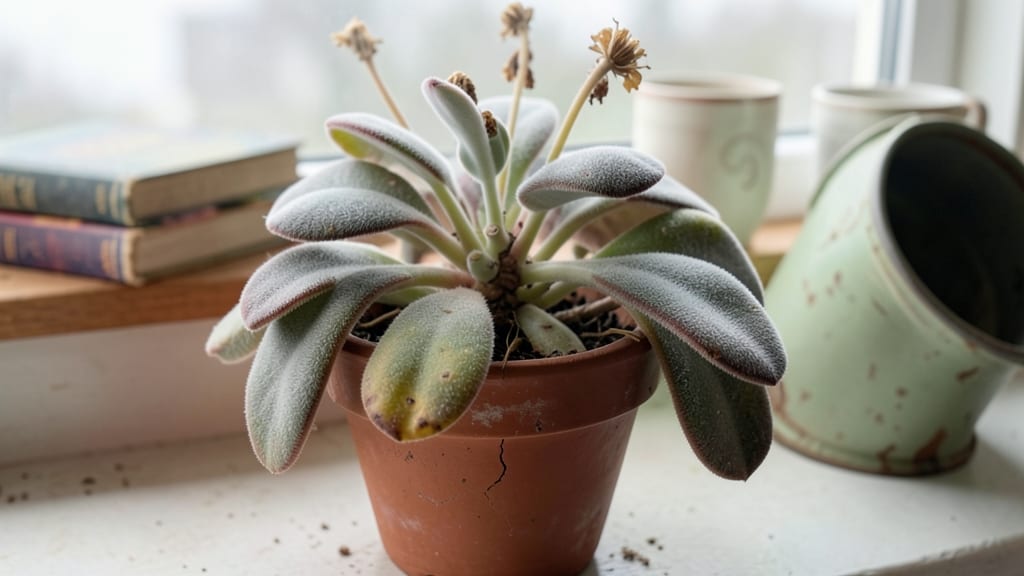
That overwatered panda plant with its sad, limp leaves is begging for a rescue—and the fix is simpler (and messier) than you’d think. 🌿 I’ve revived enough drowned Calatheas to know the drill, and the first step is always the same: check those roots before panicking.
The good news? Most panda plants recover faster than you’d expect when you catch the problem early.
Overwatering turns the roots black and mushy, while underwatering leaves them dry and brittle. The key is testing moisture with your finger—if the top inch of soil feels damp, wait. If it’s bone-dry, you’ve gone too far the other way.
Panda plants thrive in well-draining soil that dries out between waterings, and their leaves will perk up within 3-5 days once you adjust.
Start by emptying the saucer, letting excess water drain completely, and repotting if the roots smell foul. After that, stick to watering only when the top 1-2 inches of soil are dry.
Within two weeks, you’ll see new growth pushing through those once-sagging leaves—proof that even the most neglected panda plant can bounce back.
This works for both container-grown and in-ground plants, though containers dry out faster. The same rules apply whether you’re dealing with a single pot or a whole collection—just adjust your watering schedule based on your home’s humidity. Let’s get that plant back to its vibrant self.
Root Causes Of Overwatered Leaves
If your Kalanchoe tomentosa—better known as the fuzzy, velvety panda plant—is looking more like a soggy pancake than a lush succulent, the issue likely stems from one (or more) of these common watering missteps.
Understanding the why behind the droop helps you fix the problem fast and keep your plant thriving. Let’s break down the science and habits that turn your panda plant’s leaves into sad, mushy souvenirs.
Succulents like the panda plant store water in their thick, waxy leaves and stems, meaning they’re built for drought—not deluges. When you water on a fixed schedule (e.g., every Tuesday and Friday), you ignore the plant’s actual needs.
Soil moisture, humidity, and temperature all affect evaporation rates, but most people default to "more water = happier plant."
The result? Chronic oversaturation. Roots deprived of oxygen suffocate, leading to:
- Root rot: Fungal or bacterial infections thrive in waterlogged soil, breaking down root tissue.
- Nutrient leaching: Excess water flushes away essential minerals like potassium and magnesium.
- Cellular swelling: Leaves absorb too much water, becoming plump and prone to splitting or collapsing.
Pro tip: 🌡️ Stick your finger 1-2 inches into the soil—if it’s damp, wait. If it’s bone-dry, water thoroughly but only until excess drains from the bottom. Panda plants prefer the "dry-down" method: water deeply, then let the top 75% of soil dry out before repeating.
Panda plants are not fans of soggy feet—literally. If your pot lacks drainage holes or sits in a saucer filled with standing water, roots can’t "breathe." Even if you water sparingly, poor drainage traps moisture, creating a perfect storm for rot.
Here’s the science:
- Oxygen depletion: Roots need air to respire. Water fills pore spaces, suffocating them.
- Fungal growth: Phytophthora and Pythium (common soil fungi) multiply in wet conditions, attacking roots.
- Salt buildup: Minerals from tap water or fertilizers accumulate in stagnant soil, burning roots.
Fix it: 🔧 Repot your panda plant in a container with drainage holes, and use a chunky, gritty mix (e.g., 60% cactus soil + 30% perlite + 10% pumice). If your pot is saucer-less, elevate it on pebbles or a rack to prevent water pooling.
Your panda plant didn’t evolve in a humid bathroom or a north-facing window with cold drafts—it thrives in arid, bright conditions mimicking its native Madagascar. When humidity or light levels clash with its needs, it signals distress by drooping or developing mushy leaves.
Key triggers:
| Factor | Problem | Effect on Water Needs |
|---|---|---|
| High humidity (e.g., 60%+) | Slows evaporation | Soil stays wet longer → roots rot faster |
| Low light (e.g., <10 hours of indirect sun) | Reduces transpiration | Plant holds onto water → overhydration |
| Cold temperatures (<50°F) | Slows metabolic processes | Roots absorb water but can’t process it → swelling |
Adjustments: 🌿 Move your plant to a bright, east- or south-facing spot (avoid harsh afternoon sun). In humid climates, use a dehumidifier nearby or place it on a tray of dry sand. If temps drop, keep it above 55°F.
Sometimes, the "overwatering" symptoms are a mask for an unseen invader. Pests like mealybugs or scale insects excrete honeydew, which attracts sooty mold—a fungal growth that clogs leaf pores. This disrupts the plant’s ability to regulate moisture, leading to false signals of overwatering.
Other culprits:
- Bacterial soft rot: Causes leaves to turn mushy and black (often from contaminated water).
- Powdery mildew: Thrives in damp conditions, suffocating leaves and altering water absorption.
- Root-knot nematodes: Microscopic worms that gnaw on roots, reducing water uptake efficiency.
Spot-check: 🔍 Wipe leaves with a damp cloth to remove pests. If you see black sooty residue or sticky residue, treat with neem oil or insecticidal soap. For rot, trim affected areas with sterile scissors and repot in fresh soil.
Revive your panda plant now
Your overwatered panda plant might look like it’s throwing in the towel, but don’t worry—it’s often a quick fix away from bouncing back! The key is to diagnose the root of the problem (literally) and take action.
Below, we’ll map out practical solutions for the most common causes of overwatering, along with prevention tips to keep your plant thriving. Let’s get started!
Signs: Yellowing leaves, mushy stems, foul odor from the soil, or a plant that wobbles easily when pulled gently.
How to Fix It:
- 🔥 Stop Watering Immediately
- Pause all watering until the soil is dry to the touch (usually 1–2 inches down). Overwatering worsens root rot, so patience is key!
- 🍳 Remove the Plant Gently
- Carefully take the plant out of its pot and inspect the roots. Healthy roots are firm and white; rotten roots are brown, mushy, or smell bad.
- 🔪 Trim the Damaged Roots
- Use sterilized scissors or pruning shears to snip off any black, mushy, or squishy roots. Cut healthy roots at a 45-degree angle to encourage regrowth.
- 🌡️ Repot in Fresh, Dry Soil
- Choose a well-draining succulent or cactus mix (or amend regular potting soil with perlite/pumice for aeration).
- Let the soil dry out completely for 3–5 days before watering again.
- ⏰ Monitor and Adjust Care
- Place the plant in bright, indirect light (no direct sun yet) and avoid watering for at least a week.
- If the plant is severely damaged, consider propagating healthy stems in water or soil while the roots recover.
💡 Prevention Tip:
- Use a terracotta pot (allows moisture to evaporate faster) and bottom-watering to give roots control over hydration.
- Never let your panda plant sit in saucers of water—empty excess water after 10 minutes.
Signs: Blistered, puffy leaves (edema) or crispy, curled edges from inconsistent moisture.
How to Fix It:
- 🌡️ Adjust Watering Schedule
- Water only when the top 1–2 inches of soil are bone-dry (stick your finger in to check!). Panda plants store water in their leaves, so they don’t need frequent drinks.
- 🌬️ Improve Airflow
- Move the plant to a spot with gentle breezes (like near an open window or fan on low). Stagnant air traps humidity, leading to edema.
- 🍎 Prune Damaged Leaves
- If leaves are blistered or crispy, snip them off with clean scissors. This helps the plant focus energy on new growth.
- 🌱 Repot if Soil is Compacted
- If the soil feels dense or waterlogged, repot into a lighter, gritty mix with added perlite or sand.
💡 Prevention Tip:
- Water in the morning so excess moisture evaporates during the day.
- Avoid misting—panda plants hate humidity on their leaves!
Signs: Water pooling at the bottom of the pot, slow-draining soil, or a plant that stays soggy for days.
How to Fix It:
- 🔧 Check the Drainage Holes
- Ensure the pot has multiple drainage holes at the bottom. If not, drill a few (use a nail or small drill bit).
- 🍳 Upgrade the Soil Mix
- Dump old soil and replace it with a fast-draining blend:
- 50% cactus/succulent soil
- 30% perlite or pumice
- 20% coarse sand (like horticultural sand)
- Dump old soil and replace it with a fast-draining blend:
- 🏺 Choose the Right Pot
- Terracotta pots are ideal—they breathe and wick away moisture.
- If using plastic, limit watering further since it retains dampness.
💡 Prevention Tip:
- Layer gravel or broken pottery at the bottom of the pot before adding soil to create a drainage barrier.
- Test your soil’s moisture with a moisture meter or chopstick—if it’s damp after 48 hours, you’re overwatering.
- 🌞 Boost Light Exposure: Move your panda plant to a bright spot (east or west window) to aid recovery. Avoid deep shade. - 💧 Bottom-Watering Hack: Place the pot in a tray of water for 10–15 minutes, then drain.
This prevents over-soaking the roots. - 🌱 Propagate Healthy Cuttings: If the main plant is struggling, take 4–6 inch stem cuttings, let them dry for a day, then plant in fresh soil. - 📅 Track Your Watering: Use a plant care journal to note when you water and how the soil feels.
Consistency is key!
Remember: Panda plants are resilient! With the right adjustments, your plant can bounce back in 2–4 weeks. Stay patient, and soon you’ll have a happy, plump panda plant showing off its signature variegated leaves again. 🐼✨
Frequently asked questions
How do I know if my panda plant is overwatered vs. underwatered?
Check the soil first—if it's damp 1-2 inches down, you're likely overwatering. Overwatered plants show yellowing leaves, mushy stems, and may wobble when touched. Underwatered plants have crispy, dry edges and may pull away from the pot. A simple finger test solves the mystery!
Can I save a panda plant with black, mushy roots?
Yes! Trim all black/mushy roots with sterilized scissors, then repot in fresh, dry cactus mix with perlite. Hold off on watering for 3-5 days to let roots recover. Place it in bright, indirect light and avoid watering until the top 1 inch of soil is dry.
Why does my panda plant keep getting root rot even after I fix it?
This usually means your pot lacks drainage or you're using compacted soil. Switch to a terracotta pot with holes and a chunky soil mix (60% cactus soil + 30% perlite). Empty saucers after watering and avoid letting the plant sit in water. Consistency is key!
How often should I water my panda plant after recovery?
Once recovered, water only when the top 1-2 inches of soil are completely dry. In summer, this may be every 10-14 days; in winter, stretch it to 3-4 weeks. Use the "soak-and-dry" method: water thoroughly until it drains, then wait.
Will my panda plant grow back if all the leaves turn yellow?
Don't panic! Trim the yellow leaves and focus on root health. Healthy roots will produce new growth within 2-4 weeks if you adjust care. Keep it in bright light and avoid watering until the soil dries out completely. Patience pays off!