
Watering
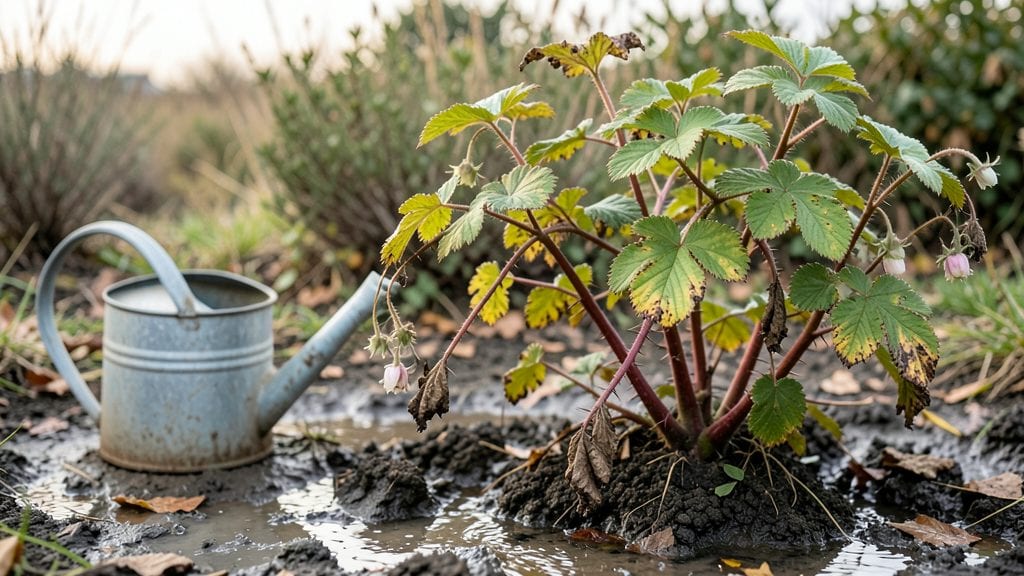
An overwatered raspberry plant looks like drowned weeds—not because it’s thirsty, but because it’s suffocating. 🌱 I’ve seen this heartbreaking scene too many times: glossy yellow leaves, limp canes, and roots that smell like a swamp. The fix isn’t complicated, but it starts with stopping the water torture right now.
Raspberries hate soggy feet more than they hate drought. The moment soil stays wet for more than 48 hours, roots choke and fungi move in. I check soil moisture by squeezing a handful—if water drips out, that’s your cue to hold off.
Drainage matters just as much as watering: raised beds or containers with holes save raspberries every season.
Within a week of proper care, you’ll see new green growth pushing through. Trim back the worst-affected canes (sterilize your pruners first!) and watch as the plant redirects energy to healthy roots. The key is consistency: water deeply but only when the top 2 inches of soil feel dry.
This works for backyard patches, raised beds, or even container-grown raspberries. The same rules apply whether you’re in Zone 5 or 8—just adjust for your local rainfall. Let’s turn those sad canes into lush, fruiting bushes again.
Root Causes Of Excess Moisture
Raspberry plants may seem like they thrive in damp conditions, but too much water can quickly turn their lush canes into a soggy mess. Understanding why this happens is the first step to fixing it—and preventing future disasters.
Let’s dig into the science behind overwatering and how it sabotages your berry bushes.
Raspberries despise soggy feet, and compacted or poorly draining soil is the #1 culprit behind overwatering. When rain or irrigation water can’t escape, it pools around the roots, suffocating them. Here’s why this is a problem:
- Oxygen starvation: Roots need air to respire (yes, they breathe!). Waterlogged soil displaces oxygen, forcing roots to switch to anaerobic respiration—an inefficient process that produces toxic byproducts like ethanol. This weakens the plant and invites Phytophthora (a deadly root rot fungus).
- Nutrient lockout: Excess water washes away essential nutrients (like nitrogen, phosphorus, and potassium) before roots can absorb them. Even if you fertilize, the plant can’t access what it needs.
- Fungal feasts: Damp soil is an all-you-can-eat buffet for pathogens. Botrytis (gray mold) and Rhizoctonia thrive in wet conditions, rotting roots and canes from the inside out.
💡 Pro Tip: Test your soil’s drainage by digging a 12-inch hole, filling it with water, and timing how long it takes to drain. If it’s still wet after 6 hours, amend with compost, perlite, or coarse sand to improve airflow.
Think you’re helping by watering every day? Too-frequent or heavy watering tricks raspberry plants into thinking they’re in a swamp. Here’s how it backfires:
- Surface evaporation ≠ root hydration: Light, shallow watering (like sprinklers) wets the topsoil but leaves deeper roots parched. Meanwhile, the surface stays damp, encouraging root rot before the plant even gets a drink.
- Root suffocation: Raspberry roots grow best in well-aerated soil. Constant moisture creates a hydroponic-like environment where roots can’t expand, stunting growth and weakening the plant’s structure.
- Salt buildup: If you’re using tap water with minerals (like chloride or sodium), overwatering concentrates these salts in the soil. High salt levels burn roots and disrupt water uptake, even if the soil looks moist.
🔥 Actionable Fix: Water deeply but infrequently—aim for 1–1.5 inches per week (including rain). Use a soaker hose or drip irrigation to deliver water slowly to the root zone, not the leaves.
Potted raspberries are especially vulnerable because their roots have nowhere to go when water accumulates. Here’s why containers turn deadly:
- No natural drainage: Even if your pot has holes, clogged drainage (from roots growing into the holes or trapped debris) traps water. Roots in containers dry out faster but also rot faster when overwatered.
- Limited oxygen exchange: Small pots compact soil quickly, reducing pore space for air. Without airflow, roots suffocate in minutes—not days.
- Temperature swings: Pots heat up faster in sun and cool rapidly at night. Cold, wet roots in containers are a recipe for root rot and cold damage, even in mild climates.
🌡️ Critical Adjustment: Use pots with multiple drainage holes and a cactus/succulent mix (60% mineral grit, 40% peat/compost). Never let them sit in saucers of water—empty saucers immediately after watering.
Raspberries evolved in temperate, well-drained forests—not tropical downpours. If you’re in a humid, rainy region or a low-lying area, excess moisture becomes a year-round battle. Key triggers:
- Poor evaporation: High humidity slows water evaporation from soil. Even if it doesn’t rain, dew and fog keep the root zone damp for days.
- Flooding risks: Clay-heavy or low-lying soils hold water like a sponge. After heavy rain, roots can drown in anaerobic conditions for weeks.
- Weakened defenses: Stressed raspberries (from pests, heat, or poor soil) can’t fight off rot when their roots are already waterlogged.
✨ Smart Solution: Plant raspberries on mounds or slopes to improve drainage. In rainy climates, use raised beds with gravel bases or mulch heavily with straw to absorb excess moisture.
Now that you know the science behind the sog, the next step is reviving your raspberry canes—without repeating the same mistakes. Stay tuned!
Revive Your Plant in 3 Steps
Now that you understand the root causes of an overwatered raspberry plant—whether it’s soggy soil, poor drainage, or fungal infections—it’s time to take action. The good news? With the right steps, you can nurse your canes back to health and prevent future waterlogging.
Here’s how to fix it, cause by cause, with practical solutions and proactive tips to keep your raspberries thriving.
If your raspberry plant’s roots are drowning, the first priority is stopping the waterlogged conditions and giving them a chance to recover.
🔥 Stop Watering Immediately
- Pause all irrigation—including rainwater if possible. Let the soil dry out slightly before assessing further.
- Check soil moisture by sticking your finger 1–2 inches deep. If it’s still damp, wait another day.
🍳 Improve Drainage Fast
- Raise the plant’s base (if in a container): Place pots on bricks, cinder blocks, or a DIY wooden stand to encourage airflow and water runoff.
- Add organic matter: Mix in compost, perlite, or coarse sand (1 part to 3 parts soil) to loosen compacted soil and improve aeration.
- For in-ground plants: Create a slight mound around the base to help water flow away from the roots.
👨🍳 Revive Stressed Roots
- Trim affected canes: Use sterilized pruners to cut back any mushy, black, or hollow stems (signs of root rot).
Snip just above a healthy node. - Apply a fungal treatment (if needed): Spray with neem oil or hydrogen peroxide (3%) to combat fungal growth. Reapply every 5–7 days for 2 weeks.
Once your plant is stable, rewrite your watering rules to avoid repeating the same mistakes.
⏰ Water Smarter, Not Harder
- Water deeply but infrequently: Aim for 1–1.5 inches of water per week (including rain), delivered in long, slow sessions (e.g., 10–15 minutes) rather than frequent light sprinkles.
- Water at the base only: Avoid wetting leaves to reduce fungal risks.
Use a soaker hose or drip irrigation for precision. - Morning is best: Water early in the day so foliage dries quickly, preventing mildew.
💡 Pro Tip: Test Your Soil
- DIY moisture test: Bury a wooden stick near the plant. If it comes out clean after 24 hours, you’re good. If muddy, hold off on watering.
- Invest in a moisture meter ($10–$20) for foolproof readings.
Now that drainage is fixed and watering is on track, strengthen your raspberry plant’s resilience with these care tweaks.
🌿 Support Weak Canes
- Stake or trellis: Overwatered plants often lose structural strength. Install support stakes or a fan-trellis to prevent canes from flopping.
- Fertilize lightly: Wait 2–3 weeks after pruning, then feed with a balanced fertilizer (10-10-10) or compost tea to rebuild vigor.
🔥 Preventative Maintenance
- Mulch properly: Apply 2–3 inches of straw or wood chips (but keep it 6 inches away from the stem) to retain moisture without suffocating roots.
- Monitor weather: If your area gets heavy rain, temporarily cover the plant with a breathable shade cloth to reduce excess moisture.
- Rotate crops: If growing raspberries in the same spot yearly, switch locations every 3–4 years to prevent soil-borne diseases.
| Symptom | Cause | Fast Solution |
|---|---|---|
| Yellowing leaves | Overwatering + nutrient loss | Flush soil with water, add Epsom salt (1 tbsp/gallon) |
| Mushy stems | Root rot | Prune affected areas, apply copper fungicide |
| Wilting despite wet soil | Compacted roots | Aerate soil with a fork, add vermiculite |
| Slow growth | Stress + poor drainage | Repot in fresh, well-draining mix |
Remember: Patience is key—raspberry plants can take 4–6 weeks to show full recovery. Stay consistent with your new routine, and your canes will bounce back stronger than ever! 🚀
Frequently asked questions
How do I know if my raspberry plant is truly overwatered and not just underwatered?
Check the soil: if it smells sour or like rot, feels cold and mushy, or water pools on top, it’s overwatered. Look for yellowing leaves that stay droopy even when soil is wet, or blackened stems at the base. Underwatered plants usually have crispy brown edges on leaves and dry, pulled-away soil.
Can I save a raspberry plant with root rot from overwatering?
Yes, but act fast! First, stop watering completely and trim all mushy, black roots with sterilized shears. Repot in fresh, well-draining soil with perlite, and water only when the top 2 inches feel dry. Apply a fungicide like neem oil to prevent further spread. Recovery takes 4-6 weeks with consistent care.
What’s the best soil mix to prevent overwatering in container-grown raspberries?
Use a blend of 60% mineral grit (perlite, coarse sand, or pumice) and 40% organic matter (compost, coconut coir, or peat). This creates air pockets while retaining moisture. Always use pots with multiple drainage holes and elevate them on feet to prevent water pooling at the bottom.
Will mulch help or hurt an overwatered raspberry plant?
Mulch can help if the soil has already dried out—it retains moisture without suffocating roots. But for actively overwatered plants, remove old mulch first to improve airflow. Use straw or wood chips (2-3 inches thick) but keep it 6 inches away from the stem to prevent rot.
How often should I water raspberries after fixing overwatering issues?
Water deeply but infrequently: aim for 1-1.5 inches per week (including rain). Use a soaker hose for 10-15 minutes at the base, then wait until the top 2 inches of soil feel dry. Morning watering prevents fungal growth from overnight moisture. Adjust for heat—water more in summer, less in winter.