
Watering
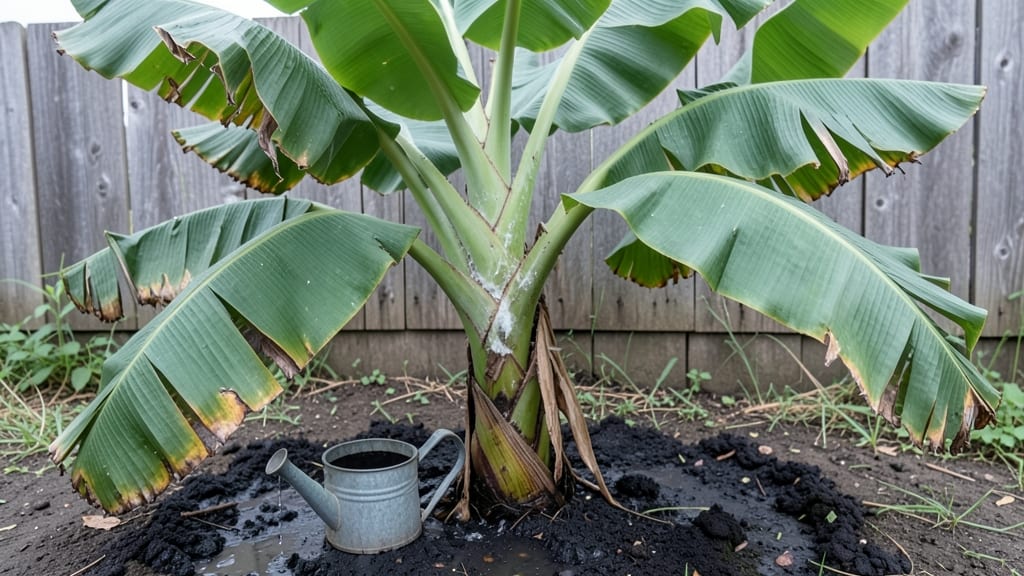
My banana plant’s yellowing leaves nearly made me give up—until I learned overwatering banana plants turns them into soggy, struggling messes. The moment I adjusted my watering schedule, new green shoots emerged within weeks. It’s not about drowning them in love; it’s about letting the soil dry out between drinks.
Banana plants hate wet feet. When you see yellowing leaves or mushy stems, it’s a cry for help—too much water blocks roots from breathing. The fix starts with well-draining soil (think cactus mix with perlite) and a pot with drainage holes.
I switched to watering only when the top 2 inches of soil feel dry, and my plant bounced back faster than I expected.
Within 3 weeks, you’ll see the difference: vibrant new fronds, fewer yellow patches, and a plant that finally feels sturdy. The key is consistency—bananas thrive when their roots get air, not a swamp. Once you master this, your plant will grow taller and produce more fruit than ever before.
Works for both indoor pots and outdoor beds, though outdoor plants need extra shade to prevent stress. Here’s how to keep it thriving long-term—no more sad, droopy leaves.
Root Causes Of Overwatering
When your banana plant’s leaves start yellowing or drooping, the culprit is often too much water—but why does this happen? Understanding the science behind it helps you fix the problem and prevent it in the future.
Here’s a breakdown of the key reasons your banana plant might be drowning in its own pot.
Banana plants thrive in well-draining soil that allows excess water to escape quickly. If your soil is heavy, compacted, or lacks organic matter, water pools around the roots instead of draining away.
Over time, this creates anaerobic conditions—meaning oxygen is cut off, suffocating the roots. Without oxygen, roots can’t absorb nutrients or water efficiently, leading to yellowing leaves and even root rot.
Why it matters: Banana plants are tropical but still need aerated soil. Clay-heavy or poorly amended garden soil traps moisture, while container mixes without perlite or sand can compact over time.
Pots without drainage holes act like a bathtub for your banana plant. Water sits at the bottom, and roots at the lowest level absorb it first—until they’re submerged. Once roots are waterlogged, they begin to ferment (yes, like spoiled food!), producing harmful byproducts like ethanol and organic acids.
These toxins damage cell membranes, causing leaves to yellow and wilt.
Why it matters: Even "self-watering" pots can trap excess moisture. If you’re using decorative containers, elevate them on saucers or add a layer of gravel at the bottom to create a false drainage layer.
Banana plants love moisture but hate soggy conditions. If you water on a strict schedule without checking soil moisture, you risk overwatering—especially in cooler weather or low-light conditions.
Roots in consistently wet soil swell and burst due to osmotic pressure, while fungal pathogens like Fusarium or Pythium thrive in damp environments, clogging root vessels and blocking water uptake.
Why it matters: Banana plants in pots dry out faster than in-ground plants. Stick your finger 2–3 inches into the soil—if it’s damp, wait. If it’s bone-dry, water thoroughly but let excess drain completely.
Banana plants are tropical, but their roots struggle when temperatures drop below 60°F (15°C). Cold soil slows water evaporation and microbial activity, making roots more susceptible to rot. High humidity without airflow can also trap moisture against leaves and soil, creating a greenhouse effect that encourages fungal growth.
Why it matters: If your banana plant is in a cool garage, shaded patio, or humid bathroom, it’s more vulnerable to overwatering. Move it to a warm, bright spot (65–85°F / 18–29°C) with indirect light and improve airflow with a small fan.
Next up: We’ll cover how to diagnose if your banana plant is truly overwatered (hint: the roots will tell the tale!).
Reviving Your Banana Plant Safely
Now that you understand why your banana plant is suffering from overwatering, it’s time to take action! The good news? With the right steps, you can nurse your plant back to health and prevent future waterlogged roots.
Below, we’ll break down practical fixes based on the most common causes of overwatering—plus prevention tips to keep your banana thriving.
If your banana plant’s leaves are yellowing, drooping, or the soil feels soggy, halt all watering for at least 3–5 days. This gives the roots time to recover and prevents further damage.
Why it works:
Overwatering suffocates roots by cutting off oxygen, leading to rot. Letting the soil dry out slightly signals to the plant that it’s time to adjust.Pro Tip: 🌡️ Stick your finger 2–3 inches deep into the soil. If it’s damp, wait longer. If it’s bone-dry, water lightly—but only if the top inch feels crispy.
Banana plants hate sitting in wet soil. If your pot lacks drainage holes or the soil retains too much moisture, fix it now.
🔧 Quick Fixes for Poor Drainage
| Problem | Solution |
|---|---|
| No drainage holes | 🔪 Poke holes in the bottom with a drill or nail (if repotting isn’t an option). |
| Compacted soil | Mix in perlite, sand, or coconut coir (20–30%) to loosen the mix. |
| Heavy clay soil | Replace with a well-draining potting mix (50% peat/coir + 50% perlite/pumice). |
| Waterlogged pot | 🏃♂️ Repot immediately into a container with holes and fresh, airy soil. |
Pro Tip: ✨ For container growers, terracotta pots dry out faster than plastic—consider switching if drainage is an issue.
Once the soil is dry, rewater with caution. Banana plants prefer consistently moist (not soggy) soil, but their needs change with seasons.
⏰ When & How to Water
- 🌧️ Frequency: Water only when the top 1–2 inches of soil are dry (check with your finger).
- 💧 Amount: Give a deep watering (until water runs out the drainage holes) but no more than once every 5–7 days in warm weather.
- 🌿 Seasonal Adjustments:
- Spring/Summer (Growing Season): Water more frequently (every 4–5 days).
- Fall/Winter (Dormant Season): Reduce to once every 10–14 days—growth slows, so less water is needed.
Pro Tip: 🎯 Morning watering is best—it allows excess moisture to evaporate during the day, reducing root rot risk.
Yellow, mushy, or black leaves won’t recover, but removing them helps the plant redirect energy to healthy growth.
🔪 How to Prune Safely
- 🍃 Identify dead leaves: Gently tug a leaf—if it comes off easily, it’s time to go.
- ✂️ Use clean shears (sterilize with rubbing alcohol if reusing).
- 🌱 Cut at the base where the leaf meets the pseudostem (avoid tearing).
- 🧼 Dispose of clippings in the trash (not compost)—rotten leaves can spread disease.
Pro Tip: 💡 Don’t prune more than 20–30% of the foliage at once, or you’ll stress the plant.
Once your banana plant recovers, keep these habits to avoid overwatering again:
- 📏 Pot Size Matters: Choose a container only slightly larger than the root ball (too big = excess moisture).
- 🌡️ Monitor Humidity: Bananas love humidity (60–80%), but avoid waterlogged trays—empty saucers after watering.
- 🌧️ Rainy Season? Move pots to a covered area or reduce watering by half.
- 🔍 Check the Roots: Every few months, gently remove the plant from its pot to inspect roots. Healthy roots are firm and white; rotten roots are mushy and brown.
Remember: Banana plants are forgiving if you catch overwatering early. With these fixes, your plant should bounce back in 2–4 weeks, showing new green growth and stronger leaves. Stay patient, and soon you’ll be harvesting sweet, homegrown bananas! 🍌🌟
Frequently asked questions
Why do my banana plant leaves turn yellow when overwatered?
Yellowing leaves signal root stress from excess moisture. When soil stays soggy, roots suffocate and can't absorb nutrients, causing leaves to yellow and drop. The older, lower leaves are usually the first to show signs of distress. Check the soil—if it's damp 2 inches down, you're overwatering.
How often should I water my banana plant to avoid overwatering?
Water only when the top 1-2 inches of soil feel dry. In warm weather, this might be every 5-7 days, while winter slows watering to every 10-14 days. Always use pots with drainage holes and let excess water drain completely. Morning watering helps prevent fungal issues.
Can I save my banana plant if the roots are rotting?
Yes, but act fast! Remove the plant from its pot and trim away any mushy, brown roots with clean scissors. Repot in fresh, well-draining soil with perlite. Reduce watering immediately and place in bright, indirect light. Healthy roots should regrow in 2-4 weeks if the rest of the plant is still vigorous.
What's the best soil mix to prevent overwatering?
Use a blend of 50% peat or coconut coir and 50% perlite/pumice for optimal drainage. Avoid heavy garden soil or pure compost, which compact and trap moisture. For outdoor plants, amend clay soil with sand or compost to improve aeration. Terracotta pots help too—they dry out faster than plastic.
Will my banana plant recover from overwatering damage?
Most plants recover within 3-6 weeks if you stop overwatering and improve drainage. Focus on new growth—healthy leaves will emerge from the center. If the stem is soft or black, the plant may not survive, but young plants often bounce back faster than mature ones. Patience is key!