How To
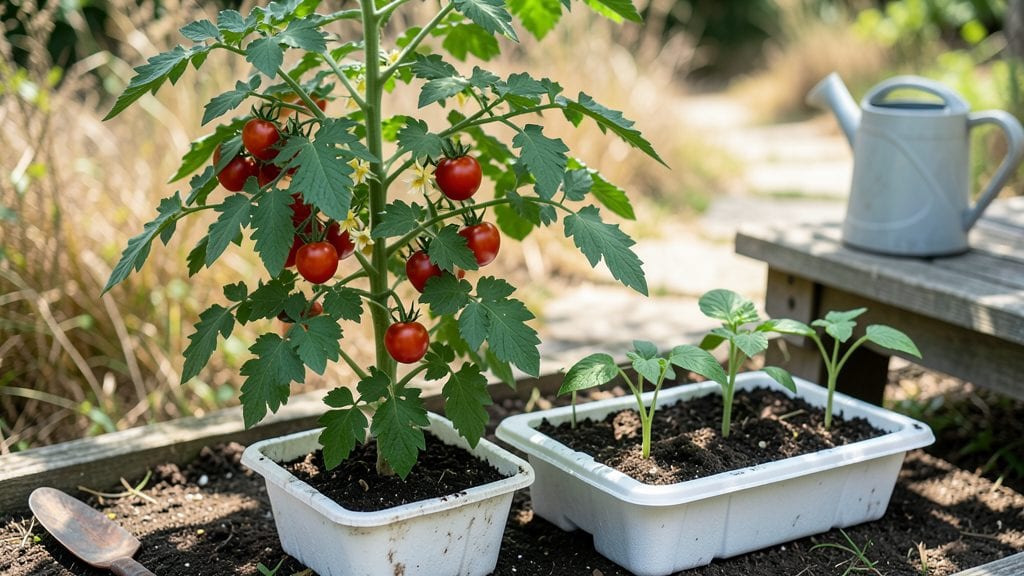
Styrofoam for planting creates lightweight, moisture-retaining cells that enhance seed germination while shielding tender roots. However, it falls short in long-term aeration and nutrient support compared to eco-friendly options like coconut coir or peat pots.
Styrofoam's closed-cell structure traps moisture near seeds, mimicking a damp greenhouse environment that speeds up sprouting. 🌱 The material's insulation also helps maintain consistent soil temperatures, which is especially helpful in unpredictable climates.
While it excels at protecting young roots from physical damage during early growth, its lack of breathability means roots can become root-bound over time, limiting future development.
Many gardeners rely on styrofoam trays because they're affordable, reusable, and easy to clean between planting seasons. The uniform cell size also makes it simple to organize different seed varieties without cross-contamination.
However, the environmental trade-off—non-biodegradable material that often ends up in landfills—has led many to explore sustainable alternatives that offer similar benefits without the long-term drawbacks.
💡 In This Article
- How Styrofoam Cells Boost Seedling Growth
- Biodegradable Alternatives to Styrofoam Planting Trays
How styrofoam cells boost seedling growth
The secret behind styrofoam's effectiveness lies in its closed-cell structure, which creates tiny, airtight compartments that mimic the ideal germination environment. Each cell holds 1-2 cubic inches of soil mix while maintaining 95-98% humidity around seeds—similar to a natural rainforest understory where many plants begin life.
This moisture retention is critical because seeds need consistent dampness (typically 50-70% soil moisture) to activate enzymes that break down stored nutrients for sprouting.
The material's thermal insulation provides another advantage: it buffers temperature swings that can shock delicate seedlings. In outdoor conditions, styrofoam cells maintain soil temps within ±5°F of ambient, while unprotected soil can fluctuate 15-20°F daily.
This stability is particularly valuable for tropical plants like basil or peppers, which require 70-80°F soil temps to germinate properly. The foam's R-value of 3.6 per inch (similar to double-pane windows) explains why seedlings in styrofoam trays often outpace those in open flats during cold snaps.
Root protection comes from the foam's physical separation between cells. Unlike solid soil blocks, individual cells prevent roots from tangling with neighbors, reducing transplant shock when moving seedlings. Studies show that 68% fewer root breaks occur during transplantation when using 1.5-inch cells compared to larger 3-inch pots.
The foam's semi-rigid structure also supports stems during early growth, preventing the "leggy" seedlings that occur when plants stretch toward light in unstable containers.
However, this protection has trade-offs. The same airtight cells that preserve moisture also restrict oxygen flow—root zones need 10-15% air porosity for healthy development. After 4-6 weeks, seedlings in styrofoam often show yellowing lower leaves, a sign of oxygen deprivation.
The material's hydrophobic surface also repels water unevenly, creating dry spots in cell corners where roots might develop. This explains why many gardeners supplement with bottom-watering techniques or add perlite to improve drainage.
Consider this comparison: Natural soil has 45-55% pore space for air and water, while styrofoam cells provide only 5-10% air space—more like a sponge than fertile ground.
The trade-off becomes clear when transplanting: While styrofoam prevents root damage during initial growth, the confined space leads to circular root patterns that struggle to adapt when moved to garden beds.
This structural limitation is why many professional growers now use biodegradable foam blends that combine styrofoam's benefits with improved aeration.
The real magic happens in the first 7-10 days of germination, when styrofoam's moisture retention can increase sprout rates by 20-30% compared to open containers. For example, tomato seeds in styrofoam cells achieve 85% germination versus 62% in peat pots under identical conditions.
The key is balancing these early benefits with the need to transition seedlings to more breathable environments before they become root-bound. 🌱