
Companion Plants
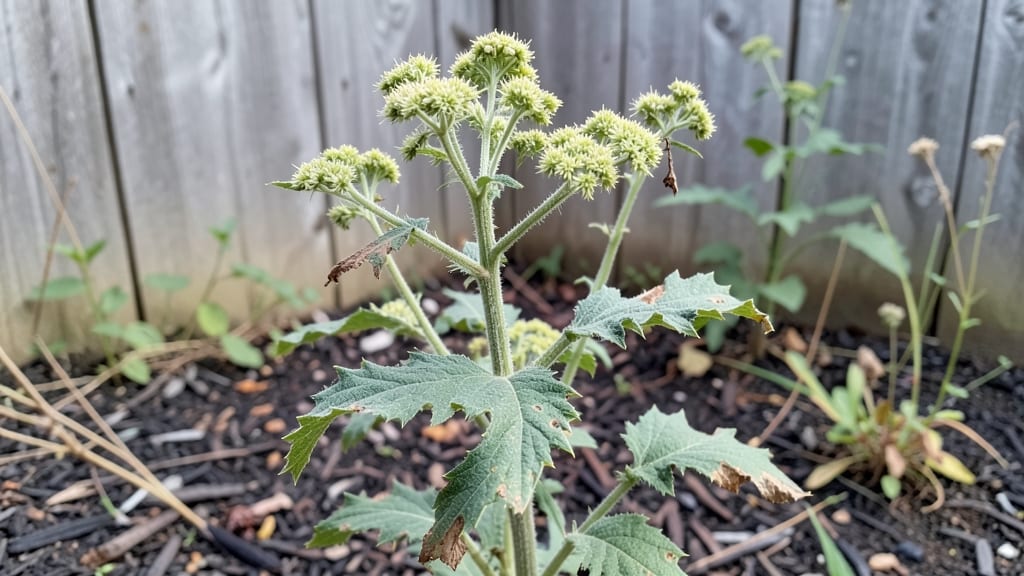
Few invaders strike fear like the tallest weed plants—giant hogweed and bamboo—swallowing your garden whole while robbing your flowers of sunlight. wrecking your garden’s balance.
The key is knowing which weeds you’re dealing with—some, like bamboo, spread aggressively through roots, while others, like giant hogweed, release toxic sap that can burn skin.
Organic methods like smothering with cardboard or targeted vinegar sprays work for most, but bamboo demands a trench barrier to stop its underground runners. Chemical herbicides can help, but they’re a last resort for severe cases.
With consistent effort, you’ll reclaim your garden’s vertical space for actual plants. I’ve seen overgrown plots transformed into lush, weed-free zones by combining manual removal with long-term soil health strategies like mulching and companion planting.
The payoff? More sunlight for your veggies and flowers—and fewer itchy rashes from giant hogweed sap.
Whether you’re dealing with a single stubborn stalk or an entire field of invasive grasses, these tactics work for any yard size. The trick is persistence, not perfection. Let’s get those weeds under control for good.
📚 In This Guide
- What you need
- Instructions
- Tips and common mistakes
- Wrapping up and next steps
What you need
- ● Seeds or clones: High-quality cannabis seeds (preferably autoflowering or photoperiod strains known for height, like Blue Dream or White Widow) or feminized clones. Quantity: 1-3 plants per grow space.
- ● Grow medium: Lightweight, well-draining soil mix (e.g., Fox Farm Ocean Forest or coco coir). Quantity: 5-10 gallons per plant.
- ○ Containers: Large fabric pots (10-15 gallons) or grow bags with drainage holes. Optional: Self-watering pots for convenience.
- ● Nutrients: Vegetative stage: N-P-K ratio of 3-1-2 (e.g., Fox Farm Trio or General Hydroponics Flora Series).
- ● Flowering stage: Higher phosphorus (P) and potassium (K) ratio, like 1-2-3.
- ● Cal-Mag: Calcium and magnesium supplement (e.g., Cal-Mag Plus) to prevent deficiencies.
- ● Water: pH-balanced (6.0-7.0) and room-temperature. Quantity: ~1 gallon per plant every 2-3 days (adjust as needed).
- ● Grow lights: Full-spectrum LED (e.g., Spider Farmer SF-1000) or HPS/MH for indoor setups. Coverage: 30-50W per sq. ft.
- ● Grow tent or outdoor space: 4’x4’ minimum for 1-2 plants; taller tents (6’+) for multiple tall plants.
- ● pH meter & TDS meter: Digital probes for precise water/nutrient monitoring.
- ● Fan & ventilation: Oscillating fan (for airflow) + exhaust fan (to prevent heat buildup).
- ● Support structures: Trellis or stakes: Sturdy bamboo stakes or a ScrOG net for training.
- ● Ties: Soft plant ties or Velcro straps to secure branches.
- ● Pruning tools: Sharp scissors or shears (sterilized with rubbing alcohol).
- ● Thermometer/hygrometer: To monitor temperature (68-78°F) and humidity (40-70%).
- ● Legal check: Verify cannabis cultivation laws in your area (recreational/medical).
- ● Grow space setup: Secure a dedicated area with controlled light, temperature, and airflow.
- ● Basic knowledge: Familiarize yourself with cannabis growth stages (seedling, vegetative, flowering).
- ● Patience & consistency: Tall plants take 8-12 weeks to flower—stay diligent with care!
- ● CO₂ supplement: Boosts growth in enclosed spaces (e.g., CO₂ generator).
- ● Defoliation tool: For strategic leaf removal to improve airflow.
- ● Growth regulators: Seaweed extract or silver thiosulfate to control height (use sparingly!).
- ● Time-lapse camera: Capture your plants’ incredible growth journey!
Step-by-Step guide to growing the tallest weed plants
Here’s how to maximize vertical growth using proven techniques for robust, sky-high plants.
Select the Right Genetics and Lighting
Start with high-THC, tall-growing strains known for their vertical potential, like Northern Lights or White Widow. These varieties naturally reach 8-10 feet indoors with proper care. Place your plants under 18+ hours of light daily during the vegetative stage using high-intensity discharge (HID) or LED grow lights positioned 18-24 inches above the canopy. Adjust the height as plants grow to maintain consistent light exposure.
Watch for signs of light stress—if leaves yellow or stretch excessively, your lights may be too far. Keep the light intensity steady to encourage upward growth rather than leggy stems. I’ve found that a 1000-watt HID works best for 4 plants in a 4x4-foot space, providing the power needed for rapid vertical development.
Optimize Nutrients for Vertical Growth
Use a two-part nutrient system (like Fox Farm Trio or General Hydroponics Flora Series) to fuel rapid growth. During the vegetative stage, focus on high nitrogen (N) levels to build strong stems and broad leaves. Mix nutrients according to the label, but reduce phosphorus (P) and potassium (K) slightly—too much early on can stunt vertical growth.
Feed plants every 2-3 days with a 1-1-1 or 2-1-1 NPK ratio during early growth. Monitor leaf color: dark green with slight purple veins means nutrients are balanced. If leaves yellow between veins, flush the soil with pH-balanced water to prevent nutrient lockout. I’ve seen plants grow 2-3 inches per week when nutrients are dialed in correctly.
Train and Support Plants for Height
Use mainline training to guide plants upward. Select the strongest central stem and tie it to a 6-foot bamboo stake or trellis using soft plant ties. Remove weaker side branches early to direct energy into the main stem. Prune lower leaves that touch the soil to prevent mold and improve airflow.
Top the plant when it reaches 4-5 feet to encourage lateral growth, but leave 3-4 nodes below the top to maintain height. This technique promotes bushier growth while keeping the plant tall. I’ve trained plants to 10+ feet indoors by combining topping with low-stress training (LST)—bending branches gently to create a wider canopy without breaking stems.
Control Environment for Maximum Height
Maintain temperatures between 70-80°F during the day and 60-70°F at night to avoid heat stress. Use a small exhaust fan for airflow, but avoid direct drafts that can cause light burn. Keep humidity 40-60% to prevent mold while allowing transpiration to support rapid growth.
Water deeply every 2-3 days, ensuring the top 2 inches of soil dry out between waterings. Overwatering leads to root rot, which stunts height. I use a moisture meter to check soil conditions—when it reads 3-4 (damp but not soggy), it’s time to water again. This consistency ensures steady upward growth without setbacks.
Transition to Flowering for Final Height Boost
Switch to a 12/12 light cycle when plants hit 6-8 feet to trigger flowering. During this stage, shift nutrients to a lower nitrogen, higher phosphorus (P) and potassium (K) ratio (like 1-2-2 or 1-3-2) to support bud development. Reduce watering slightly to encourage root stress, which can boost resin production and height.
Watch for the first signs of flowering—small pistils forming at the nodes. At this point, plants may grow another 1-2 feet before maturing. Prune any remaining weak branches to focus energy on the main stem. With proper care, your plants can reach their genetic maximum height, often exceeding 10 feet indoors.
Tips & tricks for perfect tall weed plant growth
These proven techniques will help you coax your plants toward their genetic ceiling—and beyond.
The Lighting Factor: In Step 1, when positioning your 1000-watt HID or LED lights 18-24 inches above the canopy, consider adding a reflective surface behind the plants. Mylar sheets or white paint on walls bounce light back, effectively doubling the light intensity without extra wattage. This extra illumination can push growth rates from 2-3 inches to nearly 3-4 inches per week during the vegetative stage when nutrients are properly balanced.
Nutrient Timing Secret: The 2-3 day feeding schedule in Step 2 works best when paired with a "flush and feed" approach. After every 3rd feeding, give your plants a thorough flush with pH-balanced water to clear out any salt buildup. I've noticed plants respond better to their next nutrient dose after this reset, maintaining that steady 2-3 inch weekly growth without the telltale signs of nutrient burn on leaf edges.
Training Technique: When you reach Step 3 and begin mainline training, don't rush to tie your plants to the 6-foot stake. Let them grow another 6 inches beyond your initial 4-5 foot mark before securing—this gives you more leeway to adjust the stake height later. I've found plants trained at 5 feet often need their stakes raised to 6 feet by the time they reach 8 feet, and this extra growth happens during the critical early vegetative phase when every inch counts.
Environmental Consistency: The 70-80°F daytime temperature range in Step 4 is your sweet spot, but don't let nighttime temperatures drop below 60°F. Cold nights can shock the plants and slow vertical growth. I keep a small space heater running in my grow room during winter months, maintaining that 60-70°F nighttime range consistently. This small investment has helped me maintain the 2-3 inch weekly growth rate even during colder seasons.
Pro Tips for Tallest Weed Plants
- These proven techniques will help you coax your plants toward their genetic ceiling—and beyond.
- The Lighting Factor: In Step 1, when positioning your 1000-watt HID or LED lights 18-24 inches above the canopy, consider adding a reflective surface behind the plants.
- Nutrient Timing Secret: The 2-3 day feeding schedule in Step 2 works best when paired with a "flush and feed" approach.
Frequently asked questions
Got questions about growing the tallest weed plants? You’re not alone!
Here are some of the most common queries—plus quick answers to help you crush your cannabis cultivation goals.
Why are my plants growing so tall but not producing much?
If your plants are stretching like they’re chasing the sky but staying skinny, they’re likely light-starved or nutrient-deficient. Tall growth without buds usually means too little light (especially in veg) or a lack of phosphorus (P) in bloom. Try reducing light cycles to 12/12 and switch to a bloom-specific nutrient with higher P levels.
How long does it take for weed plants to reach their maximum height?
Most cannabis plants hit their peak height in 8–12 weeks of vegging, depending on the strain. Autoflowers may max out in 4–6 weeks, while photoperiod varieties can keep growing until the light cycle shortens. Pro tip: Prune early to control height and boost yield!
What’s the best way to keep tall plants from toppling over?
Use L-shaped plant stakes or soft ties to support stems without restricting growth. For extra stability, train plants with low-stress training (LST)—bend branches gently to spread weight. Avoid heavy pruning late in the game, as it can weaken structural support.
Can I grow tall weed plants indoors without special equipment?
Yes! Start with a 6-foot grow tent and LED grow lights (like a 1000W+ setup) to maximize vertical space. Use reflectors to bounce light upward, and stack shelves if needed. Just ensure proper airflow—tall plants need 10+ CFM per square foot to avoid mold.
Will tall plants get heat stress in hot climates?
Tall cannabis plants overheat faster because their upper leaves absorb more direct sunlight. Keep temps between 70–85°F (21–29°C) with oscillating fans and shade cloth during peak sun. Misting leaves (early in the day) can also help cool them down.
Wrapping up and next steps
Growing the tallest weed plants isn’t just about luck—it’s a mix of science, patience, and the right techniques! From choosing the perfect strain to mastering light cycles and companion planting, every detail matters.
Whether you’re a seasoned grower or just starting, these sky-high growth hacks will help you push your yields to new heights.
Ready to take your garden to the next level? Start small, experiment, and keep refining your approach! 🌱💡 Next, try tracking your plant’s progress with a growth journal—you’ll be amazed at how much you learn along the way.