
Watering
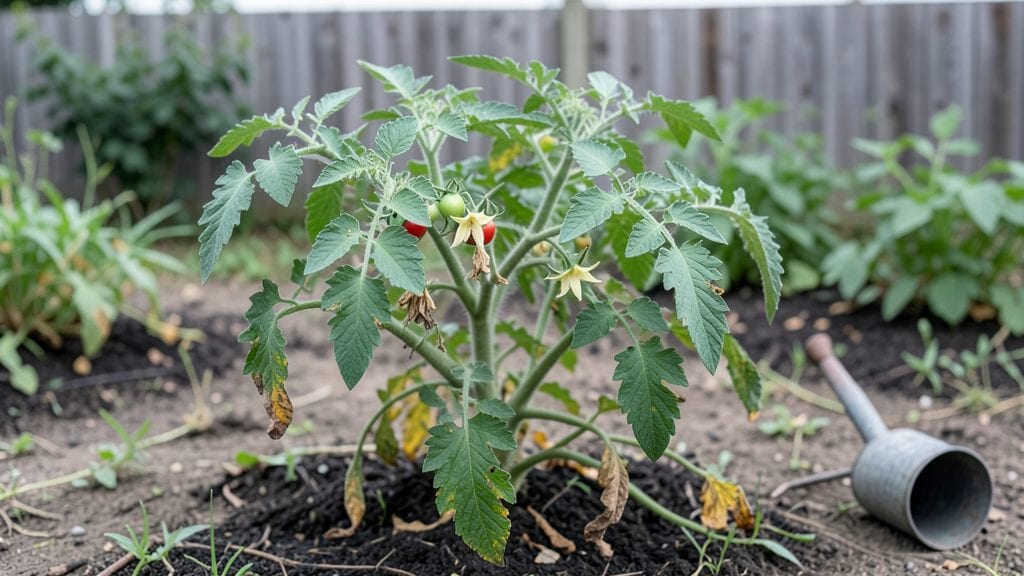
These under watered tomato plant pictures will show you exactly how a once-lush plant turns crispy brown in scorching afternoons—here’s how to fix it before it’s too late. 🌱 the roots aren’t getting enough moisture to reach upward.
The good news? You can turn things around fast with the right approach.
Underwatered tomato plants show classic warning signs: leaves curl inward like taco shells, edges turn yellow or brown, and the soil feels bone-dry an inch below the surface. Even the fruit can split or taste bland if watering’s inconsistent.
The key is checking moisture daily during dry spells and adjusting your routine before the plant hits full distress mode.
By the time you’ve diagnosed the problem, you’ll be ready to revive your plant in 3 critical steps: deep watering at the base (not just a splash on the leaves), mulching to lock in moisture, and adjusting your schedule to match your plant’s thirst.
Most plants bounce back within 24-48 hours if you catch it early—no sad faces, just happy, productive vines again.
This works for container-grown tomatoes just as well as in-ground plants, and the same principles apply whether you’re dealing with cherry tomatoes or beefsteaks. Let’s get that soil hydrated and your plants back on track!
Root Causes of Thirsty Tomatoes
Underwatered tomato plants don’t just wilt—they send silent SOS signals through their leaves, stems, and soil. Understanding these triggers is the first step to reviving your struggling plants. Here’s why your tomatoes might be parched, backed by science and actionable insights.
Tomatoes thrive on consistent moisture, especially during their fruiting phase. Their deep root systems (up to 18–24 inches!) demand 1–2 inches of water per week—more in heatwaves.
Skipping watering or relying on sporadic showers leads to: - Shallow root stress: Roots near the surface dry out faster, starving the plant of hydration. - Soil moisture imbalance: Sandy or rocky soil drains water too quickly, leaving roots thirsty. - Human error: Forgetting watering schedules or assuming "a little water is enough" (it’s not).
Pro Tip: 💡 Use a moisture meter or the "finger test" (stick your finger 2 inches into soil—if dry, water immediately).
Not all soil holds water equally.
Tomatoes hate: - Compacted clay soil: Traps water but suffocates roots, preventing deep absorption. - Sandy soil: Drains too fast, leaving roots high and dry between waterings. - Lack of organic matter: Soil without compost or mulch can’t retain moisture or nutrients.
Fix It: Amend soil with compost or coconut coir to improve water retention. Add a 2–3 inch mulch layer (straw or wood chips) to lock in moisture.
Heat, wind, and sun act like invisible straws, sucking moisture from your tomatoes.
Key culprits: - High temperatures (above 90°F): Increase evaporation rates by 20–30%. - Strong winds: Dry leaves faster, forcing plants to transpire (lose water) aggressively. - Full-sun exposure: Without shade, soil and leaves lose moisture rapidly.
Combat It: 🌡️ Water early morning or late evening to reduce evaporation. Use shade cloth (30–50%) during peak heat.
Physical or biological stress can disrupt a plant’s ability to absorb water:
- Root rot (overwatering paradox): While underwatering is the focus here, previous overwatering can kill roots, leaving them unable to drink even when water is present.
- Pests (e.g., nematodes): Damage roots, reducing their surface area for water uptake.
- Transplant shock: Newly planted tomatoes struggle to establish roots for 2–3 weeks, making them vulnerable to drought.
Check for Signs: Gently pull back mulch and inspect roots. Healthy roots are white or tan; brown/mushy roots need intervention.
Potted tomatoes dry out 3–5x faster than in-ground plants due to:
- Limited soil volume: Small pots hold less water and drain quicker.
- Exposed roots: Container roots heat up faster, increasing water loss.
- No natural moisture reserves: Unlike garden soil, pots offer no "buffer" for dry spells.
Upgrade Your Setup: 🏺 Use fabric grow bags (breathable) or large containers (5+ gallons). Add hydrogel crystals to retain moisture between waterings.
Too much fertilizer (especially synthetic nitrogen) can burn roots and disrupt their ability to absorb water. Symptoms mimic drought:
- Leaf scorch (brown edges).
- Stunted growth despite watering.
- Crusty soil surface (salt buildup from fertilizers).
Solution: Flush soil with water to leach excess salts. Switch to organic, slow-release fertilizers (like worm castings).
Even if you water regularly, rainfall patterns can throw off your schedule:
- Drought cycles: Extended dry spells (common in summer) outpace plant needs.
- Heavy rain followed by sun: Soil can become waterlogged, then dry overnight, shocking roots.
- Humidity drops: Low humidity (below 40%) forces plants to transpire faster.
Adapt Quickly: 🌧️ After rain, check soil moisture—don’t assume it’s "good enough." Adjust watering based on weather forecasts, not calendars.
Revive Your Tomato Plant Fast
Now that you’ve identified the signs of an underwatered tomato plant, it’s time to take action! The good news? With the right steps, your plant can bounce back—sometimes even within days.
Below are practical, step-by-step solutions tailored to the root causes of dehydration, plus prevention tips to keep your tomatoes thriving.
If your plant is already showing wilting, yellowing, or crispy leaves, act fast with these emergency measures:
1️⃣ Deep Watering (The Golden Rule)
Underwatered plants need more than just a quick splash—they crave deep hydration to reach their roots.
- How to do it:
- Water slowly and deeply until the soil is moist 6–8 inches down (use a trowel or stick to check).
- Aim for 1–1.5 gallons per plant (adjust based on pot size or garden bed).
- Best time: Early morning or late afternoon to reduce evaporation.
- Method: Use a soaker hose or drip irrigation for even distribution, or water at the base (not the leaves) to prevent disease.
- Pro tip: 💡 If your soil repels water (like sand), add a moisture-retaining gel or compost to improve absorption.
2️⃣ Mulching to Lock in Moisture
Mulch acts like a natural blanket, slowing water loss and keeping roots cool.
- How to do it:
- Spread 2–3 inches of organic mulch (straw, wood chips, or grass clippings) around the base.
- Keep mulch 2 inches away from the stem to prevent rot.
- Reapply every few weeks as it breaks down.
- Pro tip: 🌡️ Mulch also regulates soil temperature, protecting roots from heat stress.
3️⃣ Prune Damaged Leaves (But Not Too Much!)
Severely wilted or crispy leaves won’t recover, but over-pruning stresses the plant. Focus on removing only the worst offenders.
- How to do it:
- Snip off yellow, brown, or completely wilted leaves with clean pruners (sterilize with rubbing alcohol).
- Avoid cutting more than 20% of the foliage at once.
- Look for new green growth—this means the plant is recovering!
Prevention is key! Adjust your watering habits and soil care to stop dehydration before it starts.
1️⃣ Check Soil Moisture Daily (No Guessing!)
Tomatoes hate dry soil—but overwatering is just as bad. Test moisture before watering.
- How to check:
- Stick your finger 1–2 inches into the soil. If it’s dry, water. If damp, wait.
- Use a moisture meter for accuracy (especially in containers).
- Morning check: The best time to assess—soil is cooler and more accurate.
- Pro tip: 🎯 Container plants dry out faster—check them daily in hot weather.
2️⃣ Adjust Watering Based on Weather & Stage
Tomatoes have different thirst levels depending on their growth phase and climate.
| Stage | Water Needs | Signs of Stress |
|---|---|---|
| Seedlings | Keep soil evenly moist (not soggy) | Wilting, stunted growth |
| Flowering | 1–1.5 inches per week (more in heat) | Dropped flowers, weak stems |
| Fruiting | Deep watering every 2–3 days | Cracked tomatoes, blossom end rot |
- Pro tip: 🌡️ In extreme heat (90°F+), increase watering to every 1–2 days and water early morning.
3️⃣ Improve Soil Drainage & Retention
Poor soil = poor hydration. Amend your soil to hold moisture without drowning roots.
- How to fix:
- For clay soil: Mix in compost or coconut coir to improve drainage.
- For sandy soil: Add peat moss or organic matter to retain water.
- For containers: Use a well-draining potting mix (50% compost, 30% perlite, 20% vermiculite).
- Pro tip: ✨ Self-watering pots or drip irrigation automate moisture control—perfect for busy gardeners!
4️⃣ Fertilize for Resilience
Underwatered plants are nutrient-starved. A balanced fertilizer helps them recover faster.
- What to use:
- At revival: Fish emulsion or seaweed extract (high in potassium for root strength).
- Ongoing: 5-10-10 or 10-10-10 fertilizer (encourages fruit production).
- Avoid high-nitrogen (like lawn fertilizer)—it promotes leaves over roots.
- Pro tip: 💪 Epsom salt (1 tbsp per gallon of water) boosts magnesium, helping stressed plants rebound.
Even well-meaning gardeners make these errors—don’t let them sabotage your recovery!
- 🚫 Watering only the leaves → Leads to fungal diseases like blight.
- 🚫 Using ice cubes or cold water → Can shock roots; always use room-temperature water.
- 🚫 Skipping mulch in hot climates → Soil dries out 3x faster without protection.
- 🚫 Over-pruning → Removing too many leaves reduces the plant’s ability to photosynthesize.
- ✅ Water deeply 2–3x per week (adjust for weather).
- ✅ Mulch heavily to retain moisture.
- ✅ Monitor soil moisture daily in containers.
- ✅ Use drip irrigation for consistent hydration.
- ✅ Test soil drainage—amend if needed.
- ✅ Fertilize regularly (but avoid overdoing nitrogen).
With these steps, your tomato plant should perk up within 24–48 hours—and with proper care, it’ll reward you with juicy, vibrant tomatoes all season long! 🍅🔥
Frequently asked questions
How can I tell if my tomato plant is just thirsty or has a bigger problem?
Look for these key signs of thirst: leaves curling inward (like taco shells), dry soil 2+ inches deep, and crispy brown edges. If you also see yellowing leaves starting at the bottom or dropped flowers, it’s likely underwatering. However, if leaves have black spots or mushy stems, it could be disease or rot instead. Always check the soil moisture first!
Can I save a tomato plant that’s been underwatered for more than a week?
Yes, but act fast! Start with deep watering (1-1.5 gallons per plant) and mulch immediately to lock in moisture. If the soil is completely dry and hard, soak the roots for 20-30 minutes to rehydrate. Prune only the most damaged leaves (never more than 20%) and avoid fertilizing until new growth appears. With consistent care, many plants recover within 3-5 days.
Why do my container-grown tomatoes dry out faster than garden plants?
Containers dry out 3-5x faster because they have limited soil volume and exposed roots that heat up quickly. Small pots (under 5 gallons) lose moisture even faster. Use self-watering containers, hydrogel crystals, or drip irrigation to maintain consistent moisture. Check soil daily in hot weather—if the top inch is dry, water immediately!
Will underwatering affect my tomato fruit quality or yield?
Underwatered plants produce smaller, bland-tasting tomatoes with thinner walls. Severe drought can cause cracked fruit or blossom end rot (black bottoms). Worse, the plant may drop flowers or fruit entirely. Consistent moisture (especially during fruiting) ensures sweeter, juicier tomatoes and higher yields. Prioritize deep watering when flowers appear!
How do I adjust watering for different tomato varieties?
All tomato types need 1-2 inches of water weekly, but varieties differ slightly: Cherry tomatoes dry out faster (check soil daily in heat), while beefsteak varieties need more water due to their size. Heirloom tomatoes often have deeper roots—water deeper but less frequently. Containers always need more frequent watering than garden beds. Adjust based on leaf size (bigger leaves = more water loss).