
Pests
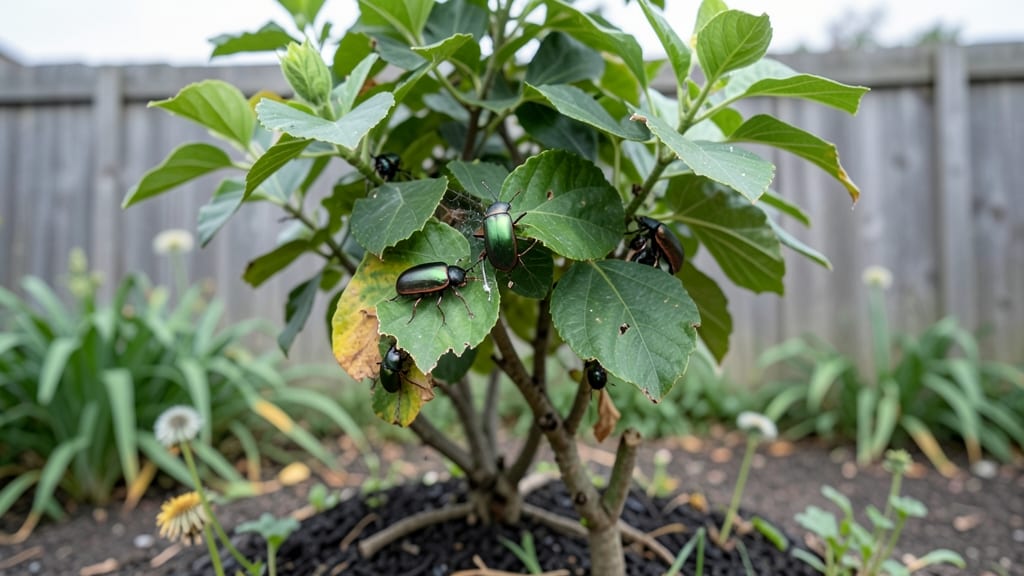
Hibiscus plants face a surprising number of hungry visitors, from large mammals to tiny insects. 🌿 Deer and rabbits often munch on leaves, especially in late spring when new growth is tender, while aphids and spider mites suck sap, leaving behind sticky residue or fine webbing.
The hibiscus looper caterpillar, with its striking striped pattern, can defoliate entire plants in weeks if populations aren't controlled. Young plants are particularly vulnerable, as their delicate stems can't recover from heavy damage.
What makes this especially tricky is how these pests attack differently—some chew through foliage, others drain nutrients, and some even lay eggs that hatch into more predators. Recognizing the signs early (like skeletonized leaves or honeydew drips) gives you the best chance to intervene before your hibiscus becomes a buffet.
💡 In This Article
- Identifying Common Hibiscus Plant Predators
- Natural Ways to Protect Hibiscus from Pests
Identifying common hibiscus plant predators
Deer are among the most destructive visitors to hibiscus gardens, using their 1-inch-wide incisors to neatly clip leaves and stems at 2-4 inches above the ground. Their feeding patterns create jagged edges, unlike the clean cuts of lawnmowers.
Adult deer prefer tender new growth, while fawns may nibble on flowers, reducing both foliage and blooms. 🌿 What's surprising is their ability to detect plants under stress—once they find a vulnerable hibiscus, they'll return daily, often in groups, which can strip a plant bare in just 3-5 days.
Rabbits, though smaller, cause equally noticeable damage with their 0.5-inch-long front teeth that create 1/4-inch-wide notches along leaf edges. Unlike deer, rabbits feed at ground level, often targeting seedlings completely. Their droppings—pea-sized and cylindrical—are a dead giveaway near infested plants.
What makes them particularly problematic is their rapid reproduction: a single female can produce 6-12 young per year, creating colonies that can decimate young hibiscus plants before they establish strong root systems.
Aphids and spider mites operate on a completely different scale but with equally devastating effects. Aphids, measuring just 1/16-inch long, cluster on new shoots and undersides of leaves, sucking sap that causes leaves to curl and turn yellow.
Their sticky honeydew secretion attracts sooty mold, creating a black fungal coating that blocks sunlight. Spider mites, barely visible to the naked eye (0.004-inch), spin fine webs between leaves, creating a silvery sheen that's unmistakable when you examine the foliage closely.
The hibiscus looper caterpillar stands out with its 1.5-inch-long striped body that arches when at rest, resembling a tiny green snake. These caterpillars can consume entire leaves in 24 hours, leaving only the veins behind—a process called "skeletonizing."
Their lifecycle is particularly aggressive: eggs hatch in 5-7 days, and larvae become adults in just 3-4 weeks, meaning multiple generations can attack your hibiscus in a single season.
What most gardeners miss is how these pests interact. For example, aphid infestations often attract ants that protect them from predators, while spider mite populations explode in hot, dry conditions (> 90°F).
Deer and rabbits, meanwhile, are most active at dawn and dusk, which is why you might not catch them in the act.
Recognizing these patterns—like the time of day damage appears or the specific leaf patterns—can help you identify which predator you're dealing with and choose the right defense strategy.
Here's a quick visual guide to spot each predator early:
- Deer: Large, irregular leaf edges with 2-4-inch gaps from stems
- Rabbits: 1/4-inch notches along leaf edges + pea-sized droppings
- Aphids: Sticky residue (honeydew) + curled yellow leaves
- Spider mites: Fine webs + silvery sheen on undersides
- Hibiscus looper: Skeletonized leaves + striped caterpillars arching on foliage
The key to protecting your hibiscus starts with understanding these visual clues. Early intervention—whether through physical barriers for deer, neem oil for aphids, or hand-picking looper caterpillars—can make all the difference between a thriving plant and one that becomes an all-you-can-eat buffet. 🌟