
Companion Plants
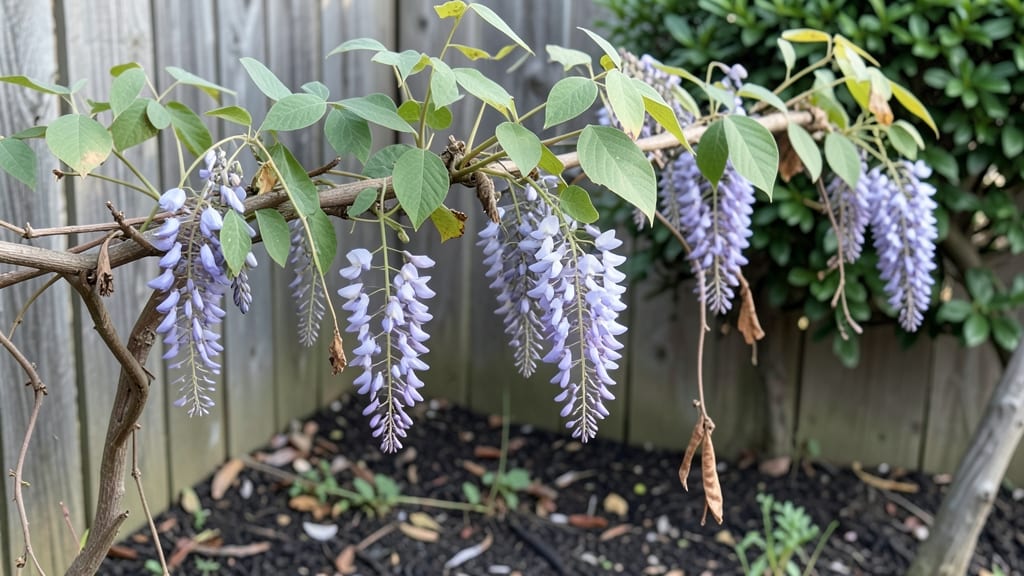
The amethyst wisteria plants with their lavender-blue cascades are the kind of drama your garden needs—yet they’re shockingly low-maintenance once established. I’ve grown them for years, and they reward patience with a 10-foot purple waterfall that blooms reliably after just three seasons.
The secret lies in their adaptability: they handle poor soil, forgetful watering, and even urban smog better than fussy climbers.
You’ll need a sturdy trellis or arbor—these vines can reach 20 feet if unchecked—but the real magic happens in how they thrive. Plant in well-draining soil with partial shade (morning sun, afternoon shade works best), and watch them send out tendrils that cling like silk ribbons.
Pruning is minimal: just trim back dead wood in late winter and shape new growth in early summer. They’re hardy to zone 5, so winter survival is rarely an issue.
By summer, your trellis will be draped in fragrant, violet-blue flowers that attract hummingbirds and bees like nothing else. The foliage stays lush even through droughts, and the plant’s slow, steady growth means you’ll enjoy it for decades.
The only real challenge? Resisting the urge to over-prune—these vines reward neglect more than they punish it.
Perfect for pergolas, arbors, or even large containers if you top-prune aggressively. Here’s how to get started without the common pitfalls—like overwatering or choosing the wrong support structure—that trip up new growers.
📚 In This Guide
- What you need
- Instructions
- Tips and common mistakes
- Wrapping up and next steps
What you need
- ● Amethyst Wisteria Plant: 1 mature plant (or 2-3 young cuttings for propagation). Choose a grafted variety (like ‘Amethyst Falls’) to avoid invasive roots.
- ● Support Structure: 1 sturdy arbor, trellis, or pergola (8–12 ft tall, made of metal, wood, or PVC).
- ○ Optional: Wire mesh or twine for guiding vines during early growth.
- ● Well-Draining Soil: Mix 2 parts topsoil + 1 part compost + 1 part coarse sand or perlite (pH 6.0–7.0).
- ● Fertilizer: Balanced 10-10-10 fertilizer (1 lb per 100 sq ft) for planting.
- ● Slow-release 5-10-10 granular fertilizer (1 cup per plant) in early spring.
- ● Mulch: 2–3 inches of organic mulch (wood chips or shredded bark) to retain moisture.
- ● Watering Supplies: Drip irrigation system or hose with a gentle spray nozzle.
- ○ Optional: Rain gauge to monitor moisture levels.
- ● Pruning Tools: 1 pair of bypass pruners (for clean cuts).
- ● 1 pair of loppers (for thicker stems).
- ● 1 pruning saw (for stubborn branches).
- ● Epsom Salt: 1 tbsp dissolved in water (monthly in spring/summer for magnesium boost).
- ● Plant Ties: Soft fabric ties to secure young vines to the trellis.
- ● Soil Moisture Meter: To avoid over/under-watering.
- ● Fungicide: Copper-based spray (for prevention of powdery mildew).
- ● Grafting Supplies: If propagating from cuttings (grafting tape, knife, and a rootstock plant).
Step-by-step instructions for planting and cultivating amethyst wisteria
This resilient climber delivers stunning purple blooms with minimal effort—here’s how to establish it for years of effortless beauty.
Select and Prepare the Planting Site
Amethyst wisteria thrives in full sun to partial shade, with at least 6 hours of direct sunlight daily for optimal flowering. Choose a location with well-draining soil—this plant despises soggy roots. If your soil is heavy clay, amend it with 2-3 inches of compost mixed into the top 12 inches of soil to improve aeration and fertility.
Since wisteria is a vigorous climber, plant it near a sturdy trellis, fence, or arbor. The roots spread aggressively, so give it 10-15 feet of horizontal space to prevent future crowding. If planting near structures, install a strong support system immediately—wisteria vines can reach 20-30 feet in ideal conditions.
Plant the Amethyst Wisteria Correctly
Dig a hole twice as wide as the root ball but only as deep as the container’s base. This prevents burying the stem too deeply, which can cause rot. Gently remove the plant from its container and loosen any circling roots with your fingers—this encourages outward growth rather than girdling.
Place the plant in the hole so the top of the root ball sits 1 inch below the soil line. Backfill with native soil mixed with 1 cup of bone meal (for phosphorus, which supports root and vine development). Water deeply to settle the soil and eliminate air pockets. Mulch around the base with 2-3 inches of organic mulch, keeping it 3 inches away from the stem to prevent rot.
Establish Support and Prune for Structure
Install your trellis or support structure before planting if possible, or secure it immediately after. Use soft ties or fabric strips to attach the main stems—avoid wire or anything that can damage the bark as the vine thickens. Wisteria grows best when trained along a central leader, so select one primary stem to encourage upward growth and remove competing lateral branches.
In the first year, prune lightly to shape the plant. Remove any dead or diseased wood, and cut back overly long vines to 12-18 inches to encourage bushier growth. Avoid heavy pruning in early years—this plant establishes slowly but rewards patience with dramatic blooms in 3-5 years.
Water and Fertilize for Long-Term Health
Water deeply once a week during the first growing season, ensuring the soil is moist 6 inches down. Once established, amethyst wisteria is drought-tolerant but will flower more prolifically with consistent moisture. Reduce watering in winter unless temperatures drop below 20°F, as the plant enters dormancy and requires less.
Fertilize in early spring with a balanced 10-10-10 fertilizer, applying ½ cup per plant. Avoid high-nitrogen fertilizers, which promote leafy growth at the expense of flowers. In late summer, switch to a low-nitrogen, high-phosphorus fertilizer (like 5-10-10) to encourage next year’s blooms. Prune again after flowering to remove dead blooms and weak growth, shaping the plant for the following season.
Overwinter and Protect for Longevity
Amethyst wisteria is hardy to USDA Zone 5, but young plants benefit from winter protection. Once temperatures drop below 25°F, wrap the base of the plant in burlap or frost cloth and mulch heavily with 4-6 inches of straw or leaves. In colder climates, consider wrapping the entire plant in burlap and securing it with twine to shield it from wind and frost.
Prune lightly in late winter (just before buds swell) to remove any dead or damaged wood. Avoid heavy pruning at this time—wisteria blooms on old wood, so pruning too aggressively reduces next year’s flowers. Resume regular care in early spring, and your amethyst wisteria will reward you with cascading purple blooms for decades.
Tips & tricks for perfect amethyst wisteria cultivation
These strategic insights will help you avoid common pitfalls and maximize the breathtaking purple blooms from your amethyst wisteria—without the fuss.
Soil Prep Precision: When amending heavy clay soil with 2-3 inches of compost, don't just mix it into the top 12 inches—work it into the entire hole you'll be planting in. The goal is to create a well-aerated root zone from the very first planting. I've seen wisteria struggle when roots hit compacted native soil just inches below the amended layer. For even better drainage, consider adding a handful of perlite to the backfill mix.
Root Ball Handling: The moment you remove your amethyst wisteria from its container, check for circling roots—those tight, spiral-shaped roots that can strangle the plant if left unchecked. Use your fingers to gently tease them apart, encouraging outward growth. This step is often overlooked, but it's crucial for establishing a strong root system that will support years of vigorous climbing and flowering.
Watering Wisdom: During the first growing season, that weekly deep watering should penetrate until the soil is moist 6 inches down. To test this, insert a long screwdriver or soil probe—if it comes out clean, you've reached the right depth. Once established, amethyst wisteria's drought tolerance becomes more pronounced, but don't let the soil completely dry out during flowering periods. The plant will reward consistent moisture with more abundant purple cascades.
Winter Protection Strategy: When temperatures drop below 25°F, your winter protection becomes critical. For young plants, focus on insulating the root zone first—wrap the base with burlap and add that 4-6 inches of mulch. In colder climates where you're wrapping the entire plant, leave some airflow at the base to prevent moisture buildup that could lead to rot. I've seen wisteria survive -10°F winters with proper protection, but the key is consistent insulation throughout the cold season.
Pro Tips for Amethyst Wisteria Plants
- These strategic insights will help you avoid common pitfalls and maximize the breathtaking purple blooms from your amethyst wisteria—without the fuss.
- Soil Prep Precision: When amending heavy clay soil with 2-3 inches of compost, don't just mix it into the top 12 inches—work it into the entire hole you'll be planting in.
- Root Ball Handling: The moment you remove your amethyst wisteria from its container, check for circling roots—those tight, spiral-shaped roots that can strangle the plant if left unchecked.
Frequently asked questions
about growing Amethyst Wisteria—the low-maintenance purple beauty that’s stealing hearts! Here are the answers to the most common queries from gardeners eager to add this stunning vine to their spaces.How fast does Amethyst Wisteria grow, and how big does it get?
Amethyst Wisteria is a moderate grower, typically adding 12–18 inches per year under ideal conditions. With proper support, it can reach 15–20 feet tall and wide, making it perfect for pergolas, trellises, or even as a ground cover in warmer climates. Patience pays off—its cascading purple blooms are worth the wait!
When is the best time to plant Amethyst Wisteria?
The ideal planting window is early spring or fall, when temperatures are mild (50–70°F). Avoid planting in summer heat or winter frost, as the roots are sensitive to extreme conditions. If you’re in a warmer zone, late fall works too—just water deeply before the first frost.
How often should I water Amethyst Wisteria, and does it need special soil?
This drought-tolerant vine thrives on neglect! Water deeply once a week (or when the top 2 inches of soil are dry) during its first year. After that, water only during prolonged dry spells. It prefers well-draining, slightly acidic soil (pH 6.0–7.0) but adapts to most soils—just avoid soggy, compacted ground.
Can I grow Amethyst Wisteria in containers, and what’s the best support for it?
Yes! It’s a great choice for large containers (at least 15-gallon pots) with drainage holes. Use a trellis, arbor, or sturdy wire cage to guide its growth—this vine needs support to climb and cascade beautifully. For containers, prune regularly to control size and encourage bushier blooms.
Are there any pests or diseases I should watch for with Amethyst Wisteria?
This hardy plant is resistant to most pests, but keep an eye out for aphids or spider mites (especially in dry heat). Treat with neem oil if needed. Root rot is the main disease risk—always ensure well-draining soil and avoid overwatering. A healthy plant rarely has issues!
What are some great companion plants for Amethyst Wisteria?
Pair it with sun-loving perennials like salvia, lavender, or Russian sage for a drought-resistant border. For shade, try hostas, ferns, or impatiens. Avoid heavy feeders (like tomatoes) that compete for nutrients—this vine prefers low-fertility soil to bloom its best!
Wrapping up and next steps
Growing amethyst wisteria is like welcoming a low-maintenance, breathtaking star to your garden—one that rewards patience with gorgeous purple cascades and effortless charm. Whether you’re a seasoned gardener or a beginner, this hardy plant thrives on neglect while adding drama and color to any space.
Ready to transform your outdoor oasis? Start by selecting the perfect spot—then sit back and enjoy the show! 🌸
- Next step: Check out our guide on pruning techniques to keep your wisteria lush and blooming year after year.