
Pests
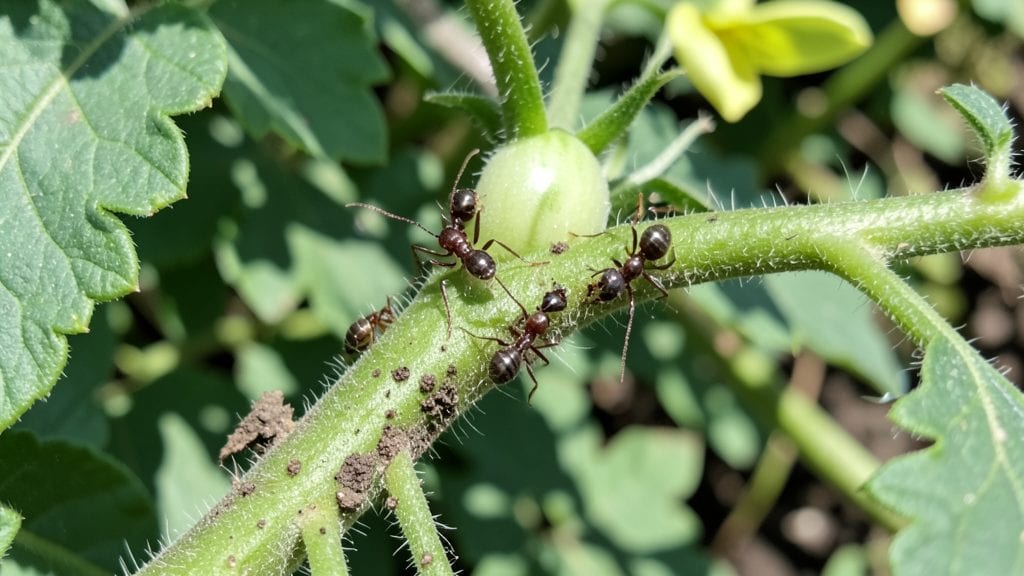
Ants on tomato plants aren’t just a nuisance—they’re a sign your garden’s ecosystem is out of balance. I’ve spent years watching these tiny marchers turn my thriving tomato plants into pest magnets, and I’ve learned the organic tricks that stop them in their tracks without harming your harvest.
The key? Understanding why they’re there and cutting them off before they invite bigger problems like aphids or whiteflies.
Here’s the thing—ants don’t actually eat tomatoes, but they farm pests like aphids for their honeydew. That sticky mess weakens plants and attracts more critters. My go-to solution? A simple diatomaceous earth barrier around the base of plants or double-sided tape on stakes to block their trails.
No chemicals, just disruption of their highway system. Within 24 hours, you’ll see fewer ants—and within a week, your plants bounce back stronger.
What you’ll end up with is a tomato plant that’s free of sticky residue, thriving roots, and fewer visits from aphids. The best part? These methods work for containers, raised beds, and in-ground gardens alike.
Once you master the ant barrier, you’ll notice other pests stay away too—it’s like flipping a switch in your garden’s food chain.
Now, don’t skip this step if you’ve got aphids lurking nearby. Ants are the middlemen of garden pests, and cutting them off early saves you a world of trouble later. Let’s get those trails blocked for good.
Root Causes of Tiny Invaders
Ants marching across your tomato plants aren’t just a nuisance—they’re often a sign of deeper ecological imbalances in your garden. Understanding why these six-legged visitors show up helps you tackle the problem at its source.
Below, we break down the most common reasons, backed by science, so you can outsmart them before they become a full-blown infestation.
Ants don’t eat tomatoes—but they love the sticky, sugary byproduct left behind by sap-sucking pests like aphids, whiteflies, and spider mites. These tiny vampires pierce tomato leaves, excreting honeydew, a liquid goldmine for ants.
In fact, studies show ants will farm these pests, protecting them in exchange for a steady food supply. 🍯
The science:
- Honeydew contains 10-25% sugars, making it a high-energy snack for ants.
- Ants release pheromones to recruit more workers, turning your tomato plant into an all-you-can-eat buffet.
- Without intervention, aphid populations can explode by 50% in just 7 days, thanks to ant "protection."
Actionable insight: If you spot ants trailing up your plant, check the undersides of leaves for tiny green/black bugs. Aphids are the #1 honeydew producer—eliminate them, and the ants lose their incentive.
Ants are drawn to humid, shaded environments—and tomato plants provide both. Dense foliage traps moisture, while the soil around your plants offers nesting sites rich in organic matter.
Some species, like Argentine ants, even build bridges using their bodies to connect food sources (like your tomatoes) to their colonies.
The science:
- Ants prefer 60-70% humidity—ideal for tomato plants in hot climates.
- They avoid dry, sunny areas, which is why you’ll rarely see them on pruned or well-aerated plants.
- Mulch and decaying plant matter in the soil create tunnels ants use to travel undetected.
Actionable insight: Reduce hiding spots by thinning out tomato vines for better airflow and removing leaf litter near the base. If your garden is prone to high humidity, consider raised beds or drip irrigation (which keeps foliage dry).
Here’s the twist: ants themselves rarely harm tomatoes, but their presence often signals indirect damage.
For example: - Cutworms (larvae that sever tomato stems) are sometimes farmed by ants for their silk nests. - Root-feeding grubs (like beetle larvae) create tunnels ants use as highways to your plant’s roots. - Over-fertilization with nitrogen can attract sap-suckers, which then attract ants.
The science:
- A 2018 study in Journal of Economic Entomology found that ant-tended pests caused 30% more yield loss in tomatoes than pests alone.
- Ants disrupt natural predators (like ladybugs) by aggressively defending their "livestock" (aphids).
Actionable insight: Inspect soil and stem bases for chew marks or wilting—these could be ant-facilitated pests. Use neem oil (a natural repellent) to deter both ants and their protected pests.
Healthy gardens have natural predators that keep ant populations in check—lizards, birds, and even certain fungi. But when your garden lacks biodiversity, ants thrive unchecked.
Common imbalances include: - Overuse of broad-spectrum pesticides (killing ant predators like spiders and ground beetles). - Monoculture planting (large blocks of tomatoes with no companion plants to disrupt ant trails). - Compacted or poor-draining soil (ants prefer loose, nutrient-rich dirt for nesting).
The science:
- Fire ants (an invasive species) have been shown to displace native predators in agricultural areas, leading to unchecked infestations.
- Mycorrhizal fungi in healthy soil can sometimes compete with ants for resources, but chemical fertilizers disrupt this balance.
Actionable insight: Introduce ant predators like chinch bugs, nematodes, or parasitic wasps (available at garden centers). Plant companion crops like basil or marigolds—ants avoid their strong scents.
Ants are most active during warm, rainy seasons (spring and fall), when:
- New colonies are establishing themselves (worker ants scout for food).
- Harvested crops (like fallen tomatoes) provide easy sugar sources.
- Soil temperatures are ideal for foraging (ants become lethargic below 50°F).
The science:
- Pavement ants and odorous house ants peak in May-June in temperate climates.
- Fire ants are most aggressive in July-August, especially after rain.
Actionable insight: Monitor ant activity weekly during peak seasons and set up early barriers (like diatomaceous earth or cinnamon). If you’re harvesting tomatoes, pick overripe fruit promptly to deny ants a free meal.
Quick Fixes for Tiny Garden Invaders
Ants marching through your tomato patch might seem like a minor nuisance, but their presence can lead to bigger problems—like aphids hitching a ride and wreaking havoc on your plants. The good news?
You don’t need harsh chemicals to keep them in check. Below are practical, organic solutions tailored to the root causes of ant infestations, plus prevention tips to keep your tomatoes thriving.
Ants are drawn to tomato plants because of the sticky honeydew left by aphids, whiteflies, or even fungal nectar. Cut off their access to this snack bar, and they’ll lose interest.
🍳 Remove Honeydew-Producing Pests First
- 👨🍳 Inspect leaves for aphids, mealybugs, or scale insects (common honeydew culprits).
- 🔪 Blot them off with a damp cloth or spray with soapy water (1 tsp mild dish soap + 1 quart water).
- 🌿 Introduce beneficial insects: Ladybugs, lacewings, and parasitic wasps eat these pests naturally.
⏰ Prune for Better Airflow
Ants love damp, shaded spots where honeydew lingers. Thin out crowded foliage to improve airflow and reduce moisture buildup.
Ants follow scent trails, so disrupting their path with physical or scent-based barriers can deter them effectively.
🌡️ DIY Ant Moat (The Classic Trick)
- 📊 Dig a shallow trench (1–2 inches deep) around your tomato plants, about 6 inches from the stem.
- ✨ Fill it with water or bran (ants avoid crossing wet or uneven surfaces).
- 💡 Pro tip: Refresh the barrier every few days, especially after rain.
🎯 Essential Oil Repellents (Non-Toxic & Strong-Smelling)
Ants hate peppermint, cinnamon, or citrus oils. Mix 10–15 drops of oil with 1 cup water and 1 tsp dish soap, then spray around the base of plants and on ant trails. Reapply after rain.
If ants are building nests near your tomatoes, they’ll keep returning. Find and disrupt their colonies without harming the environment.
🔍 Locate the Nest
- Follow ant trails back to their entry point (often near foundations, under mulch, or in soil cracks).
- 💡 Pro tip: Use borax or diatomaceous earth (food-grade only) sparingly inside nests—these dehydrate ants but are safe for plants.
🌿 Mulch Swap: Use Ant-Unfriendly Materials
- ❌ Avoid wood chips or grass clippings (ants love them).
- ✅ Opt for gravel, cedar chips, or sharp sand—ants dislike crawling over rough textures.
Once you’ve addressed the immediate problem, strategic garden habits will keep ants from returning.
🍅 Plant Ant-Repelling Companions
- 🌿 Basil, mint, or thyme near tomatoes—ants dislike their strong scents.
- 🥗 Avoid planting near fruit trees or other honeydew-rich plants in the same bed.
💡 Regular Garden Hygiene
- 🧹 Remove fallen fruit or overripe tomatoes (fermenting sugar attracts ants).
- 🌧️ Water in the morning to reduce overnight moisture that invites pests.
- ❌ Avoid ant baits with artificial sweeteners—they can harm bees and other beneficial insects.
- ❌ Don’t overwater—soggy soil encourages ant activity.
- ❌ Skip chemical sprays—they kill beneficial insects and can contaminate your harvest.
With these targeted, organic methods, you’ll send ants packing without sacrificing your garden’s health. Healthy tomatoes = happy harvests! 🍅🌱
Frequently asked questions about ants on tomato plants
Why do ants keep showing up on my tomato plants even after I remove them?
Ants don't just wander randomly—they follow scent trails called pheromones that mark food sources. If you're not disrupting their trails, they'll keep returning. Try creating a physical barrier like a shallow trench filled with water or diatomaceous earth around your plants. This forces them to find another route.
Can ants actually harm my tomato plants?
While ants don't eat tomatoes, they create bigger problems by protecting sap-sucking pests like aphids and whiteflies. These pests weaken plants by feeding on sap, and their sticky honeydew attracts more ants. The real damage comes from this indirect relationship—ants are like the garden's pest taxi service.
What's the fastest way to get rid of ants without chemicals?
For immediate results, try a cinnamon barrier—sprinkle ground cinnamon around your tomato plants. Ants hate the smell and avoid crossing it. Another quick fix is double-sided tape wrapped around stakes near your plants. The ants get stuck trying to climb up, disrupting their trails in 24 hours.
Will ants go away on their own if I ignore them?
Not likely. Ants are persistent foragers, especially during warm seasons. Ignoring them risks creating a cycle where they protect more pests, leading to weakened plants. The best approach is early intervention—addressing their food sources (like aphids) and disrupting their trails before they establish colonies.
Can I use coffee grounds to repel ants from my tomato plants?
Yes! Coffee grounds work well as a natural ant repellent because ants dislike the strong smell. Sprinkle fresh grounds around your tomato plants, especially near the base. For extra protection, mix them with crushed red pepper flakes—the combination creates a powerful deterrent that lasts 3-5 days before needing refreshment.