
Companion Plants
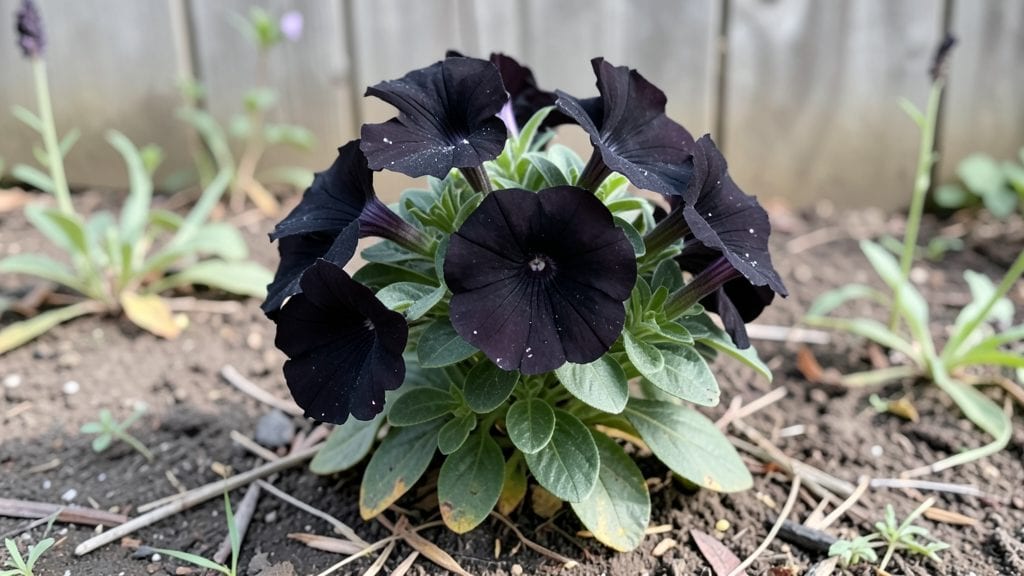
Growing black petunia plants transforms any garden into a dramatic centerpiece while naturally keeping pests away. 🌿 Their deep, velvety blooms stand out against green foliage, and the scent repels mosquitoes and aphids—making them both beautiful and functional.
I’ve grown them in containers and garden beds for years, and once you try them, you’ll never go back to ordinary petunias.
The secret to their success lies in well-draining soil, 6-8 hours of sunlight daily, and consistent moisture without soggy roots. Start seeds indoors 8-10 weeks before the last frost, or buy sturdy transplants to avoid leggy stems.
Black petunias thrive in USDA Zones 10-11 but can be treated as annuals in cooler climates, blooming from spring until frost.
With proper care, you’ll enjoy nonstop blooms from early summer until fall, their dark petals contrasting sharply with bright foliage. Prune spent flowers regularly to encourage new growth, and feed them every 2-3 weeks with a balanced fertilizer.
The result? A lush, pest-resistant display that turns heads—and keeps bugs at bay.
Whether you’re filling hanging baskets, window boxes, or garden borders, black petunias adapt easily. Just watch for powdery mildew in humid climates and avoid overwatering. For maximum impact, pair them with silver foliage plants like dusty miller or bright annuals like calibrachoa. Ready to grow yours?
📚 In This Guide
- What you need
- Instructions
- Tips and common mistakes
- Wrapping up and next steps
What you need
- ● Black petunia seeds or seedlings: Choose Solanum (nightshade) varieties labeled for companion planting (e.g., Black Velvet petunias). 10–20 seeds (or 3–5 seedlings) per pot/bed.
- ● Well-draining potting mix: 10–15 lbs of organic, peat-based mix (or coco coir + perlite for sustainability). Avoid heavy clay.
- ● Containers or garden bed: Containers: 6–12" pots with drainage holes (1–2 plants per pot).
- ● Garden beds: Full sun (6+ hours/day) with loose, fertile soil.
- ○ Companion plants (optional but recommended): Tomatoes, peppers, or eggplants (pest-repelling synergy!).
- ● Basil or marigolds (enhance pest control).
- ● Hand trowel or small shovel (for transplanting seedlings).
- ● Watering can with a fine rose nozzle (gentle watering prevents seed washout).
- ○ Gloves (optional, for handling soil or prickly stems).
- ● Pruning shears (for deadheading spent blooms).
- ● Organic fertilizer (balanced 10-10-10 or compost tea, 1 tbsp per plant every 4–6 weeks).
- ● Mulch (straw or shredded leaves) (1–2" layer to retain moisture).
- ● 🌡️ Warmth: Start seeds indoors 8–10 weeks before last frost (65–75°F soil temp) or buy seedlings from a nursery.
- ● ☀️ Sunlight: Confirm your space gets full sun (black petunias thrive in heat!).
- ● 💧 Water access: Ensure consistent moisture (drought stress = fewer blooms).
- ● 🌱 Seed-starting hack: Sprinkle seeds on damp mix, cover with ¼" soil, and mist daily until sprouts appear (7–14 days).
- ● 🐛 Pest prevention: Plant near basil or garlic to deter aphids and spider mites.
- ● ✨ Boost blooms: Pinch back leggy seedlings to encourage bushier growth.
Step-by-step guide to growing stunning black petunia plants
Here's how to cultivate these dramatic, pest-repelling beauties with minimal fuss.
🌱 Step 1: Select the Right Location and Prepare the Soil
Black petunias thrive in full sun to partial shade—at least 4-6 hours of direct sunlight daily. I always choose a spot sheltered from strong afternoon winds, which can damage their delicate blooms. Before planting, amend the soil with 2-3 inches of compost to improve drainage and fertility, since black petunias prefer well-draining, slightly acidic soil with a pH between 6.0 and 6.5. Work the compost into the top 6-8 inches of soil.
Test your soil’s moisture by squeezing a handful—it should hold together but not feel soggy. If your soil drains poorly, mix in 1 part perlite or coarse sand to 3 parts soil to prevent root rot. Black petunias are drought-tolerant once established, but they won’t bloom as prolifically if stressed during their first growing season.
🪴 Step 2: Plant Transplants at the Correct Depth and Spacing
Dig holes just slightly wider than the root balls of your black petunia transplants, but no deeper than they were in their nursery pots. This prevents water from pooling around the stems, which can cause rot. Space plants 12-18 inches apart in rows, or 18-24 inches apart in borders, to allow for air circulation and reduce fungal diseases like powdery mildew.
Gently remove each plant from its container and tease apart any circling roots with your fingers. Place the root ball into the hole, then backfill with soil, pressing lightly to eliminate air pockets. Water deeply right after planting to settle the soil and encourage root contact. You’ll know it’s done right when the soil surface looks slightly firm but not compacted.
☀️ Step 3: Water Consistently and Fertilize for Maximum Blooms
Water black petunias at the base of the plant, aiming for 1 inch of water per week, either from rainfall or irrigation. Let the top 1-2 inches of soil dry out between waterings—this encourages deeper root growth. Avoid wetting the foliage, especially in the evening, to prevent fungal diseases. I use a soaker hose or drip irrigation to keep water off the leaves while delivering moisture directly to the roots.
Feed plants every 2-3 weeks with a balanced, water-soluble fertilizer (like a 10-10-10 formula) mixed at half-strength. Start fertilizing when you see new growth appear, usually within 2-3 weeks of planting. Black petunias respond beautifully to regular feeding, producing darker, more vibrant blooms. Stop fertilizing in late summer to encourage a natural decline, which helps the plants prepare for winter.
✂️ Step 4: Prune and Deadhead for Long-Lasting Color
Pinch back the tips of young plants when they reach 6-8 inches tall to encourage bushier growth. This simple step prevents leggy stems and promotes more compact, flowering plants. Use clean, sharp pruners to snip just above a set of leaves or a leaf node—never cut into woody stems, as this can harm the plant.
Deadhead spent blooms regularly by snipping the stem just above the next set of leaves. This redirects the plant’s energy into producing new flowers instead of setting seed. I deadhead every 3-5 days during peak bloom, which keeps my black petunias looking lush and vibrant for weeks. If you notice yellowing leaves, trim them back immediately to prevent disease spread.
💧 Step 5: Protect and Maintain Through the Season
Black petunias naturally repel pests like aphids and spider mites, but they can still attract occasional visitors. If you spot pests, spray plants with a neem oil solution (1 tablespoon neem oil per quart of water) in the early morning to avoid harming beneficial insects. Always apply sprays to the undersides of leaves, where pests often hide.
Mulch around the base of plants with 2-3 inches of organic mulch to retain moisture, suppress weeds, and regulate soil temperature. Replenish mulch as it breaks down during the season. In late fall, cut back plants to 2-3 inches above the ground and remove any diseased foliage. This prepares them for winter and keeps your garden tidy.
Tips & tricks for growing bold black petunia blooms
These garden-tested strategies will help you cultivate showstopping black petunias that thrive and repel pests naturally.
Sunlight Strategy: The 4-6 hours of daily sunlight requirement is non-negotiable for those dramatic black blooms. I've learned the hard way that morning sun with afternoon shade works best in hot climates—afternoon sun can scorch the dark petals. If your garden gets intense afternoon heat, consider growing black petunias near taller plants that provide natural shade after 2 PM. This simple adjustment can extend your blooming season by weeks.
Soil Preparation Insight: That 2-3 inches of compost isn't just about nutrients—it's about creating the perfect air-soil-water balance. I always mix in a handful of worm castings with the compost for extra microbial activity. This helps the roots establish faster and gives you those deep, velvety black blooms sooner. The key is working that compost into the top 6-8 inches where most roots will grow.
Watering Wisdom: The 1-inch weekly water guideline works beautifully, but timing matters more than you'd think. I water my black petunias in the early morning when temperatures are cooler. This prevents fungal issues and allows the foliage to dry completely before evening. For container-grown plants, I actually increase to 1.5 inches per week since they dry out faster. The secret is letting that top 1-2 inches dry between waterings—this encourages deeper root growth that makes plants more drought-resistant.
Pruning Pro Tip: When pinching back those 6-8 inch tall stems, I always make my cuts just above a leaf node where new growth will emerge. This creates a bushier plant with more blooms. For deadheading, I use clean pruners and always cut at a 45-degree angle just above another set of leaves. This little detail prevents water from pooling on the cut stem, which can lead to rot. The 3-5 day deadheading schedule keeps my plants looking lush all season—it's amazing how quickly new blooms appear when you redirect that energy!
Pro Tips for Black Petunia Plants
- These garden-tested strategies will help you cultivate showstopping black petunias that thrive and repel pests naturally.
- Sunlight Strategy: The 4-6 hours of daily sunlight requirement is non-negotiable for those dramatic black blooms.
- Soil Preparation Insight: That 2-3 inches of compost isn't just about nutrients—it's about creating the perfect air-soil-water balance.
Frequently asked questions
Got questions about growing black petunia plants? You’re not alone!
Here are some of the most common queries—plus expert answers to help you cultivate these dramatic, pest-repelling beauties with confidence.
1. Are black petunias really black, or just very dark purple?
While they’re often called "black petunias," these plants are actually a deep, velvety purple-black (almost like a moonlit bruise). The intense color comes from anthocyanins, which also help repel pests—nature’s stealth mode! In bright sunlight, they’ll look the darkest, while shade may mute their drama slightly.
2. When is the best time to plant black petunias for continuous blooms?
For non-stop color, plant black petunias after the last frost in spring (when soil temps hit 50°F+). They thrive in warm weather and will bloom until frost. In zones 10–11, treat them as perennials—they’ll self-seed or return yearly! Pro tip: Pinch back leggy stems early to encourage bushier growth and more flowers.
3. Why aren’t my black petunias blooming, and how can I fix it?
If your plants are leafy but flower-shy, they’re likely overfed or understressed. Troubleshoot:
- Prune spent blooms and leggy stems to redirect energy to flowers.
- Water deeply but less often—they hate soggy roots.
- Reduce fertilizer (high nitrogen = more leaves, fewer blooms). Switch to a bloom-boosting formula (like 5-10-5).
- Ensure 6+ hours of sun—shade = fewer flowers.
4. What companion plants pair well with black petunias for pest control?
Black petunias are natural pest deterrents (especially for aphids and whiteflies), but they play nice with others too! Try these companion plant combos for a low-maintenance, bug-resistant garden:
| Companion Plant | Why It Works |
|---|---|
| Marigolds | Repels nematodes and attracts pollinators. |
| Basil | Deters mosquitoes and enhances petunia flavor if you harvest leaves! |
| Zinnias | Attracts predatory wasps that eat petunia pests. |
| Lavender | Calms bees (great for pollination) and deters moths. |
Pro tip: Avoid planting near fennel—it can stunt petunia growth.
5. Can I grow black petunias in containers, and what’s the ideal setup?
Containers are perfect for black petunias—just follow these rules:
- Pot size: At least 12 inches wide (bigger = more blooms).
- Drainage: Use pots with holes + a cactus/succulent mix (lighter soil prevents root rot).
- Sun: Place in full sun (south- or west-facing spots).
- Watering: Let soil dry 1 inch deep between waterings—overwatering = leggy, weak plants.
Bonus: Hang containers near patios to enjoy their moth-repelling scent at night!
Wrapping up and next steps
Growing black petunia plants isn’t just about adding drama to your garden—it’s a natural way to repel pests while creating stunning visuals! These bold beauties thrive with minimal effort, making them perfect for both beginners and seasoned gardeners.
Whether you’re planting them in containers or garden beds, their pest-deterring properties and striking blooms will elevate your outdoor space effortlessly.
Ready to transform your garden? Start small—try a few plants in a pot or along your garden’s edge—and watch your space flourish with color and function! 🌿✨