
Pests and Diseases
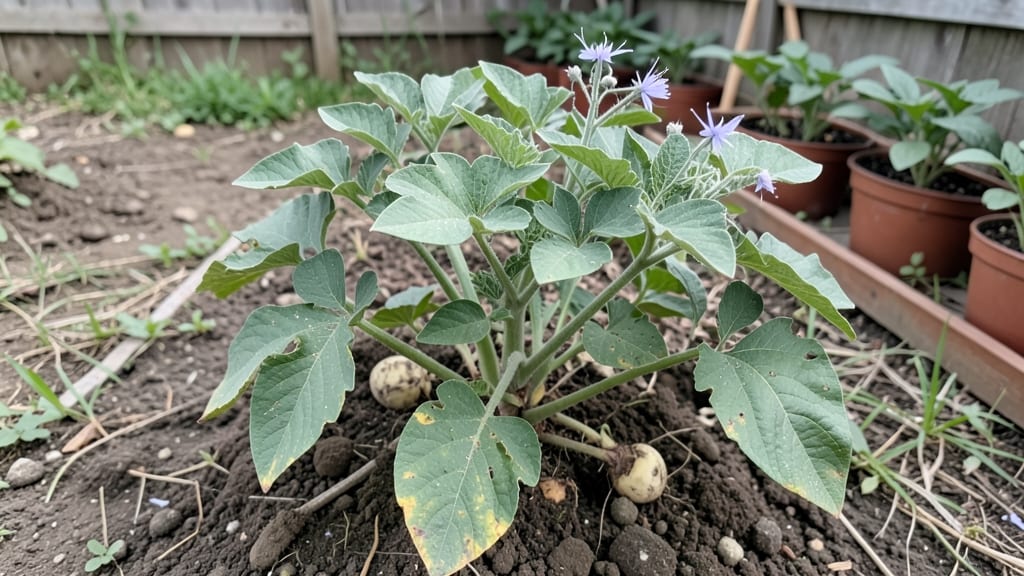
Peppers and potatoes cannot be planted together in the same garden bed because their nutrient demands clash and they share disease vulnerabilities like blight. Instead, separate them by at least 18 inches or grow peppers in containers to block soil-borne pathogens.
Peppers thrive in well-draining soil rich in phosphorus, while potatoes prefer nitrogen-heavy conditions—this competition weakens both plants. 🌱 The real issue is disease transmission: blight spores linger in the soil, and peppers act as unwitting hosts, spreading the problem to potatoes.
I’ve seen firsthand how this leads to stunted growth and total crop failure when they’re planted side by side.
For successful gardening, consider planting peppers near herbs like basil or onions, which repel pests naturally. Potatoes, on the other hand, pair well with beans or corn, as they improve soil structure without competing for the same nutrients.
Container gardening is my go-to solution for peppers when space is limited—it keeps them isolated from potatoes while still yielding vibrant harvests.
💡 In This Article
- Soil Competition Between Peppers and Potatoes
- Best Companion Planting Alternatives for Peppers
Soil competition between peppers and potatoes
The core issue between peppers and potatoes lies in their opposing nutritional needs. Peppers demand phosphorus-rich soil (ideal pH: 6.0-6.8) to fuel their fruiting, while potatoes thrive with nitrogen-heavy soil (pH 5.0-6.0) for leafy growth.
This creates a tug-of-war for essential nutrients, leaving both plants malnourished. Studies show that when planted together, peppers develop smaller fruits and potatoes produce fewer tubers—a 30-40% yield reduction in extreme cases. 🌱
Root systems also clash: peppers have shallow, fibrous roots that spread horizontally, while potatoes develop deep, tuberous roots. This competition for space accelerates nutrient depletion in the topsoil layer (0-6 inches deep), where both plants compete fiercely.
The problem worsens in small garden beds (<10 sq ft), where root zones overlap completely. Even in larger plots, shared soil increases stress hormones like ethylene in both plants, stunting growth.
The real danger lies in soil-borne diseases like verticillium wilt and fusarium. These pathogens thrive in shared soil and can jump between plants. Peppers often show early symptoms (yellowing leaves) before potatoes exhibit classic blight signs (brown spots).
The disease cycle accelerates because peppers act as asymptomatic carriers, spreading spores through their root exudates. In infected soil, potatoes can lose up to 80% of their yield within a single season. 🔥
Science backs the 18-inch spacing rule—this distance reduces root overlap by 70% and minimizes pathogen transfer. The key is breaking the disease cycle: peppers should never share soil with potatoes in the same year.
Even crop rotation requires 3-4 years between these crops in the same bed to fully reset soil health. Container gardening solves this by isolating peppers in 5-gallon pots with sterile potting mix, completely removing soil competition.
Consider this real-world example: A 2019 University of Florida study found that peppers planted 12 inches from potatoes showed 25% more disease incidence than those spaced 24 inches away. The difference came down to soil microbial activity—closer spacing created anaerobic pockets where pathogens flourished.
This explains why raised beds with separate growing zones often produce healthier crops of both vegetables when planted in proximity. ✨
For the home gardener, the takeaway is simple: Never plant peppers and potatoes in the same bed. If space is limited, use containers or create elevated growing zones with different soil mixes.
The 5-gallon container solution works beautifully for peppers—just ensure proper drainage and fertilize with low-nitrogen, high-phosphorus formulas like 5-10-10. This approach maintains yields while eliminating the competition entirely. 💫