
Planting
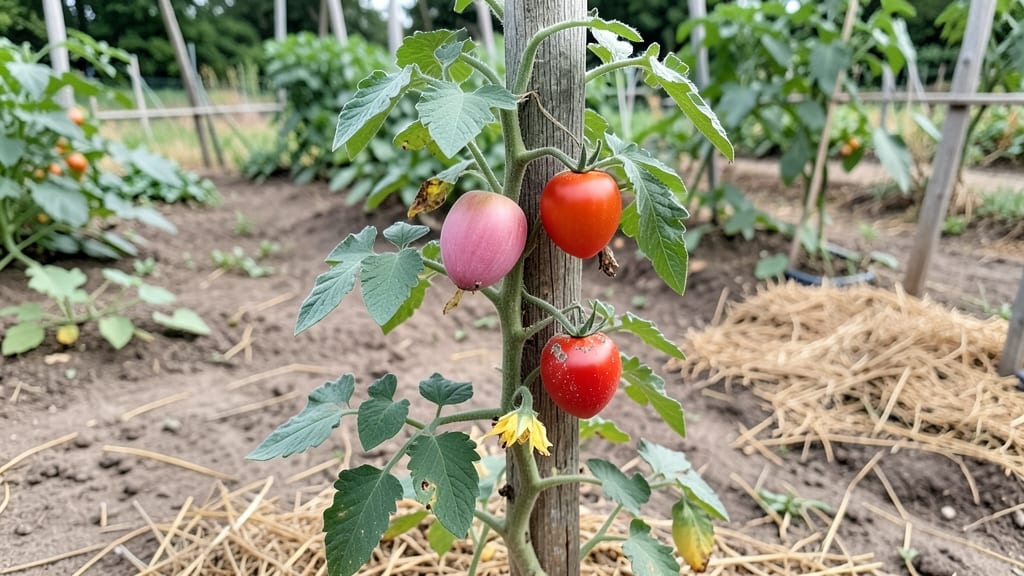
The cordon tomato plant transforms your garden into a vertical feast, producing fruit for three seasons with just a single stem and minimal pruning.
I learned this after struggling with sprawling plants that broke under their own weight—until I discovered how a sturdy trellis and strategic cuts could turn a rambling mess into a neat, high-yielding machine.
The key lies in training that one main stem to climb while pinching off side shoots, which saves time and directs energy straight to fruit production. What you end up with is a 6-foot-tall plant bursting with deep purple-blue tomatoes that ripen in waves from summer through fall.
You’ll need a strong trellis (metal or wooden stakes work best), compost-rich soil, and a sunny spot with at least 6-8 hours of light daily. Cordon tomatoes thrive in containers or in-ground beds, making them perfect for small spaces or urban gardens.
The pruning is simpler than it sounds: just remove suckers (the small shoots between the main stem and branches) every 10-14 days, and you’re done. This method also reduces disease risk by improving airflow around the plant.
By mid-July, you’ll see the first clusters of tomatoes forming, and with consistent care, the harvest continues until frost. The flavor deepens as the season progresses, and the savory-sweet taste makes them a favorite for sauces, salads, or slicing fresh.
Even if you’ve killed tomatoes before, this approach is foolproof—just follow the stem, keep it supported, and let nature do the rest. The real magic happens when you watch those heavy vines bend under the weight of fruit without snapping.
For gardeners in cooler climates, start seeds indoors 6-8 weeks before the last frost, then transplant after temperatures stay above 50°F. In warmer zones, direct-sow in early spring or late summer for a fall crop.
The same principles apply whether you’re growing one plant or a full trellis row—just scale the trellis height and spacing accordingly. Once you master the cordon method, you’ll never go back to bush tomatoes again.
📚 In This Guide
- What you need
- Instructions
- Tips and common mistakes
- Wrapping up and next steps
What you need
- ● Cordon Blue tomato seeds or seedlings – 1-2 plants per container (or 3-4 plants per 10’ row in-ground).
- ● Growing containers – 5-gallon pots (minimum) or fabric grow bags (1 plant per container). Pro tip: Ensure pots have drainage holes! 💡
- ● High-quality potting mix – 10-15 lbs (4.5-7 kg) per container. Look for a blend labeled for vegetables/tomatoes with added compost.
- ● Balanced fertilizer – 10-10-10 or 5-5-5 (organic options like fish emulsion or worm castings work too!). Start with 1 tbsp per plant at planting.
- ● Tomato cages or stakes – 6-8 ft tall (1 plant = 1 cage/stake). Avoid wire cages—opt for flexible fabric supports to prevent breakage.
- ● Pruning shears – Bypass pruners (sharp and clean!) for trimming suckers and shaping the plant.
- ● Mulch – Straw, shredded leaves, or black plastic (to retain moisture and suppress weeds). 2-3 inches thick.
- ● Drip irrigation or soaker hose – Essential for consistent moisture (avoid overhead watering to prevent disease).
- ● Epsom salt – 1 tbsp per gallon of water (monthly foliar spray for magnesium boost).
- ● Copper fungicide – For prevention of early blight (spray preventatively every 2-3 weeks).
- ● Plant clips or twist ties – To secure vines to stakes without damaging stems.
- ● Grow lights (for indoor starts) – 12-16 hours/day if germinating seeds indoors.
- ● Compost tea or mycorrhizal fungi – For extra root health and disease resistance.
Step-by-step instructions for training a cordon Blue tomato plant
This method transforms a sprawling plant into a tidy, high-yielding vertical wonder—no green thumb required.
Select and Prepare the Planting Site
Choose a south-facing location with at least 6-8 hours of direct sunlight daily. Cordon Blue tomatoes thrive in well-draining soil with a pH of 6.0-6.8. Amend the soil with 2 inches of compost mixed into the top 12 inches of soil to provide organic matter and nutrients. This plant grows best in full sun, so avoid shaded spots or areas with afternoon shade, which can reduce fruit production.
If planting in containers, use a 5-gallon pot with drainage holes. Fill it with a mix of 60% potting soil, 30% perlite, and 10% worm castings to ensure excellent drainage and nutrient retention. The larger root system of Cordon Blue benefits from the extra space and aeration.
Plant and Support the Young Tomato
Plant your Cordon Blue tomato 18-24 inches deep in the soil, burying two-thirds of the stem to encourage strong root development. This deep planting stabilizes the plant and promotes a robust root system. Immediately install a 6-foot tall tomato cage or sturdy bamboo stake next to the plant to provide vertical support. The goal is to train the plant upward, so the cage or stake should be placed within 1 inch of the stem to prevent leaning.
Water the plant deeply right after planting to settle the soil and remove air pockets. Keep the soil consistently moist but not waterlogged for the first 2 weeks. Overwatering can lead to root rot, while underwatering stresses the young plant. You’ll know the moisture level is right when the top 2 inches of soil feel damp but not soggy.
Prune and Train for Vertical Growth
Once the plant reaches 3 feet tall, begin pruning to encourage upward growth and fruit production. Remove suckers—the small shoots that grow in the V-shaped junctions between the main stem and branches—weekly. Suckers compete with the main plant for nutrients, so pinching them off early ensures the plant directs energy toward fruit development. Use your fingers or clean pruning shears to snap them off cleanly at the base.
Allow only one main stem to grow vertically, tying it to the cage or stake with soft plant ties every 12 inches as it grows. This prevents the plant from toppling over under the weight of fruit. Avoid over-tightening the ties, as they can restrict growth and damage the stem. You’ll see strong, upright growth with compact spacing between leaves, a sign the plant is thriving.
Maintain and Harvest for Continuous Production
Throughout the growing season, water at the base of the plant in the early morning to reduce disease risk and encourage deep root growth. Aim for 1-1.5 inches of water per week, adjusting for rainfall. Cordon Blue tomatoes are drought-tolerant once established, but consistent moisture ensures steady fruit production. You’ll notice plump, deep blue-purple fruit forming along the main stem, ready for harvest in 70-80 days after planting.
Harvest fruit when it reaches full color and firmness, typically in late summer through fall. Gently twist the fruit to detach it from the vine, avoiding sharp tools that can damage the stem. Regular harvesting encourages the plant to produce more fruit, extending the harvest season. With proper care, a single Cordon Blue plant can yield up to 20 pounds of tomatoes over three seasons.
Tips & tricks for perfect cordon Blue tomato plant training
Transforming a sprawling tomato plant into a tidy, high-yielding vertical garden requires a few strategic moves that make all the difference between a struggling bush and a thriving three-season producer.
Site Selection Secret: While the instructions emphasize 6-8 hours of direct sunlight, I recommend positioning your plant where it receives morning sun and afternoon shade during the hottest summer months. This prevents heat stress on the fruit while still maximizing photosynthesis. In containers, place your 5-gallon pot where it can be moved as needed—this flexibility is one of the biggest advantages of container gardening with Cordon Blue varieties.
Pruning Precision: When you begin pruning at the 3-foot mark, focus on removing suckers that are smaller than a pencil—these tiny shoots won't compete significantly with the main plant. I've found that using your fingers to pinch suckers cleanly at the base (rather than cutting with shears) prevents damage to the main stem. The key is consistency: make it a weekly habit once pruning begins, and you'll see dramatically improved air circulation and fruit production.
Support System Strategy: For the 6-foot tall cage or bamboo stake, I recommend installing it at a 5-degree angle leaning slightly away from the prevailing wind direction. This prevents the plant from growing into the support structure as it matures. When tying with soft plant ties every 12 inches, I use old T-shirts cut into strips—they're breathable, adjustable, and won't damage the stem as the plant grows. This simple adjustment prevents the common problem of stems girdling and restricting growth.
Harvest Timing Technique: The 70-80 day window to harvest is actually quite flexible with Cordon Blue varieties. I've successfully extended harvests by 2-3 weeks by leaving a few tomatoes on the vine to fully ripen in cooler fall temperatures. The trick is to monitor fruit color changes daily—when the deep blue-purple hue becomes consistent along the entire tomato, that's your signal to harvest. This patience pays off with sweeter, more flavorful tomatoes that store better for winter use.
Pro Tips for Cordon Tomato Plant
- Transforming a sprawling tomato plant into a tidy, high-yielding vertical garden requires a few strategic moves that make all the difference between a struggling bush and a thriving three-season producer.
- Site Selection Secret: While the instructions emphasize 6-8 hours of direct sunlight, I recommend positioning your plant where it receives morning sun and afternoon shade during the hottest summer months.
- Pruning Precision: When you begin pruning at the 3-foot mark, focus on removing suckers that are smaller than a pencil—these tiny shoots won't compete significantly with the main plant.
Frequently asked questions
Got questions about cordon tomato plants?
Here are answers to the most common ones—whether you're a first-timer or a seasoned gardener looking to refine your technique.
What’s the difference between cordon and bush tomatoes?
Cordon tomatoes grow vertically on a single main stem, producing fruit along the sides, while bush tomatoes (indeterminate) spread outward. Cordon varieties are ideal for small spaces, trellises, or containers and require minimal pruning to focus energy on fruit production. Bush types need more space and often produce earlier but may need staking.
When should I start pruning my cordon tomato plant?
Begin pruning when your plant reaches about 18–24 inches tall (or after the first flower cluster appears). Remove suckers (side shoots) regularly—every 1–2 weeks—to encourage upward growth. Stop pruning once the plant hits your trellis height (usually 6–8 feet) to let it focus on fruiting. Pro tip: Use clean shears to avoid disease!
Can I still get a good harvest if I forget to prune?
Yes! While pruning maximizes yield and fruit quality, unpruned cordon tomatoes will still produce—just fewer, smaller fruits. The plant may also become bushier, requiring more staking. If you’re short on time, prioritize removing suckers below the first flower cluster to balance growth and harvest.
How do I protect cordon tomatoes from extreme heat or cold?
Cordon tomatoes thrive in 60–85°F temps. For heat: Provide afternoon shade (use shade cloth) and mulch to keep roots cool. For cold: Use row covers or move potted plants indoors if temps dip below 50°F. Pro tip: Black plastic mulch warms soil faster in spring!
What can I do with extra cordon tomato plants?
Share them! Cordon tomatoes are perfect for gifting—just dig up a small plant with roots intact and replant it. Alternatively, propagate cuttings by snipping healthy stems (with leaves), dipping in rooting hormone, and planting in moist soil. Bonus: Save seeds from heirloom varieties for next season!
Wrapping up and next steps
Mastering the cordon tomato plant technique is a game-changer for gardeners—whether you’re a beginner or a seasoned pro! 🌱 With just a few simple steps, you can enjoy a bountiful, three-season harvest while keeping pruning minimal and stress-free. The key? Patience, consistency, and a little love for your plants.
Ready to elevate your gardening game? Start by planting your cordon tomato this season, and soon you’ll be reaping the rewards of juicy, homegrown tomatoes. Next up: Share your progress with fellow gardeners or experiment with different varieties to keep the adventure going!