
Blooming
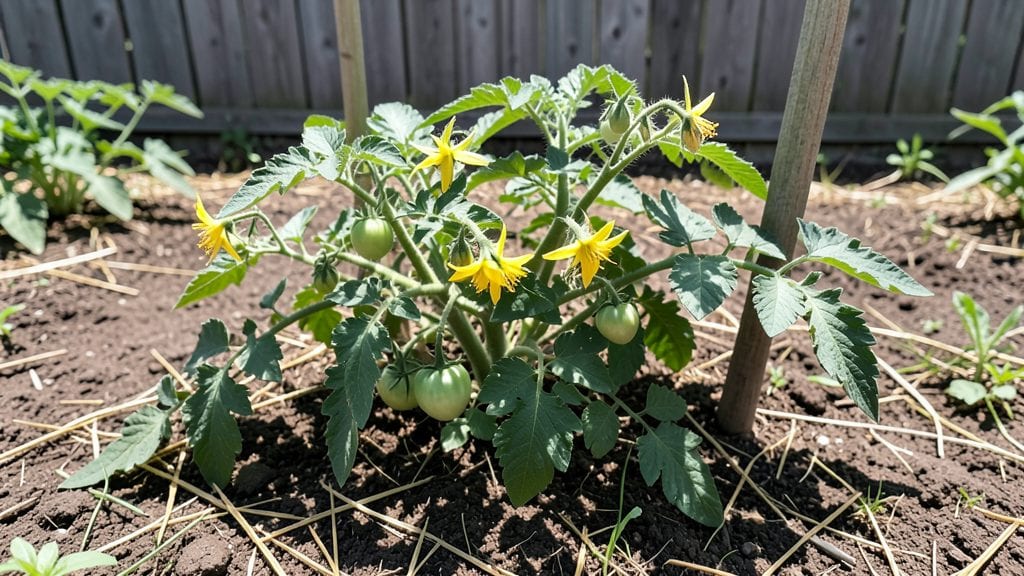
When tomato plants bloom early, it usually means they're reacting to heat stress or not enough daylight, but you can still boost your harvest by tweaking their care routine, pruning strategically, and giving them the right nutrients and shade.
Early blooming throws off your tomato plant's natural growth rhythm by forcing it to divert energy toward flowers instead of building strong roots or developing fruit. 🌱 This often leads to smaller yields or even blossom-end rot, where the bottom of tomatoes turns mushy.
The key is to recognize the warning signs—like tiny yellow flowers appearing before the plant is fully established—and act fast with targeted care adjustments.
Most gardeners overlook how critical the balance between nitrogen and phosphorus is during this stage. Too much nitrogen promotes leafy growth at the expense of fruit development, while a phosphorus boost encourages root and flower strength.
I've found that switching to a 5-10-10 fertilizer ratio (lower nitrogen) makes a noticeable difference in delaying premature blooms while keeping the plant healthy.
💡 In This Article
- Why Early Blooming Disrupts Tomato Growth Cycles
- Proven Techniques to Delay Blooms and Maximize Fruit
Why early blooming disrupts tomato growth cycles
Here's what's actually happening when your tomato plants send up early flowers: they're responding to a mismatch between their internal biological clocks and environmental conditions. Tomatoes are short-day plants, meaning they naturally flower when daylight hours shorten in late summer.
But when exposed to consistent temperatures above 85°F or sudden heat spikes, their photoperiod sensitivity gets scrambled, triggering premature blooms. This phenomenon occurs because high temperatures disrupt the plant's hormone balance, specifically reducing levels of gibberellins (growth hormones) while increasing ethylene (flowering hormone).
The real problem starts when these early flowers divert the plant's energy reserves. A tomato plant in its vegetative stage (focused on leaf and stem growth) needs 60-70% of its energy allocated to root and foliage development to support future fruit production.
When flowers appear too soon, that energy shifts abruptly to reproductive processes, leaving the roots underdeveloped and the plant vulnerable to stress. You'll often see this manifest as smaller fruit or even blossom-end rot—a calcium deficiency caused by uneven nutrient distribution when the plant can't keep up with demand.
What most people don't realize is how this affects the plant's structural integrity. Early blooming weakens the plant's ability to support its own weight, especially for indeterminate varieties that continue growing vertically.
The stems become woody and brittle from rapid growth followed by sudden flowering, increasing the risk of snapping under fruit load. I've seen heirloom varieties like Brandywine completely collapse under 3-pound tomatoes when they bloom too early, because the plant simply can't provide the necessary structural support.
The temperature threshold matters more than you'd think. Research shows that tomatoes exposed to nighttime temperatures above 75°F for more than 3 consecutive days will often trigger premature flowering, regardless of daylight hours.
This is why container-grown tomatoes in hot climates bloom earlier than their in-ground counterparts—the soil retains more heat, creating a microclimate that confuses the plant's growth signals. The result? A plant that looks lush but produces tiny, underdeveloped fruit because it never had the chance to establish proper root systems.
There's also a hidden connection to soil microbes. Early flowering disrupts the symbiotic relationship between tomato roots and beneficial bacteria like mycorrhizae, which help transport nutrients and water.
When the plant shifts focus to reproduction, it reduces root exudates that feed these microbes, creating a vicious cycle where the plant becomes more nutrient-deficient just when it needs support most. This microbial disruption explains why early-blooming plants often show signs of chlorosis (yellowing leaves) even when fertilized normally.
The science behind this involves a delicate balance of three key hormones: gibberellins (promote growth), auxins (regulate cell elongation), and ethylene (triggers flowering). When heat stress occurs, ethylene production spikes while gibberellin levels drop, creating a hormonal imbalance that forces the plant into reproductive mode prematurely.
Understanding this mechanism helps explain why simply adding more water or fertilizer doesn't solve the problem—you need to address the hormonal disruption at its source.