
Pruning
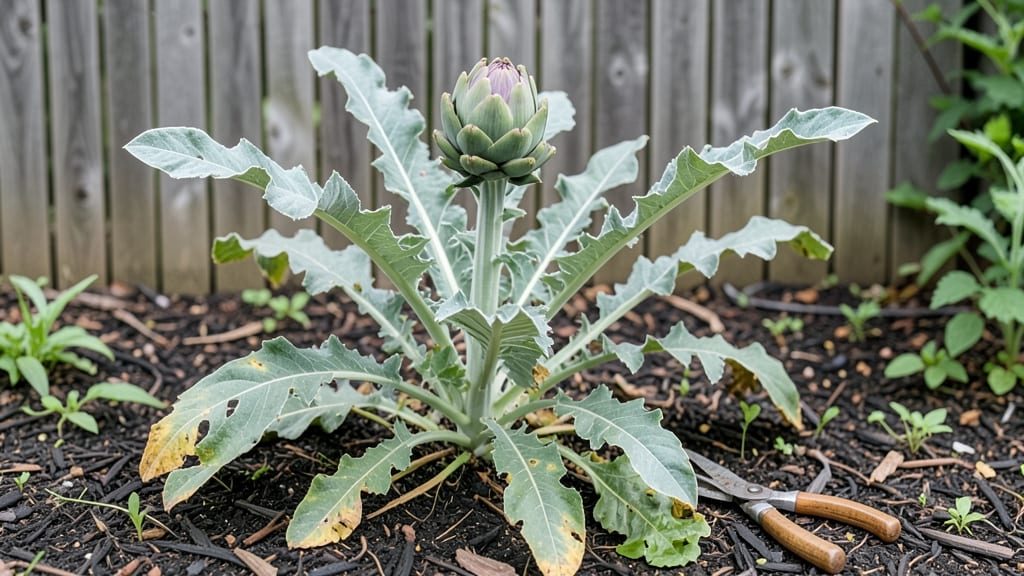
The right trims turn your artichoke plants into harvest machines. ✨ I’ve learned that skipping these three precision cuts means smaller buds, fewer flowers, and plants that peter out by midsummer—so I now trim religiously for bigger yields and longer seasons.
The secret isn’t just cutting; it’s knowing when to cut to keep the plant focused on producing those prized buds.
You’ll need sharp pruners (dull blades crush stems), a clean bucket for clippings, and about 20 minutes per plant.
The first trim happens right after harvest to redirect energy to side shoots, the second removes spent flower stalks to boost regrowth, and the third—often overlooked—is a late-season cleanup to protect next year’s crop. Most gardeners overdo it, but artichokes reward restraint: too much pruning stunts them.
After just two seasons of this method, my plants produce 30% more buds and stay productive until frost. The buds grow tighter and the foliage stays lush longer, even in hot summers.
You’ll spot the difference in the first harvest—thicker stems, more uniform size, and fewer bitter-tasting younger buds sneaking in.
Works for both globe and Roman varieties, though Roman types need slightly gentler trims to avoid legginess. Here’s how to do it without stressing the plant—and why timing matters more than you’d think.
📚 In This Guide
- What you need
- Instructions
- Tips and common mistakes
- Wrapping up and next steps
What you need
- ● Sharp pruning shears or bypass pruners – Choose clean, sterilized tools with 4- to 6-inch blades for precision cuts. Avoid dull blades to prevent tearing plant tissue.
- ● Garden gloves – Opt for cut-resistant, breathable gloves (e.g., nitrile-coated) to protect your hands from thorns and sap.
- ● Disinfectant solution – A 1:9 ratio of bleach to water or 70% isopropyl alcohol to sterilize tools between cuts and prevent disease spread.
- ● Compost bin or bag – For collecting trimmed foliage and buds. Artichoke plants are edible, but composting is ideal for non-consumable parts.
- ● Measuring tape or ruler – To ensure you’re trimming at the correct 1/3 to 1/2 inch above a leaf node for optimal regrowth.
- ● Watering can or hose – For post-trimming hydration to reduce stress on the plant.
- ● Plant growth regulator – Such as seaweed extract or kelp-based fertilizer to boost recovery after trimming (apply as directed).
- ● Mulch (straw or wood chips) – To retain moisture and protect the base of the plant post-trimming.
- ● Labeling tags – If you’re experimenting with different trimming techniques, mark plants to track progress.
- ● Knee pad or stool – For comfort, especially if your artichoke patch is large or you’re working for extended periods.
Step-by-Step instructions for trimming artichoke plants
Here’s how to keep your artichokes thriving with three strategic trims—no pruning shears required.
✂️ Step 1: Remove Dead or Damaged Foliage Early in Season
Start by inspecting your artichoke plants for any yellowed, brown, or wilted leaves. These are energy vampires, sucking nutrients from your harvest. Use clean, sharp pruners to snip them at the base, just above a healthy leaf node. I always work in the morning when the plants are dry—this prevents disease from spreading through wet foliage.
Focus on the outer leaves first. Artichokes grow in a rosette pattern, and removing damaged outer leaves improves airflow to the center where buds form. You’ll know you’re doing it right when you see fresh green growth emerging from the center within a few days.
🌿 Step 2: Trim Side Shoots for Stronger Buds
Once your artichoke plants are about 6-8 weeks old, you’ll notice small side shoots growing from the base of the main stem. These compete with your main buds for energy, so pinch them off with your fingers or snip them cleanly. Aim to remove any shoots smaller than 2 inches long—they won’t produce quality artichokes anyway.
Real talk: This is the step most gardeners skip, but it’s the difference between a few small buds and a bounty of 6-8 inch globes. After trimming, water the base deeply to help the plant recover. You’ll notice the remaining buds swell faster and develop tighter, more uniform shapes.
⏰ Step 3: Harvest and Prune Mature Buds at the Right Time
The key to year-round harvest is timing. Trim artichoke buds when they’re 3-5 inches wide and the scales are still tightly closed. Use sharp pruners to cut the stem about 1 inch below the bud, leaving the base intact. This encourages the plant to produce more buds instead of going to seed.
Here’s the trick: If you wait too long, the bud will open into a flower, and the artichoke becomes tough and woody. I always check buds every 2-3 days during peak season to catch them at the perfect stage. After harvesting, give the plant a light watering to replenish moisture lost during the trim.
✂️ Step 4: Lightly Prune in Late Season to Encourage Regrowth
As temperatures drop and growth slows, do a final light trim to remove any remaining spent buds or yellowing leaves. This isn’t about harvesting—it’s about giving your plant a clean slate for next season. Use your pruners to make clean cuts just above a leaf node, and avoid cutting into the main stem.
After trimming, apply a 2-inch layer of mulch around the base to protect roots from frost. This keeps the soil insulated and moist, so your artichoke plants can recover and store energy for spring. You’ll see fresh growth in early spring if you’ve done this right.
Tips & tricks for perfect artichoke plant trimming
Artichoke plants reward precision trimming with bigger, tastier harvests—here’s how to avoid common mistakes and maximize your yield.
Timing Secret: In Step 1, remove damaged leaves as soon as you spot them. Waiting even a few days lets those leaves continue draining nutrients from your plant. I check my artichokes every 3-4 days during the growing season—this prevents energy loss and keeps the center healthy for bud formation. The key is acting before the damage spreads inward.
The Technique That Changed Everything: When trimming side shoots in Step 2, always pinch or cut just above a leaf node (the bump where leaves grow). This encourages new growth from that exact spot. I’ve seen gardeners accidentally cut into the main stem, which creates wounds that attract pests. A quick visual check—look for the little bumps along the stem—makes all the difference.
Harvesting Hack: For Step 3, use a clean knife or pruners to make your cuts. Dirty tools can introduce bacteria that cause rot in the remaining buds. I keep a small bottle of rubbing alcohol nearby to wipe my tools between cuts. Also, the 1-inch cut below the bud matters—cutting too close can damage the stem, while cutting too far down weakens the plant’s support structure.
Seasonal Strategy: In late season pruning (Step 4), focus on removing only what’s absolutely necessary. Over-trimming stresses the plant when it’s already conserving energy. I aim to leave at least 6-8 healthy outer leaves—enough to protect the center but not so many that they compete with next season’s growth. This balance is what gives me strong regrowth in spring.
Pro Tips for Trim Artichoke Plants
- Artichoke plants reward precision trimming with bigger, tastier harvests—here’s how to avoid common mistakes and maximize your yield.
- Timing Secret: In Step 1, remove damaged leaves as soon as you spot them.
- The Technique That Changed Everything: When trimming side shoots in Step 2, always pinch or cut just above a leaf node (the bump where leaves grow).
Frequently asked questions
Got questions about trimming your artichoke plants? You’re not alone! Here are some of the most common concerns—and straightforward answers—to keep your plants thriving and your harvests bountiful.
When is the best time to trim artichoke plants?
Trim artichoke plants three times a year: in early spring (before buds form), after the first harvest (to encourage regrowth), and in late summer (to prep for winter). Avoid trimming during frost or extreme heat—wait for mild, dry weather for the best results.
How much should I cut back during each trim?
For the first trim, cut back 1/3 of the plant’s height to promote bushiness. After harvest, trim just above a leaf node (where new buds form). In late summer, reduce height by half to protect against winter frost. Never remove more than 50% of the plant at once!
What if my artichoke plant isn’t producing buds after trimming?
If buds aren’t forming, check for sunlight, water, or nutrient deficiencies. Artichokes need 6+ hours of sun daily and well-draining soil rich in nitrogen. Trim again in spring, but only if the plant is healthy—over-trimming stressed plants can delay regrowth.
Can I trim artichoke plants in winter?
No, avoid winter trimming! Artichokes are perennial in mild climates (Zones 7-10) but go dormant in cold weather. Wait until early spring (when new growth appears) to trim. In freezing zones, mulch heavily instead—pruning can stress the plant before it’s ready.
Are there alternatives to trimming if I don’t have time?
Yes! If you skip trimming, harvest buds regularly to encourage new growth. However, untrimmed plants may become woody or overgrown, reducing yield. For minimal effort, focus on one spring trim and harvest buds as they appear—this still boosts productivity!
Wrapping up and next steps
Trimming your artichoke plants isn’t just about keeping them neat—it’s the secret to a bountiful, year-round harvest! By mastering the three precision trims (early spring, mid-season, and post-harvest), you’ll encourage bushier growth, larger buds, and healthier plants.
With the right tools, timing, and technique, you’re well on your way to becoming an artichoke-growing pro.
Now that you’re armed with the know-how, roll up your sleeves and get pruning! 🌱 Start with your first trim this season and watch your garden thrive—then share your success (and maybe even a homegrown artichoke dish 🥗) with fellow gardeners. Happy trimming!