
Succulent
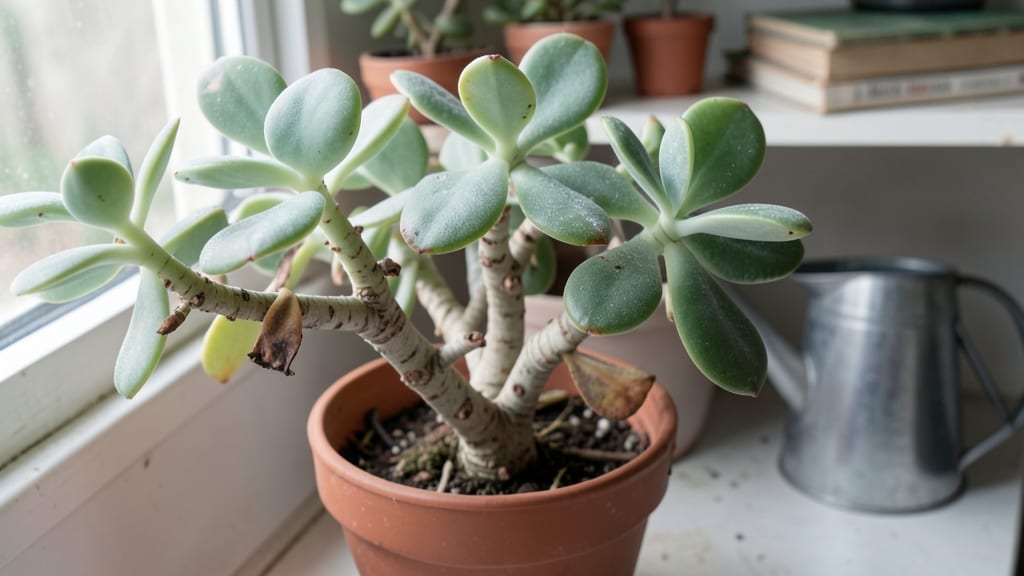
Your jade plant’s sad, mushy stems and yellowing leaves aren’t a death sentence—just a cry for help. 🌱 I’ve nursed back more overwatered jades than I’d like to admit, and the secret isn’t complicated: stop the rot, dry out the roots, and reset the watering rhythm.
The first 48 hours are critical, but with the right moves, your plant can bounce back stronger than ever.
Overwatering turns jade roots into a soggy mess because these plants store moisture like tiny water tanks. When soil stays damp for days, roots suffocate and turn black. The good news? Jades are tough—they’ll regrow from healthy stems if you act fast.
You’ll need a clean pot, fresh soil mix, and patience, but this isn’t a months-long project. Think of it as a 3-step reset: trim the damage, let it dry, then water like a pro.
By the time you’re done, you’ll have a jade with crisp, plump leaves and a root system that’s finally breathing easy. The key is watching for that “just dry enough” moment—stick your finger in the soil before watering again.
Trust me, your plant will thank you with years of thriving growth and those signature thick, happy leaves.
This works whether your jade lives in a sunny windowsill or a bright corner—just adjust watering for your light levels. Let’s turn that sad plant into a showstopper again.
Root Causes Of Overwatering Jade Plants
Overwatering your jade plant—Crassula ovata—can turn its lush, vibrant leaves into a sad, mushy mess. But why does this happen? The answer lies in the plant’s natural adaptations, soil science, and even human behavior. Let’s break down the key reasons your jade plant might be drowning in water.
Jade plants are succulents, meaning they’ve evolved to store water in their thick, fleshy leaves and stems. Their roots, however, hate sitting in soggy conditions.
When planted in soil that retains too much moisture—like heavy garden soil, peat-based mixes, or potting blends without perlite—water lingers around the roots instead of draining away.
Why it’s a problem:
- Compacted soil reduces oxygen flow to roots, suffocating them.
- No air pockets (from additives like sand or pumice) trap water, creating anaerobic conditions where harmful bacteria thrive.
- Slow evaporation means roots stay wet for days, accelerating rot.
💡 Pro Tip: Use a cactus/succulent mix (30% perlite, 30% potting soil, 30% coarse sand, 10% compost) or amend regular soil with orchid bark or pumice to boost drainage.
Many plant owners fall into the trap of sticking to a rigid watering schedule—like every Monday and Thursday—without checking soil moisture first. Jade plants, however, thrive on a “soak-and-dry” cycle. Their roots are sensitive to excess moisture, especially in cooler weather or lower-light conditions where evaporation slows.
Why it’s a problem:
- Overconfidence in memory leads to missed “dry checks.”
- Seasonal changes (e.g., winter dormancy) reduce a plant’s water needs by up to 50%.
- Pot size matters: A small 4-inch pot dries out faster than a 10-inch one, but both need the same “dry before watering” rule.
🌡️ Science Note: Jade plants absorb water through osmosis—when soil moisture exceeds 30% saturation, roots struggle to oxygenate, leading to Pythium or Phytophthora fungal infections.
A pot without drainage holes is like a bathtub for your jade plant—water has nowhere to go. Even “self-watering” or decorative pots can become death traps if they don’t allow excess water to escape.
Without proper drainage, roots sit in a permanent waterlogged state, cutting off oxygen and inviting rot.
Why it’s a problem:
- Water pools at the bottom, creating a hydroponic-like environment that roots can’t tolerate.
- Salt and mineral buildup from tap water accumulates, further stressing roots.
- Decorative cachepots (outer pots without holes) trap moisture inside the inner container.
✨ Fix It: If repotting isn’t an option, place the pot on a drainage tray and water only when the top 2 inches of soil are bone-dry. For cachepots, lift the inner pot to check moisture levels.
Jade plants are sensitive to salts, chlorine, and fluoride found in municipal tap water. Over time, these minerals accumulate in the soil, raising its salinity. High salinity disrupts the plant’s ability to absorb water and nutrients, causing stress that weakens its defenses against rot.
Why it’s a problem:
- Salt buildup creates a hypertonic solution outside root cells, drawing water out of the roots (osmotic stress).
- Chlorine can burn root tips, reducing surface area for water uptake.
- Hard water (high calcium/magnesium) forms a crust on soil, blocking drainage.
🔥 Solution: Use filtered, rainwater, or distilled water. If tap water is your only option, let it sit 24 hours to evaporate chlorine, or flush the soil monthly with reverse-osmosis water.
🚨 Key Takeaway: Overwatering isn’t just about how much you water—it’s about how often, what’s in the water, and where the water goes. Jade plants are resilient, but they despise soggy conditions. Next up: How to diagnose and fix root rot before it’s too late! 🌿💦
Revive Your Jade Plant Now
Overwatering can feel like a death sentence for your jade plant, but don’t panic—this resilient succulent often bounces back with the right care. The key is acting fast to stop the rot, dry out the soil, and give your plant a fighting chance.
Below, we’ll break down practical fixes based on the root cause of your overwatering woes, plus prevention tips to keep your jade thriving long-term.
Cause: Continuous moisture triggers root rot by suffocating roots and inviting fungal growth. Fix:
- Pause all watering until the soil is completely dry (this could take 1–2 weeks, depending on humidity and temperature).
- Move your plant to a bright, indirect light spot (like an east-facing window) to help it recover. Avoid direct sun at first—it can stress a weakened plant.
- Check the soil moisture by inserting a wooden chopstick or clean finger 1–2 inches deep. If it comes out dry, wait another day before reassessing.
💡 Pro Tip: If your jade is in a decorative pot without drainage holes, transfer it to a temporary container with holes (like a plastic nursery pot) to prevent further waterlogging.
Cause: Rotten roots can’t absorb water or nutrients, and soggy soil becomes a breeding ground for bacteria. Fix:
- Gently remove the plant from its pot and rinse the roots with lukewarm water to wash away excess soil.
- Inspect the roots:
- Healthy roots are firm, white, or light tan.
- Rotten roots are mushy, dark brown/black, and may smell foul. Trim these away with sterilized scissors or pruning shears (wipe with rubbing alcohol between cuts).
- Repot in fresh, dry soil:
- Use a well-draining cactus/succulent mix (or amend regular potting soil with perlite/pumice for aeration).
- Choose a terracotta or ceramic pot (they dry faster than plastic) with drainage holes.
- Let the soil dry out completely before watering again (this might take 5–7 days).
🔥 Emergency Fix: If repotting feels overwhelming, top-dress the soil with a 1-inch layer of dry sand or perlite to improve drainage without full repotting.
Cause: Overzealous watering (or poor drainage) leads to chronic soggy soil. Fix:
- Water only when the soil is bone-dry—stick your finger 2 inches deep. If it’s dry, water thoroughly but sparingly (until water drains from the bottom). If not, wait.
- Bottom-water your jade: Place the pot in a tray of water for 10–15 minutes, then drain excess. This gives roots control over hydration.
- Reduce frequency: Jade plants thrive on neglect. In spring/summer, water every 2–3 weeks; in fall/winter, once a month (or less).
🌡️ Seasonal Hack: In winter, jade plants enter dormancy. Water even less—they’re surviving on stored moisture!
Once your jade is back on track, avoid these common mistakes: - ❌ Overpotting: A pot that’s too large holds excess moisture.
Choose one 1–2 inches larger than the root ball. - ❌ Using regular potting soil: It compacts and retains too much water. Succulent mixes or 50% perlite/pumice are lifesavers. - ❌ Ignoring humidity: Jade plants hate humidity.
Keep them in dry, airy spots (like a sunny windowsill) and avoid misting. - ✅ Monitor with a moisture meter: These $10 tools take the guesswork out of watering.
Final Thought: Jade plants are forgiving—act fast, dry them out, and adjust your habits, and you’ll see new growth in 4–6 weeks. Patience is key, but your jade will reward you with those iconic plump leaves! 🌿✨
Frequently asked questions
How do I know if my jade plant is overwatered?
Check for yellowing leaves, mushy stems, or leaves that feel soft and droopy. The soil may also smell foul or feel constantly damp. If you gently tug on a leaf and it pulls away easily, that’s another red flag—healthy jades resist gentle tugging.
Can I save my jade plant if the roots are rotting?
Yes! Remove the plant from its pot, rinse the roots, and trim away any black, mushy roots with sterilized scissors. Repot in fresh, dry cactus mix with perlite, and let the soil dry completely before watering again. With patience, your jade can regrow from healthy stems.
Why does my jade plant keep getting overwatered?
Jade plants thrive on a “soak-and-dry” cycle—water only when the top 2 inches of soil are bone-dry. Many people water on a schedule instead of checking moisture. Also, pots without drainage holes or heavy soil mixes trap water. Use terracotta pots and a well-draining mix.
How often should I water my jade plant after fixing overwatering?
Wait until the soil is completely dry—this could take 1–2 weeks in warm weather or longer in cooler months. After recovery, water every 2–3 weeks in spring/summer and once a month in winter. Always use a pot with drainage holes.
Will my jade plant survive if I don’t repot it?
It can, but only temporarily. Without repotting, soggy soil will keep harming roots. Try a quick fix: top-dress the soil with 1 inch of dry perlite or coarse sand to improve drainage. For long-term health, repotting in fresh, dry mix is best.