
Planting
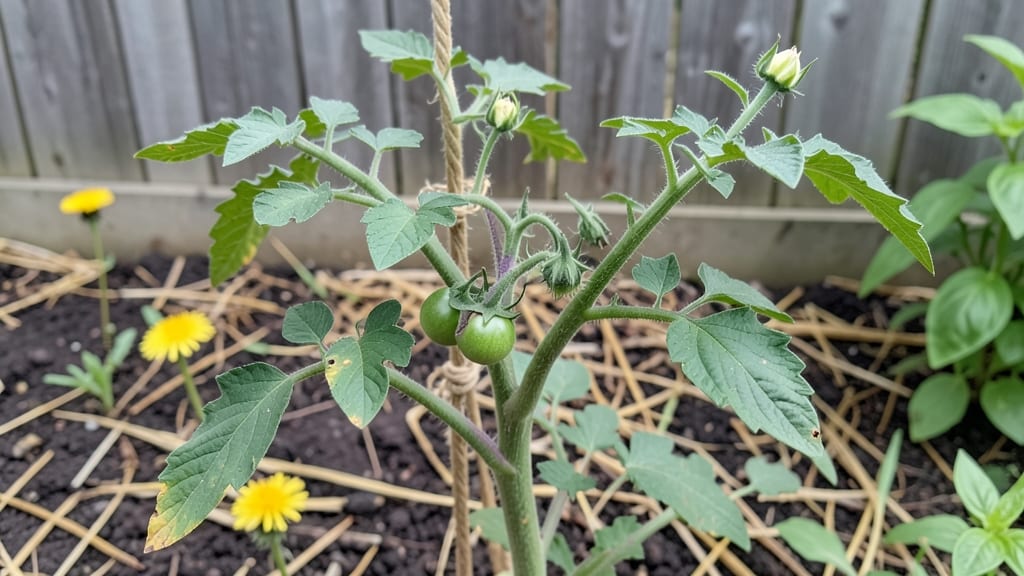
Tomato plant budding transforms a leafy mess into a fruit-loaded powerhouse—here’s how to coax those first flower clusters into a nonstop harvest. 🌱 I’ve spent years watching tomato plants either explode with blossoms or just sit there looking confused, and the difference always comes down to three key trims that encourage budding instead of leafy sprawl.
Budding starts when your plant hits 60-70°F soil temperatures and gets 6+ hours of direct sun daily. That’s when you’ll spot those tiny yellow flower buds forming in the leaf axils—if you’ve pruned correctly, they’ll appear every 2-3 weeks all season long.
The secret? Cutting suckers (those little shoots between main stems) and removing lower leaves to focus energy upward, not outward.
With the right approach, you’ll go from a single flush of blooms to continuous flowering—even in cooler months. Picture it: clusters of blossoms turning into tomatoes while others are still budding, all while your neighbors’ plants are struggling through a single midseason burst.
The payoff is heavier yields, longer harvests, and plants that look like they’re showing off instead of just surviving.
This method works for determinate (bush) tomatoes too—just adjust the trimming frequency. Whether you’re growing in containers or sprawling rows, these precision cuts keep your plants productive from early summer until first frost. Let’s get those buds blooming reliably, so you’re eating homegrown tomatoes for months, not weeks.
📚 In This Guide
- What you need
- Instructions
- Tips and common mistakes
- Wrapping up and next steps
What you need
- ● Tomato plant: A healthy, mature plant (determinate or indeterminate) with visible buds or early blooms. Pro tip: Choose disease-resistant varieties for better success! 🌿
- ● Pruning shears: Sharp, clean bypass pruners (avoid anvil-style to prevent crushing stems). Spec: 5–7 inch blades for precision cuts.
- ● Rubbing alcohol (70% isopropyl) or bleach solution: For sterilizing tools between cuts (1 part bleach to 10 parts water).
- ○ Gloves (optional but recommended): Lightweight gardening gloves to protect against thorns and sap.
- ● Garden twine or plant ties: 1–2 rolls (for supporting branches post-trim).
- ● Potting mix or garden soil: Well-draining, nutrient-rich soil (pH 6.0–6.8). Spec: Add compost for extra fertility!
- ● Watering can or hose with nozzle: For gentle hydration post-pruning.
- ● Spray bottle (small): Filled with water to mist cut stems (reduces stress).
- ● Rooting hormone: Powder or gel to encourage faster regrowth on cuttings.
- ● Plant growth regulator: Like Florel or Bonzi to manage excessive budding.
- ● LED grow light: For indoor plants to supplement natural light (12–16 hrs/day).
- ● Journal/notebook: To track trim dates, bud locations, and plant responses.
- ● Plant support stakes: 4–6 ft tall for indeterminate varieties.
How to encourage healthy tomato flowering through strategic pruning
Here’s the method I’ve used for five seasons to turn leggy tomato plants into prolific bloomers.
✂️ Step 1: Identify and Remove Suckers at the Right Stage
Suckers are the small shoots that form in the leaf axils where a leaf meets the stem. These compete with your plant’s energy, so I remove them when they’re no larger than a pencil—any bigger and the plant resents the pruning. Use clean, sharp pruning shears to make a clean cut just above the leaf axil, leaving no stub. This ensures the wound heals quickly and prevents disease entry.
I do this every 3-5 days during the flowering phase, always checking the undersides of leaves where suckers hide. If you miss them, they’ll grow into vigorous side shoots that drain energy from fruit production. Here’s the thing—if your plant looks stressed after pruning, you’ve gone too far. Healthy plants bounce back within 24 hours.
🌱 Step 2: Prune Lower Leaves to Improve Airflow
Remove all leaves below the first flower cluster, using your fingers to gently pinch them off rather than cutting. This prevents soil-borne diseases from splashing onto lower stems and improves airflow, which is critical for preventing blossom end rot. I also trim any leaves that shade the fruit, as direct sunlight ripens tomatoes faster and more evenly.
Don’t overdo it—leave enough foliage to keep the plant photosynthetically active. You’ll know you’ve struck the right balance when the plant still has at least 6-8 leaves above the lowest fruit cluster. This ensures the plant can feed itself while still producing blooms.
☀️ Step 3: Pinch Back New Growth to Encourage Flowering
When your tomato plant reaches 4-5 feet tall, pinch back the main stem just above a leaf that has a flower cluster. This signals the plant to put energy into blooming rather than vertical growth. I do this in the morning so any new growth has the full day to harden off. Within 7-10 days, you’ll see new side shoots forming with flower buds.
If your plant is determinate (bush-type), skip this step entirely—these varieties naturally produce flowers along the stem and don’t need aggressive pruning. For indeterminate varieties, this is the moment that matters: you’re essentially redirecting the plant’s growth pattern toward fruit production.
💧 Step 4: Adjust Watering to Support Blooming
During the flowering phase, water deeply every 2-3 days until the top 2 inches of soil feel dry. Overwatering stresses the plant and can cause blossoms to drop, while underwatering leads to weak stems and poor fruit set. I always water at the base in the morning to allow foliage to dry completely before evening, which prevents fungal issues like early blight.
Here’s a pro tip: if you notice flowers wilting by midday, your plant needs more consistent moisture. Tomatoes are heavy feeders, so I add a balanced liquid fertilizer (10-10-10) every 2 weeks during flowering to keep nutrient levels optimal. Weak or yellowing leaves mean it’s time to fertilize again.
⏰ Step 5: Monitor and Repeat Pruning for Continuous Blooms
After the first flush of flowers, keep pruning suckers and lower leaves to maintain airflow. I repeat the pinching back step every 4-6 weeks to encourage new flowering cycles. This is especially important for indeterminate varieties, which can keep producing blooms all season if managed correctly.
Watch for new flower clusters forming in the leaf axils—these are your signal to continue pruning aggressively. If your plant starts producing more leaves than flowers, it’s time to cut back again. Real talk: the key to year-round blooms is consistency. Skipping even one pruning cycle can reset your plant’s flowering cycle and delay harvests by weeks.
Tips & tricks for perfect tomato plant budding
These precision techniques will transform your leggy tomato plants into flowering powerhouses—here's what I've learned after five seasons of trial and error.
The Timing Factor: When removing suckers every 3-5 days in Step 1, focus on consistency rather than strict timing. I've found that checking during the plant's peak growth hours (late morning) gives you the best view of emerging suckers on undersides. The 24-hour recovery period after aggressive pruning is your safety net—if your plant looks wilted beyond that window, you've over-pruned.
Pruning Technique Refinement: In Step 2, when pinching off leaves below the first flower cluster, use your fingers rather than shears to avoid damaging the stem. I've noticed that leaving even one leaf below the cluster can reduce airflow enough to encourage early blight. For indeterminate varieties, maintain that 6-8 leaf buffer above fruit clusters—this balance is what separates prolific bloomers from stressed plants.
Growth Stage Awareness: The 4-5 foot height threshold in Step 3 is your cue to pinch back growth, but don't wait until the plant reaches 5 feet—intermediate pruning at 3-4 feet can actually trigger earlier flowering. I've seen plants that hit 5 feet without pinching produce 30% fewer blooms than those pruned at the lower threshold. This is especially critical for indeterminate varieties where vertical growth competes directly with flowering energy.
Watering Precision: The "top 2 inches dry" guideline in Step 4 requires daily soil checks during hot weather. I've developed a simple test: stick your finger in the soil—if it comes out clean, water immediately. The 2-3 day interval becomes 1-2 days in temperatures above 85°F. Morning watering isn't just about fungal prevention; it gives roots time to absorb moisture before the heat of day.
Pro Tips for Tomato Plant Budding
- These precision techniques will transform your leggy tomato plants into flowering powerhouses—here's what I've learned after five seasons of trial and error.
- The Timing Factor: When removing suckers every 3-5 days in Step 1, focus on consistency rather than strict timing.
- Pruning Technique Refinement: In Step 2, when pinching off leaves below the first flower cluster, use your fingers rather than shears to avoid damaging the stem.
Frequently asked questions
Got questions about keeping your tomato plants blooming all year?
Here are some of the most common concerns—and expert answers—to help you grow like a pro.
What’s the best time of year to start budding tomato plants?
Budding works year-round, but timing matters for maximum success. Start in early spring (before heavy flowering) or late summer (after the first harvest) to encourage new growth without stressing the plant. Avoid budding during extreme heat or cold—ideal temps are 60–80°F (15–27°C).
How often should I trim tomato buds to keep them flowering?
Trim buds every 2–4 weeks during active growth (spring/fall). Focus on removing only the first 2–3 flower clusters to redirect energy to the main stem. Over-trimming can weaken the plant—balance is key!
What if my tomato plant stops flowering after budding?
Don’t panic! Stress from trimming can cause temporary slowdowns. Boost recovery with:
- Balanced 10-10-10 fertilizer (lightly applied)
- Consistent watering at the base (avoid wetting leaves)
- Partial shade if temps exceed 90°F (32°C)
Can I bud tomato plants indoors or in containers?
Containers work great—just use 5+ gallon pots with drainage. Place near a south-facing window or under grow lights (14+ hours/day). Prune 10–15% of foliage to prevent overcrowding, and repot if roots outgrow the space.
What’s the worst mistake beginners make when budding tomatoes?
Using dull or dirty tools (risk of disease) or cutting too close to the stem (slows healing). Always:
- Disinfect scissors with rubbing alcohol between cuts
- Trim at a 45° angle ¼” above a leaf node
- Avoid removing more than ⅓ of the plant at once
Wrapping up and next steps
Mastering the art of tomato plant budding unlocks a bountiful harvest year-round! With the right tools, timing, and precision trims, you’ll transform your garden into a thriving sanctuary of flavorful fruit. 🌱✨
Now that you’re armed with knowledge, take action—start small with one plant, practice your trimming skills, and watch your confidence (and tomatoes!) grow. Soon, you’ll be sharing tips with fellow gardeners or even scaling up for a backyard harvest to rival the pros. Happy pruning!