
Fertilization
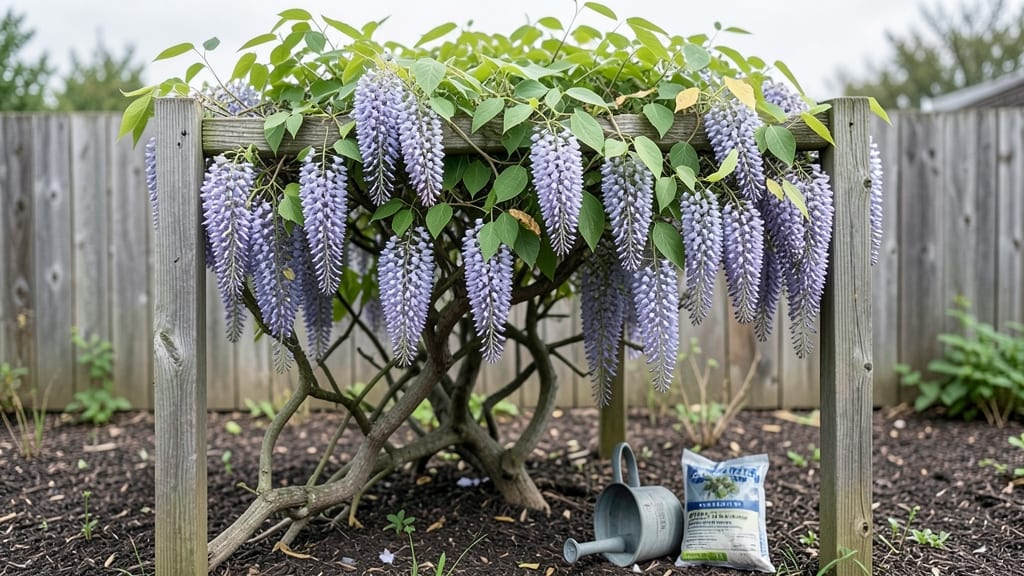
The right wisteria plant food 🌸 can turn your leggy vine into a fragrant, flower-covered showstopper—if you pick the right formula and timing.
Struggling to get your wisteria to bloom? The right plant food with the perfect N-P-K ratio can transform your woody climber from sparse to spectacular—here’s how to feed it for maximum growth and vibrant flowers.
Wisteria thrives on balanced nutrition, but too much nitrogen means more leaves and fewer blooms. In USDA Zone 6a, timing matters most—feed lightly in spring when buds form, then switch to a bloom-boosting formula by late May.
Below, I break down the best organic and synthetic options, how often to apply them, and the telltale signs your wisteria is hungry (or drowning in too much fertilizer).
Understanding wisteria N-P-K ratios for optimal growth and blooms
Wisteria thrives when fed the right nutrients at the right time, and the N-P-K ratio is your secret weapon. Nitrogen (N) fuels leafy growth, phosphorus (P) supports root development and blooms, while potassium (K) boosts disease resistance and flower production.
Getting these three elements balanced ensures your wisteria grows strong vines and abundant flowers every season. Let’s break down the ideal ratios for each growth stage to maximize your plant’s potential.
For seedlings, focus on a low-nitrogen approach to encourage root establishment. A 5-10-10 ratio provides just enough phosphorus and potassium to support early development without overwhelming the young plant.
This stage is all about building a healthy foundation for future growth, and too much nitrogen can lead to weak, leggy vines that struggle to support those iconic heavy flower clusters later on.
Once your wisteria enters the vegetative stage (spring through early summer), shift to a balanced fertilizer like 10-10-10. This ratio promotes leafy growth and vine elongation, which are critical for establishing a strong structure.
During this phase, you’ll see rapid vine growth, and the right balance of nutrients ensures your wisteria can climb and spread effectively. Over-fertilizing with nitrogen here can delay flowering, so monitor your plant’s response closely.
Here’s a quick reference for the ideal N-P-K ratios at each stage of wisteria growth:
<summary-table>When your wisteria reaches the flowering stage (late spring to early summer), switch to a phosphorus-heavy fertilizer like 5-15-15. This ratio encourages bud formation and vibrant blooms, giving you those show-stopping, fragrant clusters.
Phosphorus is essential for energy transfer within the plant, which directly impacts flower production. If you notice fewer blooms than expected, this is often a sign your wisteria needs more phosphorus.
After the blooming season, transition to a low-nitrogen, high-potassium fertilizer like 3-6-6 to support root health and disease resistance. This ratio helps your wisteria recover from the energy demands of flowering and prepares it for dormancy.
Potassium also plays a key role in stress tolerance, helping your plant withstand heat, drought, and pests more effectively. Think of this stage as a recovery period to ensure your wisteria comes back stronger next year.
Timing is everything when it comes to feeding wisteria. Always apply fertilizer in early spring before new growth begins, and avoid fertilizing in late summer or fall, as this can stimulate tender new growth that won’t survive winter.
For container-grown wisteria, reduce fertilizer amounts by half to prevent salt buildup in the soil, which can harm roots. Always water thoroughly after applying fertilizer to help nutrients penetrate the soil and reach the roots.
Signs of nutrient deficiency can help you adjust your feeding schedule. Yellowing leaves often indicate a nitrogen deficiency, while purple or dark green leaves can signal a phosphorus or potassium imbalance.
If your wisteria produces fewer flowers than usual, it may need a phosphorus boost during the flowering stage. Pay attention to these cues, and don’t hesitate to tweak your fertilizer ratios based on what your plant is telling you.
For organic gardeners, consider using composted manure or fish emulsion for nitrogen, bone meal for phosphorus, and kelp meal for potassium. These natural amendments provide a slow-release of nutrients, which is gentler on your wisteria and mimics the natural nutrient cycles in the soil.
Synthetic fertilizers can be faster-acting, but they require more frequent applications and careful monitoring to avoid over-fertilization.
Remember, the key to feeding wisteria is patience and consistency. This isn’t a plant that responds well to heavy-handed fertilizing—it rewards careful, stage-specific care.
By following these N-P-K ratios and adjusting based on your plant’s needs, you’ll be well on your way to growing a lush, blooming wisteria that steals the show in your garden. 🌸
Best organic and synthetic wisteria plant foods compared
Choosing the right wisteria plant food can mean the difference between sparse vines and lush, fragrant blooms. Organic options like compost and fish emulsion provide slow-release nutrients, while synthetic fertilizers deliver precise N-P-K ratios for targeted growth.
Let’s compare the top choices to help you decide what works best for your woody climber.
For organic wisteria care, I recommend starting with well-aged compost—it improves soil structure while providing a steady supply of nutrients. Fish emulsion is another favorite because it’s rich in nitrogen for leafy growth, while bone meal boosts phosphorus to encourage vibrant blooms.
These options are eco-friendly and safe for long-term use, though they require more frequent applications.
Synthetic fertilizers, like balanced 10-10-10 or bloom-boosting 5-10-5 formulas, offer quick results with measurable N-P-K ratios. They’re ideal for correcting deficiencies fast, but overuse can harm your wisteria’s roots or lead to nutrient burn. Always follow label instructions to avoid mistakes.
Organic vs. Synthetic Wisteria Plant Foods
Organic Options
- Pros: Improves soil health, slow-release nutrients, eco-friendly
- Cons: Requires more frequent applications, slower results
Top Picks:
- Compost – Best for soil structure and long-term feeding
- Fish Emulsion – High in nitrogen for leafy growth
- Bone Meal – Boosts phosphorus for blooms
Synthetic Options
- Pros: Fast results, precise N-P-K ratios, easy to measure
- Cons: Risk of over-fertilizing, can harm roots if misused
Top Picks:
- 10-10-10 Balanced – Ideal for overall growth
- 5-10-5 Bloom Booster – Enhances flowering
- Slow-Release Granules – Convenient for long-term feeding
When applying organic wisteria plant food, I mix compost into the soil at planting and top-dress with fish emulsion every 4-6 weeks during spring and summer. For synthetic fertilizers, I use a 10-10-10 formula in early spring and switch to a 5-10-5 in late spring to encourage blooms.
Always water thoroughly after application to prevent root damage.
Cost is another key factor. Organic options like compost are nearly free if you make your own, while fish emulsion and bone meal cost $10-$20 per gallon. Synthetic fertilizers are more affordable per application ($5-$15 per bag) but may require larger quantities for long-term use.
For budget-friendly feeding, I recommend a mix of both—organic for soil health and synthetic for quick nutrient boosts.
For best results, test your soil’s pH first (wisteria thrives in 6.0-7.0). If your soil is deficient in nutrients, a soil test kit ($20) will save you money by telling you exactly what to add.
Pair your fertilizer with regular pruning and deep watering to maximize growth and blooms.