
Pests and Diseases
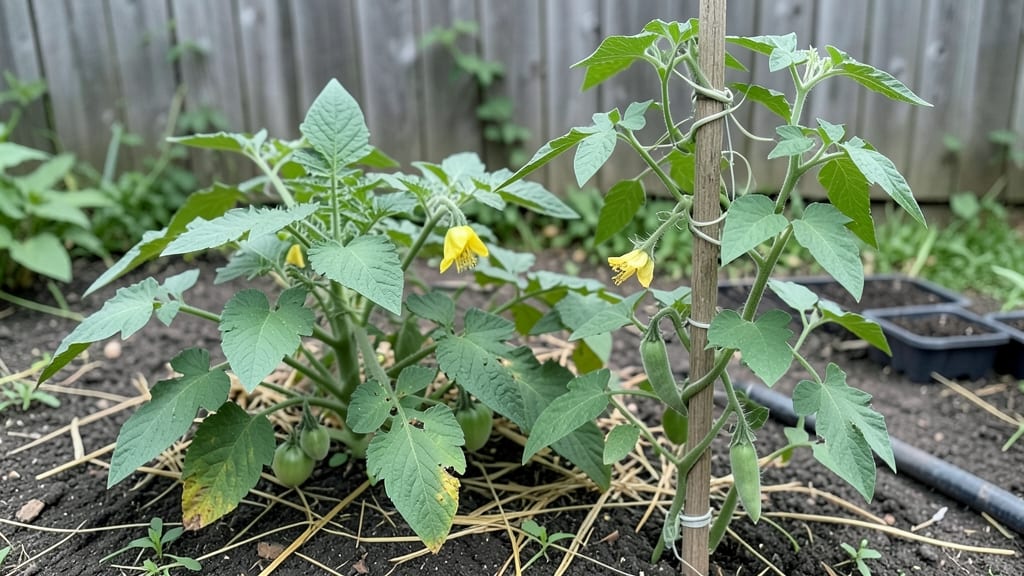
You can plant tomatoes and green beans together because they complement each other in companion planting—beans enrich the soil with nitrogen while tomatoes repel pests like Mexican bean beetles. Just ensure proper spacing to prevent resource competition.
This pairing works because beans naturally absorb excess nitrogen from the soil, leaving it more balanced for tomatoes. 🌱 Meanwhile, tomatoes act as natural pest deterrents, keeping aphids and beetles away from the beans.
Many gardeners swear by this combo, especially when space is limited—just avoid planting them too close together, or the beans might struggle to get enough sunlight.
For best results, I recommend spacing green beans 18–24 inches apart and tomatoes 2–3 feet apart. Trellising the beans vertically also saves garden space while keeping them out of the tomatoes' shade. The key is balance—too much competition for sunlight or nutrients can backfire, so plan your layout carefully!
💡 In This Article
- How Companion Planting Boosts Tomato and Green Bean Growth
- Best Spacing and Planting Techniques for Tomatoes and Green Beans
How companion planting boosts tomato and green bean growth
The real magic happens underground where green beans perform a natural soil enrichment service. These legumes host Rhizobium bacteria in their root nodules that convert atmospheric nitrogen (N₂) into ammonia (NH₃), a form plants can absorb.
This process, called nitrogen fixation, adds approximately 50-100 pounds of nitrogen per acre annually to the soil—enough to significantly boost tomato growth without synthetic fertilizers. 🌱 The tomatoes, in turn, benefit from this nutrient boost while their deep roots help break up compacted soil, improving aeration for the shallower bean roots.
Above ground, the partnership creates a pest defense system. Tomatoes release volatile organic compounds like α-pinene and limonene that repel Mexican bean beetles—one of the green beans' most destructive pests—while their strong scent masks the beans' natural aroma that attracts other insects.
Studies show tomato plants can reduce bean pest populations by up to 40% when planted within 3-4 feet of each other. The beans' vertical growth habit also provides shade for tomato fruits, preventing sunburn while maintaining optimal 70-80°F soil temperatures for both crops.
This dynamic duo also improves soil structure through their different root systems. Tomato roots grow deep (up to 3 feet) while green beans develop extensive lateral roots, creating a more comprehensive soil network.
The beans' fibrous roots help prevent erosion while their nitrogen enrichment reduces soil acidity—tomatoes prefer a slightly acidic pH of 6.0-6.8 while beans thrive in 6.0-7.0. This natural pH balancing creates an ideal growing environment for both plants, with measurable increases in yield when compared to monoculture plantings.
What most gardeners don't realize is how this pairing extends beyond the growing season. When beans senesce (die back), their nitrogen-rich residues decompose, releasing additional nutrients that tomatoes can utilize throughout their fruiting period.
Research from the University of California shows companion-planted tomatoes in bean-enriched soil can produce 20-30% more fruit with better flavor profiles due to enhanced nitrogen availability and reduced stress from pests. The beans, meanwhile, benefit from the tomatoes' improved soil structure and reduced competition for water.
For maximum benefits, plant bush beans 4-6 weeks before transplanting tomato seedlings. This timing allows the beans to establish their nitrogen-fixing relationship before the tomatoes become competitive for resources.
The key is maintaining proper spacing—beans need 4-6 inches between plants while tomatoes require 18-24 inches—to prevent shading and resource competition while still allowing the plants to benefit from each other's presence. 🌿
The scientific term for this mutual benefit is "facilitation," where one species improves conditions for another without direct physical interaction. In this case, the beans create a more fertile environment while the tomatoes provide pest protection and improved microclimates.
This natural synergy reduces the need for chemical inputs while increasing overall garden productivity—a win-win for both plants and gardeners alike.