
Companion Plants
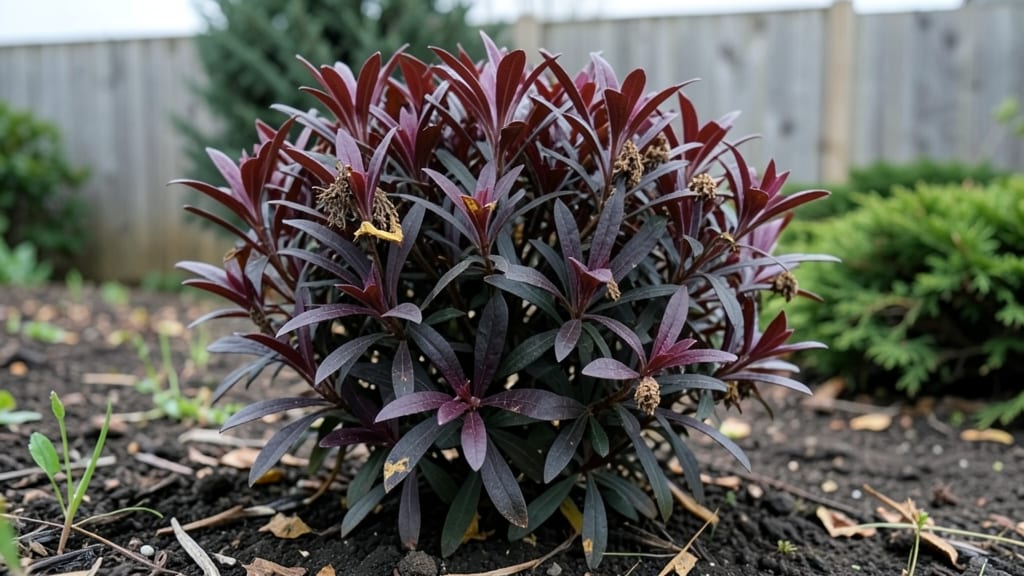
Purple evergreen plants are the unsung heroes of year-round garden drama. ✨ They bring deep, moody hues to winter beds while keeping foliage lush—no flowers required. My front yard’s Heuchera and Purple Leaf Sandcherry have become the backbone of my pollinator-friendly design, offering color when everything else fades.
These plants thrive in partial shade to full sun, with most handling zones 4-9 without fuss. The smoky purple of smoke bush contrasts beautifully with silver foliage like lamb’s ear, while Heuchera’s velvety leaves add texture.
Low-maintenance and drought-tolerant once established, they’re perfect for borders, containers, or even hedges—no deadheading or staking needed.
Pair them with silvery artemisia or bright yellow coreopsis for a striking contrast, or let their deep tones anchor a shade garden. They’ll attract bees and butterflies year-round, too—just don’t prune them back hard in winter. The results? A garden that looks intentional, even in January.
Whether you’re filling a shady corner or brightening a sunny border, these plants deliver four-season interest with minimal effort. Let’s talk specifics—what’s your garden’s biggest color challenge?
📚 In This Guide
- What you need
- Instructions
- Tips and common mistakes
- Wrapping up and next steps
What you need
- ● Purple evergreen plants: 3–5 mature plants (check local nurseries for Heuchera ‘Palace Purple,’ Cotoneaster ‘Royal Purple,’ or Skimmia japonica ‘Veitchii’)
- ● High-quality potting mix: 1–2 bags (look for well-draining, peat-free soil amended with perlite or compost)
- ● Organic mulch: 1–2 cubic feet (cedar chips or pine bark to retain moisture and suppress weeds)
- ● Slow-release fertilizer: 10–20 lb bag (10-10-10 or organic options like fish emulsion)
- ● Garden trowel or spade: 1 (for planting and soil prep)
- ● Pruning shears: 1 pair (sharp, sterilized for trimming)
- ● Garden gloves: 1 pair (to protect hands from thorns or rough foliage)
- ● Watering can or hose with nozzle: 1 (for gentle, deep watering)
- ● Measuring tape: 1 (to space plants 12–36 inches apart, depending on variety)
- ● Pollinator-friendly companions: 1–2 packets of seeds (e.g., purple coneflower or lavender)
- ● Decorative rocks or edging: For a polished look
- ● Soil pH test kit: To ensure acidic to neutral soil (pH 6.0–7.0) for optimal growth
- ● Shade cloth (30–50% coverage): For hot climates (protects tender foliage)
Step-by-Step guide to designing a pollinator-friendly purple evergreen garden
Here's how to create a vibrant, low-maintenance garden that thrives year-round while attracting bees, butterflies, and hummingbirds.
🌿 Step 1: Select the Right Purple Evergreen Varieties
Choose four pollinator-friendly purple evergreen plants that thrive in your climate zone. I recommend Heuchera 'Palace Purple' for its velvety foliage, Lavender 'Hidcote' for its fragrant blooms, Cotoneaster 'Royal Purple' for its berries, and Salvia 'May Night' for its long flowering season. These varieties provide year-round color while supporting pollinators.
Check each plant's mature size to ensure they complement your space. For example, Cotoneaster can reach 6-10 feet tall, while Heuchera stays compact at 12-18 inches. Group taller plants toward the back and shorter ones in front for a layered effect that draws the eye and provides habitat diversity.
☀️ Step 2: Prepare the Planting Sites for Optimal Growth
Most purple evergreens prefer full sun to partial shade (at least 4-6 hours of direct sunlight daily). Test your garden spots by observing sunlight patterns for a week—this ensures you place sun-lovers like Salvia in the brightest areas and shade-tolerant Heuchera where light filters through.
Amend the soil with 2-3 inches of compost to improve drainage and nutrient retention. Purple evergreens hate soggy roots, so avoid low-lying areas where water pools. If your soil is heavy clay, mix in 10% perlite to create air pockets. Dig holes twice as wide as the root ball but only as deep—planting too deep suffocates roots and causes stress.
💧 Step 3: Plant and Establish for Year-Round Resilience
Remove each plant from its container and loosen the roots gently if they're circling. Place it in the hole so the top of the root ball sits ½ inch below soil level—this prevents stem rot while allowing roots to access moisture. Backfill with native soil, pressing lightly to eliminate air pockets, then water deeply to settle everything.
Mulch around the base with 2-3 inches of organic mulch (like shredded bark) to retain moisture and regulate soil temperature. Keep mulch 2 inches away from stems to avoid rot. Water once weekly for the first month until new growth appears—this helps roots establish before summer heat sets in.
✂️ Step 4: Prune and Maintain for Pollinator Appeal
Prune Lavender and Salvia in early spring by cutting back one-third of the previous year's growth to encourage dense, fragrant blooms. For Cotoneaster, remove any dead or crossing branches in late winter to maintain an open, airy shape that attracts birds. Heuchera rarely needs pruning—just remove any yellowed leaves in early spring to keep the foliage vibrant.
Fertilize lightly in early spring with a balanced, slow-release fertilizer (10-10-10). Purple evergreens are low-maintenance but appreciate a boost in early growth. Avoid high-nitrogen fertilizers—they promote leafy growth at the expense of flowers, which pollinators rely on. Deadhead spent blooms on Salvia and Lavender to prolong flowering and encourage more pollinator visits.
🪴 Step 5: Extend the Season with Strategic Planting
To ensure year-round color, layer plants with varying bloom times. Lavender flowers in late spring to early summer, while Salvia blooms from midsummer to fall. Add Winter Daphne (if your zone allows) for early spring blooms, or Hellebore for late winter interest. This succession keeps pollinators fed and your garden lively in every season.
Group plants with similar water needs together—Heuchera and Salvia prefer slightly drier conditions, while Lavender thrives with minimal moisture. In containers, use well-draining potting mix and water only when the top 1 inch of soil feels dry. Containers dry out faster, so check them daily in hot weather to prevent wilting.
Tips & tricks for perfect purple evergreen plant gardens
Creating a pollinator-friendly purple evergreen garden takes thoughtful planning—and these tips will help you avoid common pitfalls while maximizing beauty and biodiversity.
Layering for Visual Impact: In Step 1, when selecting your four varieties, consider their mature heights and textures. Place the Cotoneaster 'Royal Purple' (6-10 feet) at the back or along fences for vertical interest, while the Heuchera 'Palace Purple' (12-18 inches) should anchor the front. This vertical layering creates depth that draws the eye while providing habitat for pollinators at multiple levels. I've found that adding a medium-height shrub like Salvia 'May Night' (3-4 feet) in between creates perfect perches for butterflies and hummingbirds.
Soil Prep Secrets: The instructions mention amending soil with 2-3 inches of compost, but here's what nobody tells you—test your soil's pH first. Purple evergreens like Heuchera and Salvia prefer slightly acidic soil (pH 6.0-7.0), while Lavender thrives in alkaline conditions (pH 7.0-8.0). If your soil is too alkaline, mix in sulfur according to package instructions before adding compost. For heavy clay soils, I've had success adding 10% perlite by volume to improve drainage—this creates air pockets that prevent root suffocation while maintaining moisture retention.
Watering Wisdom: The instructions recommend watering once weekly for the first month, but timing matters just as much as frequency. Water deeply in the morning (between 6-10 AM) to allow foliage to dry before evening—this prevents fungal diseases that thrive in damp conditions. For containers, I've found that checking moisture by sticking a finger 1 inch deep into the soil is more reliable than guessing. Purple evergreens like Heuchera and Salvia actually prefer slightly drier conditions once established, so resist the urge to overwater once they're past the initial establishment phase.
Pruning Pro Tips: When pruning Lavender and Salvia in early spring (Step 4), use sharp, clean shears to avoid damaging stems. Cut just above a set of leaves or a bud to encourage new growth. For Cotoneaster, remove crossing branches in late winter when the plant is still dormant—this prevents future congestion and improves air circulation. Here's a secret: Heuchera rarely needs pruning, but if you notice yellowed leaves in early spring, simply snip them at the base with clean scissors. This keeps the foliage looking fresh without disturbing the plant's natural growth pattern.
Pro Tips for Purple Evergreen Plants
- Creating a pollinator-friendly purple evergreen garden takes thoughtful planning—and these tips will help you avoid common pitfalls while maximizing beauty and biodiversity.
- Layering for Visual Impact: In Step 1, when selecting your four varieties, consider their mature heights and textures.
- Soil Prep Secrets: The instructions mention amending soil with 2-3 inches of compost, but here's what nobody tells you—test your soil's pH first.
Frequently asked questions
Got questions about purple evergreen plants? You’re not alone! Here are some of the most common questions—and answers—to help you bring bold, pollinator-friendly color to your garden year-round.
What are the easiest purple evergreen plants for beginners?
Start with Heuchera (Coral Bells) or Liriope (Mondo Grass)—both are low-maintenance, drought-tolerant, and thrive in partial shade. For full sun, Carex ‘Ice Dance’ (a silver-blue grass with purple undertones) is a great pick. These varieties are forgiving and perfect for adding texture without fuss!
How long does it take for purple evergreen plants to establish?
Most purple evergreens establish within 1–2 years, but faster-growing varieties like Heuchera may show noticeable color in 6–12 months. Slow growers, such as Dwarf Mondo Grass, can take 2–3 years to fill in. Patience pays off—once rooted, they’re tough and low-maintenance!
Can I grow purple evergreen plants in containers?
Compact varieties like Heuchera ‘Palace Purple’ or Carex ‘Everillo’ thrive in containers. Use well-draining soil with 30% perlite or sand, and ensure pots have drainage holes. For larger containers, mix in orchid bark to mimic woodland soil conditions. Just keep them moderately moist—never soggy!
Are purple evergreen plants good for attracting pollinators?
Yes! While they’re not as flashy as flowers, Heuchera and Liriope produce subtle blooms that attract bees, butterflies, and beneficial insects. Pair them with pollinator magnets like salvia or coneflowers to create a buzzing, biodiversity-rich garden. Their evergreen foliage also provides year-round shelter for pollinators.
What should I do if my purple evergreen plant turns brown or crispy?
Brown edges usually mean underwatering or sunburn—purple evergreens often prefer partial shade. Check soil moisture (top inch should be dry but not bone-dry) and move plants to morning sun or dappled shade if in hot climates. Overwatering can also cause rot—ensure pots/containers drain well!
What’s a good alternative if I can’t find purple evergreen plants?
Try blue-green sedums (like ‘Dragon’s Blood’) or purple-leaved ferns (e.g., Dryopteris erythrosora) for similar color and texture. For pollinator appeal, ‘Purple Smoke’ bush honeysuckle (semi-evergreen) or ‘Black Lace’ elderberry (deciduous but vibrant) are stunning substitutes!
Wrapping up and next steps
Purple evergreen plants are a game-changer for gardeners who crave year-round color and pollinator-friendly beauty! From lavender to heather, these hardy plants bring vibrancy, texture, and low-maintenance charm to any landscape.
Whether you're a beginner or a seasoned gardener, adding them to your space is a simple yet impactful way to support local ecosystems while keeping your garden stunning in every season.
Ready to transform your outdoor space? Start small—pick one or two purple evergreens that thrive in your climate, and watch your garden bloom with pollinator power! 🌿🐝